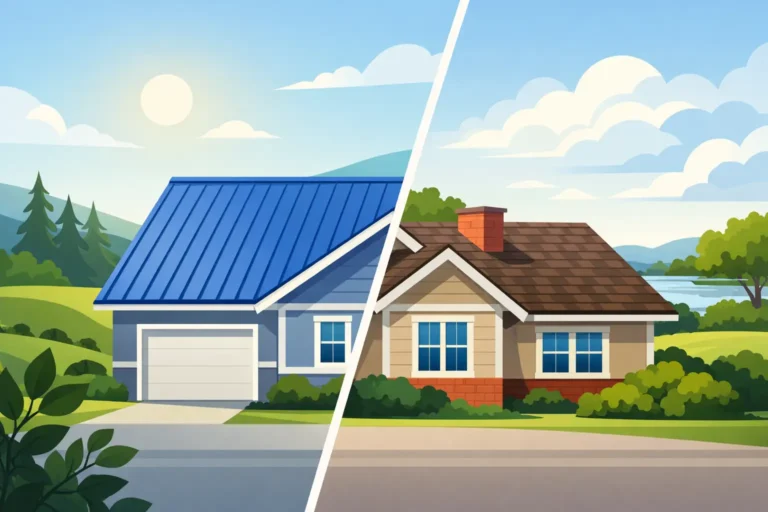
A roof replacement is rarely a casual purchase, especially after an Alabama storm has left you sorting through leaks, missing shingles, or an insurance claim. When comparing a metal roof vs shingles, the right answer depends on more than curb appeal. Your budget, roof design, long-term plans, storm exposure, and insurance settlement all deserve a place in the decision.
For many homeowners in Tuscaloosa, Birmingham, and nearby communities, asphalt shingles remain the practical choice. For others, metal offers a longer-lasting upgrade that may make sense for a forever home or a property with repeated weather concerns. The best material is the one that fits your home, your claim, and your expectations without creating unnecessary cost or stress.
Metal Roof vs Shingles: The Core Differences
Asphalt shingles are the most common residential roofing material in Alabama. They are familiar, available in many colors and styles, and work well on a wide range of roof shapes. A properly installed shingle roof can provide dependable protection at a lower upfront cost than metal.
Metal roofing comes in several forms, including exposed-fastener panels and standing-seam systems. It is lightweight, durable, and designed to shed water efficiently. Metal also reflects more solar heat than many dark roofing materials, which can be an appealing feature during Alabama summers.
The biggest difference is not simply that one roof is metal and the other is shingle. It is how each system performs over time, what it costs to install correctly, and how it responds when severe weather moves through your neighborhood.
Upfront Cost and Long-Term Value
Shingles typically have the lower initial price. That matters when a roof replacement is unexpected, when insurance funds are limited to restoring the damaged roof with comparable materials, or when a homeowner expects to sell in the near future. Architectural shingles give many properties an attractive, dimensional appearance without the higher investment of a metal system.
Metal roofing usually costs more at installation. Standing-seam metal, in particular, requires precise measurements, specialized trim work, and experienced installation. The material is only part of the expense. Flashings, penetrations, underlayment, ventilation details, and roof geometry all affect the final price.
Over a longer ownership period, metal can offer strong value because it generally lasts longer than asphalt shingles. A homeowner planning to stay in the property for decades may reasonably decide that the higher initial cost is worth avoiding another full replacement later. That calculation changes if the home has a complex roof, a limited budget, or a planned sale within a few years.
Cost should also include the condition of the roof deck. Whether you choose metal or shingles, damaged decking, rotten fascia, poor ventilation, or improper flashing should be addressed during replacement. Installing premium materials over unresolved problems does not create a premium roof system.
Storm Performance in Alabama
No roof is completely storm-proof. Alabama homes face high winds, wind-driven rain, hail, falling limbs, heat, and sudden temperature changes. The quality of the installation is just as important as the material selected.
A well-installed shingle roof can perform very well in severe weather. Modern architectural shingles are engineered for wind resistance, but their performance depends on correct nailing, adequate starter strips, sealed edges, and proper flashing. Missing or lifted shingles after a storm can expose the underlayment and deck to water.
Metal roofing is highly resistant to wind when it is properly attached and detailed. Its interlocking panels and long sheet lengths can make it an excellent choice for homeowners who prioritize wind performance. Metal sheds rain quickly and does not absorb water like some other materials.
Hail is more nuanced. Hail may crack, bruise, or dislodge shingles, sometimes creating damage that is not obvious from the ground. Metal may resist punctures well but can dent when struck by larger hail. A dented metal panel may still perform its primary job of keeping water out, yet cosmetic damage can still be a concern. The specific metal gauge, panel profile, coating, and impact rating matter.
Tree coverage also deserves consideration. A metal roof can handle routine weather well, but repeated contact from limbs can scratch finishes or damage panels. Shingles can lose granules under repeated abrasion. Keeping branches trimmed away from either roofing system is a practical form of roof protection.
Lifespan, Maintenance, and Repairs
A quality asphalt shingle roof often serves a home well for many years, but it will eventually need replacement. Sun exposure, heat, wind, algae, and normal aging gradually affect the shingles. Routine inspections can catch loose tabs, damaged pipe boots, failing sealant, or flashing issues before they become interior leaks.
Metal roofing can last significantly longer, particularly a well-installed standing-seam system. It is not maintenance-free, though. Fasteners on exposed-fastener panels may need attention as they age, sealants can deteriorate, and penetrations still require periodic inspection. Metal panels also expand and contract with temperature changes, so the system must be installed with those movements in mind.
Repairability differs as well. A localized shingle repair can often blend into the surrounding roof, although color matching becomes harder on an older roof. Replacing a metal panel may be more involved, especially on concealed-fastener systems where adjacent panels and trim may need to be removed to access the damaged area.
Appearance and Roof Design Matter
Shingles offer broad design flexibility. They work naturally with traditional homes, steep roof pitches, dormers, valleys, and more detailed rooflines. Colors and profiles make it easier to coordinate with brick, siding, and trim.
Metal can give a home a clean, distinctive appearance, from traditional ribbed panels to a more refined standing-seam look. It is especially appealing on farmhouses, contemporary homes, cabins, and properties seeking a longer-term exterior upgrade. Still, metal is not automatically the best visual or financial fit for every neighborhood or roof style.
Complex roofs can narrow the gap between material costs. A roof with many valleys, chimneys, skylights, and transitions requires more cuts and flashing work regardless of material. On these roofs, the contractor’s detail work matters far more than a simple material comparison.
What Insurance Usually Covers After Storm Damage
When storm damage leads to a claim, insurance typically pays based on the terms of your policy and the covered damage found during the inspection. In many cases, the carrier’s payment is intended to restore the property with materials of like kind and quality. If your damaged roof is asphalt shingles, a metal upgrade may require you to pay the difference beyond the approved settlement.
That does not mean metal is off the table. It simply means the decision should be made with clear numbers. Review the estimate, depreciation, deductible, code-related requirements, and any upgrade costs before committing. Do not assume every visible mark is covered damage, and do not assume a denial means there is no valid damage. A thorough inspection and accurate documentation make a real difference.
Bluefin Exteriors helps property owners understand the roof condition, document storm-related concerns, and navigate the claim process without high-pressure sales tactics. The goal is to give you a clear picture of what your roof needs and what your insurance settlement may support.
Which Roof Is Right for Your Property?
Shingles are often the right choice when you need a cost-conscious replacement, want a traditional appearance, have a complex roof design, or are working within an insurance settlement for a comparable shingle system. They are proven, versatile, and effective when installed as a complete roofing system.
Metal may be the better fit if you expect to own the property for many years, want a longer-lasting material, place a high priority on wind resistance, or prefer its appearance and heat-reflective qualities. It can also make sense for certain commercial buildings, outbuildings, and low-slope applications when the proper system is selected.
Before choosing either option, have the entire roof evaluated – not just the obvious damaged area. A no-pressure inspection can identify hidden hail impacts, lifted shingles, compromised flashing, soft decking, and ventilation concerns. With the condition of the roof documented and the costs explained clearly, you can choose a roofing system based on facts rather than urgency.
