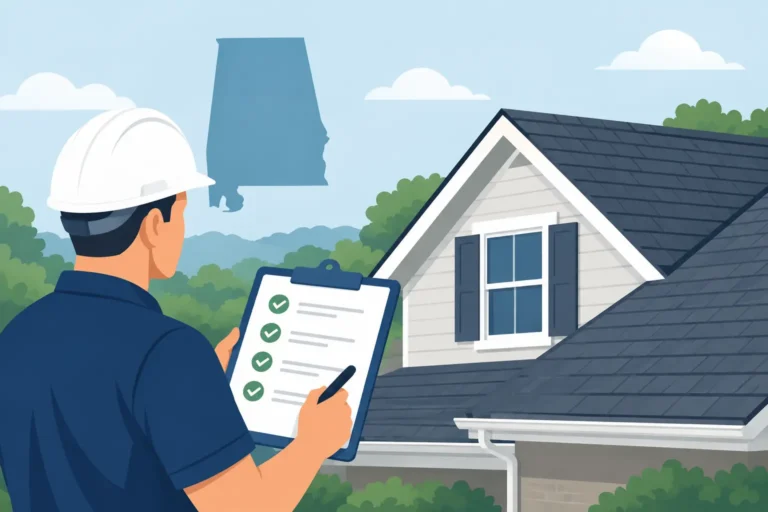
A hard rain is not the time to find out your roof has a problem. In Alabama, wind, hail, fallen limbs, and heavy downpours can turn a small weak spot into an active leak quickly. This roof repair checklist helps homeowners, landlords, and commercial property owners recognize damage early, protect the building, and make informed decisions before the problem spreads.
You do not need to climb onto the roof or become a roofing expert. In fact, walking a damaged or wet roof can be dangerous and may cause more harm. Start from the ground, check the areas you can safely access, and bring in a qualified roofing contractor when the signs point to storm damage or a possible failure.
Roof Repair Checklist: Start With Safety and Evidence
The first priority after a storm is protecting people and preventing further interior damage. Keep clear of downed power lines, unstable trees, and roof areas that may be compromised. If water is entering the building, move valuables away from the leak, place containers beneath dripping water, and use towels or plastic sheeting to limit damage where it is safe to do so.
Before cleaning up too much, take clear photos and videos. Photograph visible roof damage from the ground, damaged gutters, fallen branches, wet ceilings, stained walls, and any personal property affected by water. Include wide shots that show the location and close shots that show the damage itself. This documentation can be useful if you need to file an insurance claim.
Avoid making permanent repairs before the damage is documented and evaluated. Emergency measures, such as a temporary tarp, may be necessary to prevent further loss. Keep receipts for emergency services and temporary materials. Your policy may require reasonable steps to prevent additional damage, but the right approach depends on the extent of the issue and your insurer’s requirements.
Check for Exterior Signs of Roof Damage
A ground-level inspection can reveal more than most property owners expect. Walk around the property slowly, preferably in good daylight, and look at each roof slope from more than one angle. Do not rely on one view from the driveway.
Watch for these common exterior warning signs:
- Missing, lifted, cracked, curled, or loose shingles
- Dark spots, bare areas, or piles of shingle granules near downspouts
- Dented metal vents, flashing, gutters, or roof accessories after hail
- Damaged ridge caps, exposed nail heads, or separated flashing
- Tree limbs on the roof, broken gutters, or debris collecting in valleys
- Sagging rooflines or areas that appear uneven from the ground
Wind damage does not always mean shingles are completely missing. A strong gust can break the seal beneath a shingle, crease it, or lift it enough to create a future leak path. Hail damage can be even harder to identify from the ground. What looks like a few harmless dents may be evidence that the roof’s protective surface has been compromised.
For flat or low-slope commercial roofs, look for ponding water that remains after 48 hours of dry weather, loose edge metal, open seams, punctures, clogged drains, or bubbling in the membrane. TPO, PVC, EPDM, metal, and roof coating systems all show damage differently, which is one reason a professional inspection matters.
Inspect Gutters, Downspouts, and Flashing
Gutters are part of the roof drainage system, not an afterthought. If they are bent, loose, overflowing, or full of granules, water may not be moving away from the structure as it should. Check that downspouts discharge away from the foundation and are not blocked by leaves or storm debris.
Pay close attention to flashing around chimneys, skylights, wall intersections, vents, and pipe boots. These transitions are common leak locations because they depend on properly installed materials and tight seals. A roof can have shingles that look acceptable from the yard while a failed pipe boot or lifted flashing allows water into the attic.
Check the Attic and Interior Before the Leak Gets Worse
Roof damage often announces itself indoors after water has already moved past the roof covering. Check the attic with a flashlight during daylight hours if you can do so safely. Look for wet insulation, dark wood, mold-like growth, rusted fasteners, water trails on rafters, or daylight coming through the roof deck.
Inside the building, inspect ceilings and upper walls for new stains, peeling paint, bubbling drywall, soft spots, or a musty odor. Do not assume a ceiling stain is old simply because it is dry when you find it. Mark the edges lightly with a pencil and check it after the next rain. If it grows, darkens, or feels soft, moisture is still getting in.
A leak does not always appear directly below the roof opening. Water can run along decking, rafters, wiring, or framing before it reaches the ceiling. That is why a contractor should trace the source rather than simply patch the spot where the water became visible.
Consider the Roof’s Age and Repair History
The same visible issue can call for different solutions depending on the roof’s age, condition, and repair history. A few wind-damaged shingles on a newer roof may be a straightforward repair. Repeated leaks, widespread granule loss, brittle shingles, or multiple repaired areas may point to a larger system problem.
Ask yourself whether the roof has had recurring trouble in the same area, whether it has been repaired after prior storms, and whether matching materials are still available. A repair is often the right choice when damage is limited and the remaining roof is in good condition. Replacement may make more sense when damage is widespread, the roof is near the end of its service life, or a repair would create an unreliable patchwork result.
Document Storm Damage for an Insurance Claim
If you believe wind or hail caused the damage, contact your insurance carrier promptly and review your policy’s claim process. Report facts, not assumptions: the date of the storm, the damage you observed, and the steps you took to prevent further damage. Keep your claim number, adjuster contact information, photos, receipts, and written estimates in one place.
Insurance coverage depends on your policy, deductible, exclusions, roof age, and the cause of loss. An inspection is not a guarantee that insurance will approve a repair or replacement. Still, a thorough contractor inspection can help identify damage that is not obvious, provide clear documentation, and help you understand what should be discussed with the adjuster.
Be cautious with anyone who promises claim approval or tells you to avoid speaking with your insurer. A dependable contractor should explain the roof condition honestly, provide support with documentation, and let you make decisions with a clear understanding of the process.
Know When to Call a Roofing Professional
Call for a professional inspection promptly if you see active leaking, missing shingles, hail impacts, a tree strike, sagging, damaged flashing, or water stains inside the building. It is also smart to schedule an inspection after a significant storm even when damage is not obvious. Some storm-related issues become visible only after the next period of wind or rain.
A proper inspection should look beyond the shingles. It should include roof penetrations, flashing, ridge and hip areas, valleys, ventilation, gutters, roof decking indicators, and the attic when accessible. For commercial properties, the inspection should also evaluate drainage, seams, penetrations, edge details, and areas where water may be collecting.
Bluefin Exteriors provides no-pressure roof inspections and insurance claim help for property owners in Tuscaloosa, Birmingham, and surrounding Alabama communities. The goal is not to force a replacement when a repair will do. It is to identify the condition of the roof clearly, explain the practical options, and help protect your property from the next storm.
Do Not Put Off Small Roof Repairs
A missing shingle, loose vent boot, or damaged piece of flashing may seem minor on a dry day. Once water gets beneath the roof covering, the repair can expand to include decking, insulation, drywall, framing, or mold remediation. Fast attention usually means more options and less disruption.
Use this checklist after severe weather and any time you notice a change around the roofline or inside the building. If something does not look right, trust that observation and have it checked before the next rain has a chance to make the decision for you.
