After a strong Alabama storm, the first question is usually not whether the roof took damage – it is how bad the damage is, what needs to happen next, and whether insurance will cover it. Understanding your storm damaged roof repair options helps you make a calm, informed decision before a small issue turns into interior damage, mold, or a denied claim.
The right repair path depends on what kind of roof you have, how the storm hit, and whether the damage is isolated or spread across the system. In some cases, a targeted repair is the smart and cost-effective choice. In others, patching visible problem areas only delays a larger failure. That is why a proper inspection matters first.
What storm damage actually looks like on a roof
Storm damage is not always obvious from the ground. Missing shingles are easy to spot, but many roofing problems after wind or hail are more subtle. Asphalt shingles may be creased, lifted, bruised, or granule-worn. Metal panels can loosen at seams or suffer impact damage around fasteners. On flat and low-slope commercial roofs, storms may leave punctures, membrane separation, or pooling that was not there before.
Fallen limbs and flying debris create another category of damage. Sometimes the roof covering is only scratched or punctured in one area. Other times, the decking underneath is compromised, which changes the repair scope entirely. Water can also enter around flashing, vents, ridge caps, skylights, or chimney transitions even if the field of the roof looks mostly intact.
A roof can be storm-damaged without leaking right away. That delay is one reason many property owners underestimate the problem. Damage that starts at the shingle or flashing level may not show up inside until the next rain event.
Storm damaged roof repair options for common situations
The best storm damaged roof repair options depend on the extent of damage and the age of the existing system. Repair and replacement are not competing sales pitches when handled correctly – they are different solutions for different conditions.
Minor localized repairs
If damage is limited to a small area, a focused repair may be enough. This often applies when a few shingles blew off, a section of flashing lifted, a vent boot failed, or a tree branch damaged one slope without affecting the rest of the roof.
A localized repair can restore weather protection quickly and may be the best option when the roof is otherwise in good condition. The trade-off is matching. On older roofs, replacement shingles may not blend perfectly in color or texture. That cosmetic difference does not always affect performance, but homeowners should know about it upfront.
Section repairs after wind or debris impact
When one section of the roof has more concentrated damage, a partial repair may make sense. That could involve replacing a portion of shingles, underlayment, flashing, and damaged decking in a specific area.
This approach works best when the rest of the roof still has useful life and there is no widespread storm impact. If the storm affected multiple elevations or created repeated weak points, section repair can become a short-term fix rather than a lasting solution.
Emergency tarping and temporary protection
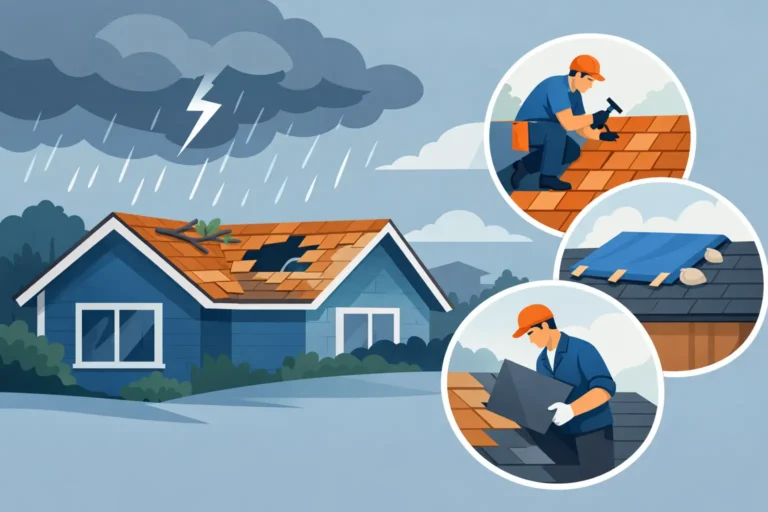
Not every repair starts with permanent work on day one. If the roof has active openings from fallen limbs, missing materials, or punctures, temporary protection may be necessary first. Emergency tarping helps limit additional water intrusion while inspection, documentation, and claim decisions move forward.
This matters because insurance carriers often expect property owners to take reasonable steps to prevent further damage. Temporary protection is not the final repair, but it can protect ceilings, insulation, walls, inventory, and equipment from getting worse.
Full roof replacement
A full replacement may be the better option when storm damage is widespread, when repairs would affect too many areas, or when the existing roof is already near the end of its service life. Hail damage is a common example. A roof may not be missing large sections, but impact marks across the system can reduce performance and shorten lifespan enough that replacement is more practical than repeated spot work.
Replacement also becomes more likely when matching materials are unavailable or when code requirements are triggered. For commercial properties, replacement may involve membrane systems like TPO, PVC, or EPDM, or a metal or coating solution depending on the roof design and long-term budget goals.
When repair makes sense and when it does not
Many owners want to know one thing quickly: can this be repaired, or am I looking at replacement? The honest answer is that it depends on four main factors – scope, age, material condition, and insurability.
Repair usually makes sense when damage is limited, the roof still has solid remaining life, and the repair can restore proper waterproofing without creating a patchwork of future issues. A newer asphalt shingle roof with a few wind-lifted tabs may be a good repair candidate. The same is true for a metal roof with isolated flashing or fastener issues.
Repair becomes less attractive when damage is scattered across multiple slopes, when hail has compromised large areas, or when older materials are brittle and difficult to work with. In those cases, paying for several repairs over a short period can cost more in the long run and still leave you with an aging roof.
Insurance can also shape the decision. If the documented storm damage supports a covered loss for replacement, it may not make financial sense to fund repeated out-of-pocket repairs that only postpone the inevitable.
Why the inspection matters more than the guess
After a storm, it is common for property owners to rely on what they can see from the driveway or what a neighbor says happened to their house. That is understandable, but roofs do not fail based on neighborhood averages.
A proper inspection should identify visible damage, hidden damage, and damage patterns that suggest broader system issues. It should also document the condition in a way that supports next steps, especially if an insurance claim is involved. Photos, measurements, material identification, and a clear scope all matter.
This is where experience makes a real difference. A contractor who understands both roofing systems and insurance documentation can often save property owners time, confusion, and avoidable delays. Bluefin Exteriors works with homeowners and property owners across Tuscaloosa, Birmingham, and nearby Alabama communities with that exact focus – clear inspections, honest recommendations, and help navigating the claim process when storm damage qualifies.
Insurance claims and repair decisions
Insurance does not automatically mean full replacement, and a visible leak does not automatically mean denial. The outcome depends on cause, timing, documentation, and policy terms.
If the damage was caused by a covered storm event, the claim may help pay for repair or replacement depending on the extent of loss. That is why it is smart to document damage early and avoid waiting until the roof has deteriorated further. Delays can make it harder to connect the condition to a specific storm event, and insurers may question whether later interior damage resulted from lack of maintenance.
For many property owners, the stressful part is not the roofing work. It is the paperwork, adjuster meetings, scope discussions, and uncertainty around what will be approved. Working with a contractor who can clearly explain the roof condition and communicate the repair scope often makes the process more manageable.
Residential and commercial roofs are not evaluated the same way
Homeowners and commercial property managers both deal with storm damage, but the repair path is often very different. Residential roofs are commonly judged by shingle condition, flashing integrity, and attic or interior leak signs. Commercial roofs may require membrane testing, seam review, drainage evaluation, and a closer look at rooftop penetrations and HVAC areas.
That difference matters because a repair that works on a steep-slope shingle roof may be completely wrong for a TPO or EPDM system. Commercial properties also have added concerns like tenant disruption, inventory protection, and maintaining operations during repairs.
The best approach is one that fits the building, not a one-size-fits-all answer.
What to do right after the storm
If you suspect damage, start by looking for obvious signs from the ground such as missing shingles, exposed underlayment, fallen branches, dented gutters, or debris impact. Inside, check ceilings, attic spaces, and upper walls for stains or active moisture.
Then schedule a professional inspection before deciding on a repair plan. Avoid climbing on the roof yourself, especially after rain or high winds. Safety comes first, and storm damage is often more extensive than it appears.
Good decisions usually come from good documentation, not quick assumptions. The goal is not to push every storm into a full replacement or minimize serious damage with a small patch. The goal is to choose the repair option that protects your property, fits the actual condition of the roof, and gives you confidence the problem is being handled the right way.
When a storm hits, clarity matters. A straightforward inspection and an honest recommendation can take a stressful situation and turn it into a manageable next step.
