
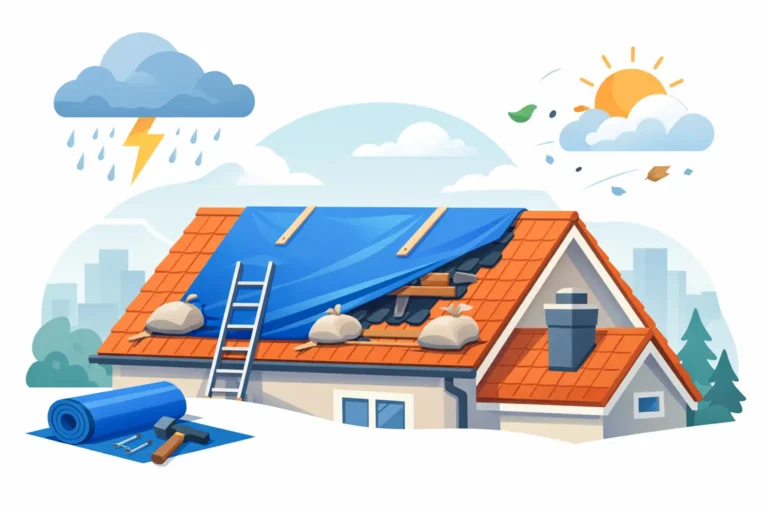
The first few hours after a storm are when roof damage tends to get worse. A missing section of shingles, a puncture from fallen debris, or lifted flashing can let water into the attic long before a full repair is scheduled. In that situation, a temporary tarp for roof damage can buy you time, limit interior damage, and help protect the property while the next steps are sorted out.
That said, a tarp is not a repair. It is an emergency measure meant to reduce additional water intrusion until a qualified roofer can inspect the roof, document the damage, and complete the right fix. For homeowners and property owners in Alabama, especially after heavy wind, hail, or tree impact, knowing when a tarp helps and when it needs to be replaced by real repair work matters.
What a temporary tarp for roof damage actually does
A roof tarp creates a temporary barrier over an exposed or compromised section of roofing. If shingles have blown off, decking is exposed, or flashing has failed around a roof penetration, the tarp helps redirect water away from that vulnerable area. It is meant to reduce active leaks and limit the spread of moisture into insulation, framing, ceilings, and walls.
The key word is temporary. Even a well-installed tarp is still exposed to sun, wind, pooling water, and shifting materials underneath it. It may hold for a short period, but it is not designed to perform like a complete roofing system. If the underlying damage is extensive, the tarp may only reduce the problem rather than stop it completely.
This is one reason prompt inspection matters. A professional roofer can determine whether the visible issue is isolated or whether the storm caused broader damage that is not obvious from the ground.
When tarping the roof makes sense
Not every roof issue calls for emergency tarping. If the roof is aging but not actively leaking, a tarp may not be necessary. But when the home or building has an exposed opening or there is a strong risk of water entry before repairs can happen, tarping is often the right short-term move.
Common situations include wind damage that tears off shingles, tree limbs that puncture the roof, hail damage combined with torn roofing materials, or storm-related flashing failure around vents, chimneys, and ridges. On commercial properties, membrane punctures or lifted edge details can also create conditions where temporary coverage helps protect the interior.
The timing matters too. If more rain is in the forecast, delaying temporary protection can turn a manageable repair into a much larger restoration project involving drywall, insulation, flooring, or mold remediation.
A tarp can help with insurance documentation, but only if handled correctly
After storm damage, property owners often focus on the visible leak and overlook the claim side of the situation. That is understandable, but it helps to think about both at the same time. Insurance carriers generally expect property owners to take reasonable steps to prevent further damage. In many cases, that includes emergency tarping when it is safe and necessary.
A proper inspection and clear documentation of the damage before and after tarping can make a real difference. Photos of missing shingles, impact points, interior water staining, and exposed roof areas help establish what happened. Documentation of emergency mitigation also shows that the property owner acted responsibly to protect the structure.
This is where working with a roofing contractor who understands both storm damage and claims can reduce a lot of stress. Bluefin Exteriors, for example, works with property owners who need both roofing expertise and support navigating the insurance side of the process.
Why DIY tarping is riskier than most people expect
When water is entering the home, it is tempting to get on the roof with a ladder, a tarp, and a few boards. The problem is that storm-damaged roofs are often unstable, slick, or structurally compromised. What looks like a simple exposed patch may involve weakened decking, loose granules, bent metal, hidden punctures, or debris that shifts underfoot.
There is also the installation issue. If the tarp is too small, fastened incorrectly, or placed over the wrong section, water can still work underneath it. If fasteners are driven where they should not be, the temporary protection can create more openings in the roof. A tarp that is not secured well can tear loose in the next wind event and leave the roof even more exposed.
For single-story homes with very limited damage, some owners may feel comfortable taking temporary measures from the ground or attic level, such as placing containers under active drips and moving belongings out of harm’s way. But climbing onto a storm-damaged roof is a different decision. In many cases, the safer and more effective move is to call for emergency service and let trained crews handle it.
What professional roof tarping should include
A proper emergency tarp job starts with assessing the full affected area, not just the spot where water is showing up inside. Roof leaks can travel. The entry point may be uphill from the stain on the ceiling, and storm damage may extend farther than expected.
Professionals typically use heavy-duty tarp material sized to cover beyond the visibly damaged section. The tarp should extend over the roof slope enough to shed water away from the opening. Securing methods matter. The goal is to hold the tarp in place without creating unnecessary additional damage to the roofing system.
Just as important, the tarp should be treated as part of an emergency mitigation plan, not the final answer. The property owner should know what damage was observed, whether more rain protection may be needed, and what the likely repair or replacement path looks like.
How long can a temporary tarp stay on a damaged roof?
It depends on the severity of the damage, weather conditions, roof type, and quality of installation. Some tarps may hold for a few weeks. Others fail much sooner under strong sun, high winds, or repeated storms. In Alabama, where weather can shift quickly and storm patterns can stack up in the same season, relying on a tarp for too long is a gamble.
There is also a practical issue. The longer a tarp remains in place, the harder it can be to monitor what is happening underneath. Small leaks may continue unnoticed. Trapped moisture can affect decking and attic materials even when the interior ceiling looks dry.
That is why emergency protection should move quickly into inspection, documentation, and permanent repair planning. If the damage is limited, a targeted repair may be enough. If the storm compromised multiple sections of the roof or shortened the life of the whole system, replacement may be the smarter investment.
Temporary tarp for roof damage on homes vs. commercial buildings
The basic purpose is the same, but the application can look very different. On a residential shingle roof, tarping often addresses missing shingles, exposed underlayment, or punctures from debris. The concern is usually keeping water out of the attic and living space until repairs are completed.
On commercial roofs, temporary protection can involve membrane damage, rooftop equipment penetrations, seam failure, or flashing problems around parapets and curbs. These systems behave differently, and improper emergency measures can make later repairs harder. A tarp may still be part of the solution, but commercial properties often need a more system-specific assessment right away.
That is one reason property managers and business owners benefit from contractors who understand both steep-slope residential roofing and commercial systems. The urgency is the same, but the repair path is often not.
What to do right after roof damage
Start with safety. Stay off the roof, avoid areas with sagging ceilings, and keep clear of downed power lines or fallen limbs. If water is entering the home, contain it as best you can from inside by moving furniture, placing buckets, and protecting flooring.
Then document what you can safely see. Take photos of exterior damage from the ground, interior leaks, ceiling stains, and any debris impact. If emergency tarping is needed, arrange it quickly, but do not stop there. Schedule a professional roof inspection as soon as possible so the full extent of the damage can be evaluated.
If an insurance claim may be involved, early documentation and a clear damage assessment can help avoid delays and confusion later. The strongest approach is usually simple: protect the property, document the loss, and get an experienced roofer involved before small damage becomes a larger claim.
A tarp can keep the next rainfall from doing more harm, but peace of mind comes from knowing what the roof actually needs and having a clear plan to fix it the right way.
