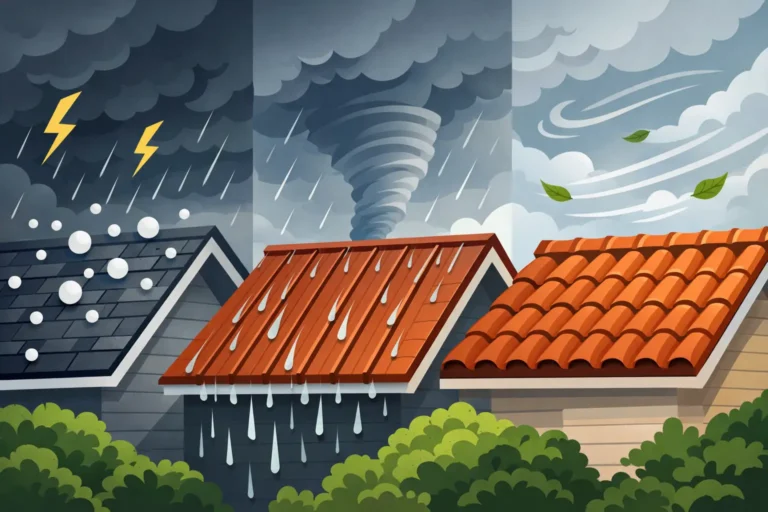
A roof usually looks fine right up until the first big storm tests it. In Alabama, that test can mean wind-driven rain, hail, flying debris, and sudden pressure changes that expose every weak spot. If you are comparing the best roof materials for storms, the right answer is not just about what is strongest on paper. It is about how that roofing system performs on your property, in your budget, and under real local weather conditions.
For homeowners and property owners around Tuscaloosa and Birmingham, storm resistance matters because replacement is expensive, interior damage gets worse fast, and insurance claims are easier when the roof system is built and documented properly from the start. Material choice plays a big role, but so does installation quality, ventilation, flashing, fastening methods, and the age of the roof already in place.
What makes a roof material storm-resistant?
When most people think about storm damage, they think about shingles blowing off. That is only part of the picture. A storm-resistant roof needs to hold up against uplift from high winds, impact from hail, and water intrusion after the outer surface gets stressed.
That means the best-performing materials are usually the ones with strong wind ratings, good impact resistance, and reliable attachment systems. A roof also needs quality underlayment, properly installed flashing, and secure edges. Even the best material can fail early if the installation is rushed or the system is incomplete.
Best roof materials for storms in Alabama
Architectural asphalt shingles
For many homes, architectural shingles are the most practical balance of cost, appearance, and storm performance. They are thicker than basic 3-tab shingles and generally offer better wind resistance and longer service life. Many premium versions are designed to resist higher winds and, in some product lines, earn stronger impact ratings for hail.
This is often the right fit for homeowners who want dependable protection without moving into the higher price range of metal or specialty systems. Architectural shingles also work well with most home styles, and repairs can be more straightforward than with some premium materials.
The trade-off is that asphalt is still more vulnerable to severe hail and aging than metal. Granule loss, lifted tabs, and bruising can show up after strong storms, especially on older roofs. If a shingle roof is already near the end of its life, one major weather event can push it from repairable to replacement territory.
Impact-resistant shingles
If you want the shingle look but need better storm protection, impact-resistant shingles deserve serious consideration. These products are engineered to better absorb hail strikes and reduce the chance of cracking or puncture. In hail-prone areas, that can make a meaningful difference.
They still need proper installation and they do cost more than standard architectural shingles, but for many Alabama property owners, the upgrade is worth it. It can reduce damage frequency and may support a stronger case for long-term value, especially if storms are a regular concern in your area.
Standing seam metal roofing
Metal is one of the strongest options available when storm resistance is the top priority. A standing seam metal roof can perform extremely well in high winds because the panels interlock and fasteners are often concealed, which reduces exposure points. It also sheds rain efficiently and tends to hold up better than many other materials when maintained properly.
For homeowners focused on durability, metal is often near the top of the list of the best roof materials for storms. It is especially attractive for properties exposed to repeated severe weather or owners who want a longer-term investment.
That said, metal is not automatically damage-proof. Large hail can still dent panels, and not every owner is comfortable with the possibility of cosmetic damage even if the roof remains functional. Upfront cost is also significantly higher than asphalt in many cases. On some homes, the budget simply points to a better shingle system instead of stretching too far for metal.
Exposed-fastener metal roofing
Exposed-fastener metal can be a useful option on certain residential structures, agricultural buildings, and some commercial properties, but it has more vulnerability over time than standing seam. Because the fasteners are exposed to weather, expansion and contraction can eventually create maintenance issues if the system is not installed and inspected carefully.
It can still perform well in storms, but it usually requires more attention long term. For owners looking for maximum storm durability with fewer leak-risk points, standing seam is typically the stronger metal choice.
Commercial single-ply systems
For low-slope commercial roofs, storm resistance becomes a different conversation. Materials like TPO, PVC, and EPDM are common because they provide broad coverage, can be highly effective when correctly attached, and are designed for commercial building performance.
The best option depends on the building, drainage design, insulation package, rooftop equipment, and exposure. PVC and TPO can offer strong seam performance when installed correctly, while EPDM has a long history and can be a solid fit in the right application. On commercial properties, the material matters, but the attachment method and detail work around penetrations are often what determine whether a roof survives a storm with minor issues or major disruption.
Which roof material handles wind best?
Metal roofing generally leads the field for wind resistance, especially engineered standing seam systems installed to manufacturer specifications. High-quality architectural and impact-resistant shingles can also perform very well, particularly when they carry higher wind ratings and are installed with the right nailing pattern and starter system.
If your property has a complex roofline, a lot of ridges and valleys, or existing deck issues, those factors can affect real-world wind performance just as much as the material category. A simpler, properly sealed system often outperforms a more expensive roof installed poorly.
Which roof material handles hail best?
Hail is where the answer gets more nuanced. Impact-resistant shingles are designed specifically to improve performance here, and many owners prefer them because they preserve the traditional look of a home. Metal can resist puncture very well, but cosmetic denting is still possible depending on panel type and hail size.
For a homeowner, the real question is whether you are more concerned about structural durability, appearance after impact, or replacement cost if damage occurs. Those are not always the same thing.
Cost versus long-term value
Storm protection should absolutely influence your roofing decision, but it should not be the only factor. The lowest upfront bid can become the most expensive choice if the materials are weak, the fasteners are wrong, or the flashing is not done correctly. On the other hand, the most expensive roof is not automatically the best fit for every property.
Architectural shingles remain popular because they offer strong value. Impact-resistant shingles make sense when hail exposure is a concern and you want an upgrade without committing to metal. Standing seam metal usually brings the highest long-term durability, but it requires a larger initial investment.
For insurance-related decisions, documentation matters too. After a storm, it helps to know exactly what material was installed, when it was installed, and whether the system met current standards. That is one reason many property owners prefer working with a contractor who understands both roofing performance and the insurance process.
Installation matters as much as material
This is the part many articles skip, but it is often the difference between a roof that survives and one that fails early. Storm-resistant roofing is a system, not just a product. The shingles or panels get the attention, but underlayment, decking condition, edge metal, ridge vent design, flashing details, and fastening all work together.
A strong material installed over rotted decking or paired with poor flashing is still a risk. The same goes for storm damage claims. If a roof was installed incorrectly, claim outcomes can become more complicated because the conversation shifts from storm damage to workmanship issues.
That is why inspections matter before and after severe weather. A no-pressure inspection can identify whether your current roof is still serviceable, whether repairs make sense, or whether replacement is the smarter move before the next storm season arrives.
How to choose the right option for your property
If you own a typical home and want a practical, cost-conscious upgrade, architectural shingles are often a solid choice. If your neighborhood sees frequent hail and you want stronger impact performance, impact-resistant shingles are worth a close look. If your priority is long-term durability and strong wind performance, standing seam metal is hard to ignore.
For commercial buildings, the right answer depends on slope, drainage, traffic, and building use. There is no one-size-fits-all system for every flat or low-slope roof.
At Bluefin Exteriors, that is usually where the conversation starts – not with a sales pitch, but with an inspection, a clear explanation of what storm risk looks like on your property, and a straightforward recommendation based on condition, budget, and insurance realities.
If your roof has already been through heavy wind or hail, the best material for the next storm may not be a guess at all. It may start with a careful inspection, good documentation, and a plan that protects both your property and your peace of mind.
