A roof often looks fine from the driveway right up until the next hailstorm proves otherwise. That is why an impact resistant shingles guide matters for Alabama homeowners – especially in areas like Tuscaloosa and Birmingham, where wind, hail, and storm-driven debris can turn a small weakness into a full replacement.
If you are comparing roofing options after storm damage, impact resistant shingles can be a smart upgrade. But they are not a magic fix, and they are not the right answer in every situation. The real value comes from understanding what they actually do, how they are rated, and whether they make sense for your home, your budget, and your insurance situation.
What impact resistant shingles actually are
Impact resistant shingles are asphalt shingles engineered to better withstand hits from hail and debris than standard shingles. Most are built with a reinforced mat or modified asphalt blend that helps the shingle flex instead of cracking when struck.
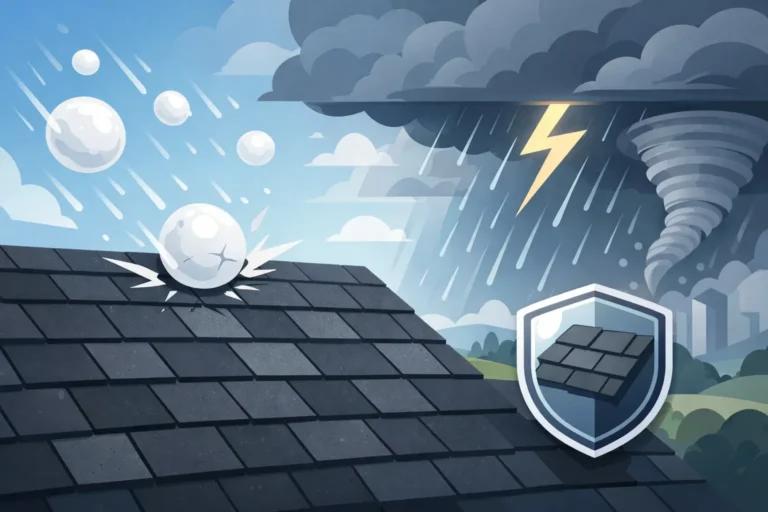
That does not mean they are hail-proof. It means they are designed to reduce the kind of surface fractures, granule loss, and bruising that often shorten a roof’s life after a storm. In practical terms, they may hold up better when Alabama weather gets rough, but severe hail and high winds can still damage any roofing system.
Understanding Class 4 ratings in an impact resistant shingles guide
When homeowners ask about impact resistant shingles, they usually hear about Class 4 first. That rating comes from a standardized test where steel balls are dropped on roofing material to measure how well it resists cracking.
Class 4 is the highest commonly referenced impact rating for asphalt shingles. It is a useful benchmark, but it should not be the only factor in your decision. Lab testing is controlled. Real storms are not. Hail size, wind speed, roof slope, attic ventilation, installation quality, and the age of the roof all affect real-world performance.
So yes, a Class 4 shingle is typically the strongest impact-resistant asphalt option available. But the label alone does not guarantee you will avoid storm damage or an insurance claim.
Why Alabama property owners consider them
In this market, the appeal is easy to understand. Storms are frequent, hail is unpredictable, and many homeowners would rather invest in stronger materials now than face repeated repairs later.
Impact resistant shingles can make sense if your neighborhood has seen recent hail claims, if your current roof has a history of storm damage, or if you plan to stay in the home long enough to benefit from added durability. They may also appeal to owners who want a little more peace of mind without moving to a completely different roofing material like metal.
For commercial and residential property owners alike, there is also a practical insurance angle. Some carriers offer premium discounts for qualifying impact resistant roofing products. Others do not, or they may have specific documentation requirements. That is why it helps to verify the details before assuming the upgrade pays for itself.
The biggest benefits – and the trade-offs
The clearest benefit is better resistance to hail and flying debris. That can mean fewer punctures, fewer broken tabs, and less cosmetic and functional damage after a storm. It may also reduce the chance of small impacts turning into leaks months later.
There is also a durability argument beyond hail. Many impact resistant shingles are premium products overall, which means they may come with stronger wind ratings, improved construction, and better manufacturer backing. For some homeowners, that broader quality upgrade is just as valuable as the impact rating itself.
The trade-off is cost. Impact resistant shingles usually cost more than standard architectural shingles. Depending on the product line, roof size, and local market, the difference can be meaningful. If your home is in a heavily treed area or a storm-prone part of Alabama, that added cost may feel justified. If your budget is tight and your insurer offers no discount, the math may be less favorable.
Another trade-off is expectations. Some homeowners hear “impact resistant” and assume “damage proof.” That is where disappointment starts. A strong shingle can reduce damage, but no asphalt roof is immune to major hail, falling limbs, or poor installation.
When impact resistant shingles are worth the extra money
They are often worth considering when you are already replacing the roof through an insurance claim after storm damage. In that situation, the cost difference between a standard shingle and an upgraded one may be manageable, especially if you are trying to reduce future risk.
They can also be worth it if your current roof has been repaired multiple times after hail events. Repeated patching gets expensive, and it can create a roof that ages unevenly. Starting fresh with a stronger shingle may be the better long-term move.
If you plan to sell soon, the value depends on your local market. Some buyers appreciate the upgrade and the potential insurance benefit. Others will simply see “new roof” and not weigh the shingle class heavily. So if resale is your only goal, ask whether the premium is likely to matter in your neighborhood.
Installation matters as much as the shingle
A premium shingle cannot overcome poor workmanship. Even the best impact resistant product can underperform if it is installed over damaged decking, paired with bad ventilation, or fastened incorrectly.
That is one reason inspections matter after storms. Homeowners often focus on the visible shingle damage and miss the system issues underneath. Flashing, underlayment, ridge ventilation, pipe boots, and decking condition all affect whether a roof performs well over time.
A dependable contractor should explain more than the shingle brochure. You want a clear assessment of the whole roofing system, honest feedback on whether repair or replacement makes more sense, and straightforward answers about what your insurance carrier may require.
Insurance questions to ask before you choose
Insurance can influence this decision more than homeowners expect. Some policies offer discounts for Class 4 shingles. Others may only recognize certain tested products. Some policies have cosmetic damage exclusions that affect how hail claims are handled later.
Before selecting a product, ask your carrier three simple questions. Do you offer a discount for impact resistant shingles, what documentation do you need, and will choosing this product change how future roof claims are evaluated?
If your roof is already being reviewed for storm damage, proper documentation matters just as much as product choice. Photos, test squares, repair history, and a clear inspection report can all affect claim outcomes. That is where working with a contractor who understands both roofing and claims can remove a lot of stress from the process.
How to choose the right product for your home
Start with your risk level. If your home has frequent storm exposure, mature trees, or a recent history of hail damage, stronger shingles deserve a serious look. Then weigh your budget against how long you expect to stay in the home.
Next, compare warranty terms, wind ratings, color availability, and manufacturer reputation. Not all impact resistant shingles are built the same, even if they carry a similar class rating. Some are thicker, some are more flexible, and some fit the look of your home better than others.
Finally, make sure the recommendation fits your actual roof condition. If the decking is compromised or ventilation is poor, those issues need to be addressed as part of the project. Bluefin Exteriors often sees storm-damaged roofs where the best result comes from looking beyond the shingle itself and fixing the full system correctly the first time.
A few common misunderstandings
One common myth is that impact resistant shingles stop leaks on their own. They do not. Leaks come from system failures, flashing issues, punctures, aging materials, and installation defects as much as from visible hail hits.
Another is that every homeowner should upgrade automatically. Sometimes a quality architectural shingle is the better fit, especially if budget is the top concern and storm exposure is relatively moderate. There is no one-size-fits-all answer.
And finally, many people assume a roof with no obvious holes has no storm damage. Hail damage is often subtle at first. Granule loss, bruising, fractured mats, and loosened seal strips can be missed without a close inspection.
If you are weighing a roof replacement after a storm, the best next step is not guessing from the ground. It is getting a clear, no-pressure inspection, understanding what the storm actually did to your roof, and choosing materials based on real conditions instead of marketing claims alone.
