A storm rolls through at 2 a.m., and by sunrise you are spotting shingles in the yard, a water stain on the ceiling, or metal flashing pulled loose by wind. At that point, the insurance claim roof repair timeline becomes more than a search term. It becomes the question standing between your property and more damage.
The good news is that roof claims usually follow a predictable path. The hard part is that every claim moves at a slightly different speed depending on storm volume, the quality of documentation, your policy, and whether hidden damage shows up after work begins. If you know what to expect, the process feels a lot less frustrating.
What the insurance claim roof repair timeline usually looks like
For many Alabama property owners, the full insurance claim roof repair timeline runs anywhere from a couple of weeks to a couple of months. Smaller repairs with clear storm damage can move faster. Full roof replacements after a major hail or wind event often take longer because insurance carriers, adjusters, suppliers, and contractors are all handling a surge of demand at the same time.
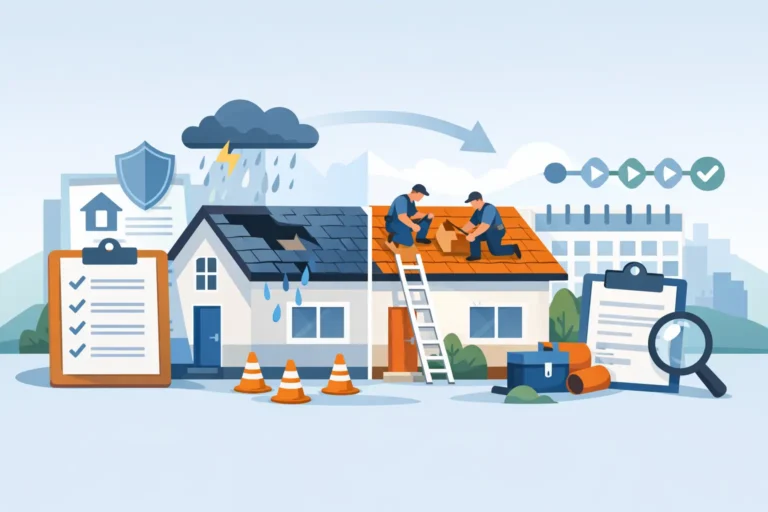
A common timeline looks like this: inspection within a day or two, claim filing right after that, adjuster review within several days to a few weeks, paperwork and scope approval after that, then scheduling materials and installation. If supplements are needed because more damage is found, that can add time. Weather can also shift the schedule, especially during storm season.
That range may sound broad, but it is realistic. Anyone promising every claim will be wrapped up on a fixed schedule is leaving out a lot of real-world variables.
Step 1: Initial roof inspection and emergency protection
The first step is confirming the extent of damage. A professional roof inspection should happen as soon as possible after the storm, especially if you suspect leaks, lifted shingles, punctures, or impact marks. Quick action matters because insurance companies may ask whether you took reasonable steps to prevent further damage.
In many cases, temporary protection comes first. That could mean tarping an exposed area, sealing a vulnerable section, or documenting interior water intrusion before cleanup starts. Emergency mitigation is not the same as permanent repair, but it can protect your claim and your property at the same time.
This stage can take one day if schedules are open, or several days if a major storm has hit Tuscaloosa, Birmingham, or surrounding communities all at once. After widespread weather events, inspection demand spikes fast.
Step 2: Filing the insurance claim
Once storm damage is documented, the claim gets filed with your insurer. Some property owners call the carrier first and then schedule a contractor. Others prefer to have a contractor inspect first so they can describe the damage more clearly when opening the claim. Either way can work, but having strong photo documentation from the start often helps keep the process cleaner.
At this point, the carrier creates a claim number and assigns an adjuster or inspection vendor. That assignment may happen quickly, or it may take longer during catastrophe conditions. If a storm affected a large part of your area, insurers are often dealing with a heavy claim volume across multiple counties.
This step is usually measured in days, not weeks, but the adjuster scheduling that follows is where timelines begin to vary more.
Step 3: Adjuster inspection and scope review
The adjuster visit is one of the most important parts of the insurance claim roof repair timeline. This is when the insurance company evaluates visible damage and starts determining what it believes is covered under your policy.
In a straightforward claim, the adjuster inspects the roof, exterior components, and sometimes interior damage if there has been leaking. Then the carrier prepares an estimate, often called a scope of loss. That document outlines what it plans to pay for based on its findings, depreciation, deductible, and policy terms.
This part can move quickly if damage is obvious and the claim is simple. It can slow down if access is limited, the damage is borderline, multiple structures are involved, or there is disagreement about whether repair or replacement is appropriate.
That is one reason many property owners want an experienced roofing contractor involved early. A contractor who understands both storm damage and claim documentation can help make sure the adjuster sees the full picture. Bluefin Exteriors works in that gap often, helping property owners understand what the insurance paperwork means and where supplements may be needed.
Step 4: Estimate approval, deductible, and scope alignment
After the adjuster inspection, the insurance company issues its estimate. This does not always mean you are ready for construction the same day. Sometimes the carrier’s first scope matches the actual work well. Other times, it leaves out code-required items, accessories, or damage that is difficult to identify from the ground or from a limited inspection.
When that happens, the contractor may submit a supplement. A supplement is additional documentation showing why more work or materials are needed. That might include updated measurements, photos, manufacturer requirements, local code considerations, or proof of related damage to vents, flashing, gutters, or commercial roofing components.
This is one of the biggest places where timelines stretch. Not because anything is wrong, but because claim approval is sometimes a back-and-forth process. A roof can be damaged in ways that are obvious to an experienced contractor but not fully reflected in the first insurance estimate.
Property owners should also understand the payment side here. Most policies involve a deductible, and many claims are paid in stages. You may receive an initial payment first, then recoverable depreciation after the work is completed and invoiced. That can affect scheduling if there is confusion about funding.
Step 5: Material ordering and scheduling the roof work
Once the scope is approved or close enough to move forward, the job moves into production. Materials are selected, colors are confirmed, delivery is scheduled, and the install date is set.
For standard asphalt shingle systems, this stage may move quickly if materials are in stock. Metal roofing and commercial systems such as TPO, PVC, EPDM, or coatings can require longer lead times depending on supplier availability and project size. If a storm has created region-wide demand, even common products may take longer than usual.
Weather is another factor. A roof replacement cannot be scheduled purely by calendar if rain is coming in. A dependable contractor will aim for speed, but not at the expense of exposing the property to avoidable risk.
Step 6: Roof repair or replacement day
Actual installation is often the shortest part of the process. Many residential roof replacements are completed in one to two days. Larger homes, steep roofs, specialty materials, and commercial properties can take longer.
Repairs may be even faster if the damage is isolated. But isolated repair is not always the right call. If the roof has broad storm impact or matching issues, a partial repair might save time upfront while creating problems later with performance or appearance. This is where honest guidance matters. The fastest option and the best option are not always the same.
A professional crew should also keep the site clean, protect landscaping where possible, and document the finished work for final claim processing.
What can delay an insurance claim roof repair timeline
Most delays fall into a few categories. The first is volume. After a major storm, everyone is trying to get inspected, adjusted, approved, and scheduled at once.
The second is incomplete documentation. If early photos are weak, damage is not clearly described, or interior issues are not documented, the carrier may need more information later. That adds friction.
The third is scope disagreement. Insurance companies and contractors do not always see the same repair needs on the first pass. Supplements are common, and they are not necessarily a red flag. They are often just part of getting the scope accurate.
The fourth is material and weather delays. Even after approval, rain or supply constraints can push the install date.
Finally, there is communication. Claims tend to move faster when the homeowner, contractor, and carrier are all responding promptly. Small delays in returning calls, approving colors, or sending paperwork can stretch the process more than people expect.
How to keep the process moving
Start with a prompt inspection. Do not wait weeks to find out whether the damage is cosmetic, repairable, or severe enough for replacement. Keep photos of exterior and interior conditions, save claim emails and estimate documents, and ask questions if any part of the scope is unclear.
It also helps to work with a contractor who understands insurance claim work instead of treating it like standard retail roofing. That does not mean the contractor decides coverage. It means they know how to document damage, communicate needed repairs, and keep the project moving without adding pressure.
A realistic expectation helps more than a perfect promise
Most property owners want one answer: how long will this take? The honest answer is that the insurance claim roof repair timeline depends on the size of the storm, the complexity of the claim, and how quickly the paperwork lines up with the actual roof needs. Some jobs move fast. Others require patience.
What matters most is not just speed. It is making sure the damage is documented correctly, the scope reflects the real work, and the roof is restored the right way. A few extra days spent getting that right can save a lot of frustration after the crew leaves.
