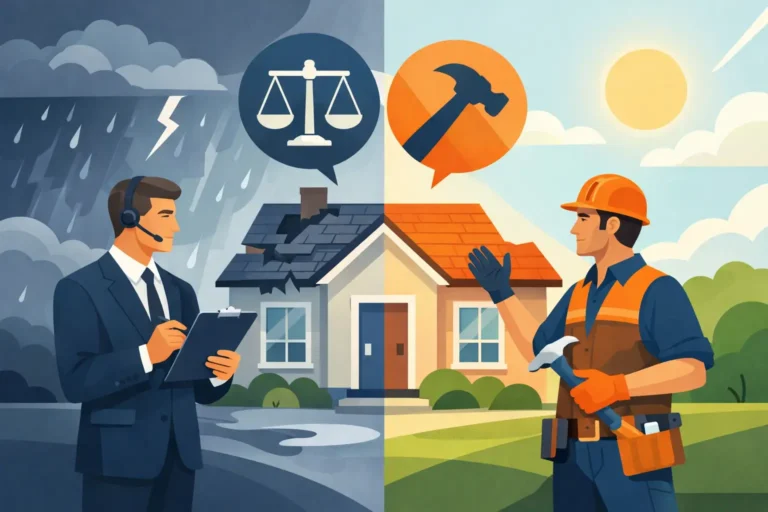
A lot of homeowners ask the same question after a storm: in an insurance adjuster vs roofer situation, whose opinion actually matters more? It usually comes up when you can see shingles on the ground, water stains on the ceiling, or dents on metal components, but the insurance report does not seem to match what a roofer says on site. That gap is where confusion starts, and it is also where costly mistakes can happen.
The short answer is that both matter, but they do different jobs. If you treat them like they are supposed to do the same thing, the process gets harder than it needs to be.
Insurance adjuster vs roofer: different roles, different goals
An insurance adjuster is there to evaluate a claim under the terms of the policy. Their job is to determine whether damage is covered, document what they observe, and estimate what the carrier believes should be paid. They are not there to install a roofing system, diagnose every construction issue, or design the best repair plan for long-term performance.
A roofer is there to inspect the roof itself and determine what is damaged, what failed, and what it will take to restore the system properly. A qualified roofing contractor looks at shingles, underlayment, flashing, ventilation, decking concerns, accessory metals, and the real-world labor required to repair or replace the roof. Their responsibility is to the building and the work that has to be done correctly.
That difference matters. One is making a coverage and pricing decision for a claim. The other is evaluating construction conditions and the scope needed to complete the job.
Who has the final say?
On coverage, the insurance company has the final say unless the claim is challenged, supplemented, or reopened according to the policy and state rules. The adjuster represents that side of the process.
On what it takes to perform the roofing work correctly, the roofer has the practical expertise. If the insurer approves a partial repair but the roof system requires more extensive work to match materials, maintain performance, or meet code, a contractor may need to document that and push for a revised scope.
This is where homeowners often feel stuck. The adjuster says one thing. The roofer says another. It can sound like a disagreement, but many times it is really a difference in role. The adjuster is not writing a construction plan. The roofer is not deciding policy coverage.
Why roof claims often turn into disagreements
Storm damage is not always obvious from the ground, and not all damage presents the same way. Hail can bruise shingles without tearing them off. Wind can break seal strips, crease tabs, or loosen ridge components in ways that are easy to miss during a quick inspection. On commercial roofs, punctures, membrane damage, seam issues, and drainage problems may not show up the same day the storm passes.
There is also the issue of scope. An adjuster may inspect quickly and write for a few missing shingles, one slope, or isolated soft metal damage. A roofer may see a broader pattern that affects multiple elevations or related components. Flashing, starter, ridge cap, underlayment, vents, gutters, and interior damage can all be part of the same event, but they are not always included the first time around.
That does not automatically mean the adjuster is wrong or the roofer is exaggerating. Sometimes the initial inspection is limited. Sometimes more documentation is needed. Sometimes the roof really is repairable. The point is that first reports are not always complete.
What a good roofer adds to the claim process
A good roofer does more than say, “You need a new roof.” They should be able to explain why, show the damage clearly, and connect the inspection findings to a reasonable scope of work.
That includes photo documentation, marked test areas when appropriate, notes on collateral indicators, measurements, material identification, and a clear explanation of whether the roof is a repair candidate or a replacement candidate. If local code requirements or manufacturer limitations affect the repair, that should be documented too.
For homeowners, this is where the right contractor can make the process much less stressful. A roofer with insurance claim experience knows how to present damage in a way that is clear, factual, and useful. That can help avoid the common problem where a valid issue is real but poorly documented.
What an adjuster should be doing well
A fair adjuster should inspect thoroughly, communicate clearly, and issue an estimate that reflects the observed damage and policy terms. If more information is provided later, they should review it. If something was missed, there should be a path to supplement the claim.
Most adjusters are not trying to create problems for property owners. But they work within time constraints, company guidelines, and claim systems. That means details can be missed, especially on steep roofs, complex roof layouts, older systems, or storm events with widespread losses.
That is why having a roofer present at the inspection can help. It gives the adjuster access to someone who understands the roof system and can point out relevant damage in real time.
Insurance adjuster vs roofer on repair vs replacement
This is one of the biggest pressure points in an insurance adjuster vs roofer conversation. Homeowners want a straight answer, but the right answer depends on the roof.
If the damage is isolated and matching materials are available, a repair may be perfectly reasonable. If the roof has widespread storm damage, discontinued shingles, brittle materials, or system-wide issues, replacement may be the more appropriate path.
There is also a practical issue that homeowners often do not see until work begins. A repair written on paper may assume surrounding materials can be lifted and reinstalled without damage. In the field, that is not always possible. Older shingles can crack during manipulation. Flashing may need to be replaced to do the work correctly. Adjacent components may not tie back in as neatly as the estimate suggests.
This is where experience matters. The best outcome is not the cheapest line item on an estimate. It is a roof system that can actually be restored properly and stand up over time.
How homeowners can protect themselves
The biggest mistake is choosing sides too early. If you assume the adjuster must be right, you may accept an incomplete scope. If you assume every contractor opinion is automatically correct, you may miss the policy side of the process.
A better approach is to ask for evidence. Ask the roofer to show you the damage, explain the recommended scope, and identify what supports a repair or replacement position. Ask for clear photos and a written explanation. Then compare that to the insurance estimate line by line.
If something does not match, ask questions. Is damage missing? Are code items excluded? Were all roof slopes inspected? Are accessories and soft metals included? Was interior or water intrusion damage documented? If the estimate feels light, it may need a supplement, not an argument.
Homeowners should also avoid signing with a contractor who relies on pressure instead of proof. Storm damage already creates enough stress. You want a company that is calm, responsive, and willing to explain the process without rushing you.
The best results usually come from cooperation
The strongest roof claims are not built on conflict. They are built on accurate inspection, solid documentation, and professional communication. When the adjuster and roofer each stay in their lane but work from the same facts, claims move more smoothly.
That is especially true in storm-prone areas where roofing damage can be widespread and timing matters. A qualified local contractor can inspect early, document conditions before they worsen, meet with the adjuster if needed, and help make sure the claim reflects the real scope of the work. That is the kind of support property owners need when they are trying to protect both the building and the budget.
At Bluefin Exteriors, this is exactly why insurance experience matters alongside roofing expertise. Homeowners and property owners should not have to figure out technical damage, claim paperwork, and repair scope on their own while the roof problem gets worse.
If you are hearing different answers from the insurance company and the contractor, do not guess. Get a thorough roof inspection, get the damage documented clearly, and make decisions based on what can actually be defended – both in the claim file and on the roof itself. A good roof claim is not about who talks louder. It is about who can show the work and stand behind it.
