
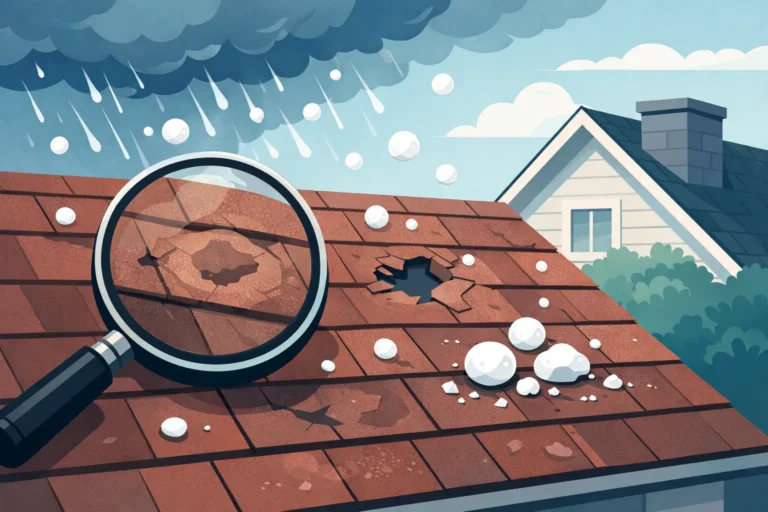
A hailstorm can leave your yard covered in leaves, your gutters full of debris, and your roof looking perfectly normal from the driveway. That is what makes knowing how to identify hail damage so valuable. Damage is often subtle, especially on asphalt shingles, but it can shorten roof life, create future leaks, and affect an insurance claim if it is not documented promptly.
For homeowners and commercial property owners in Tuscaloosa, Birmingham, and nearby Alabama communities, the right response is not to climb onto the roof after every storm. It is to look for safe, visible clues, record what you find, and bring in a qualified roofing professional when the signs point to a possible problem.
Start With the Storm Itself
Before inspecting the property, consider what actually happened. Hail large enough to damage roofing is not always baseball-sized. Even smaller hail can leave marks when it falls hard, is driven by wind, or strikes an older roof that has already lost some flexibility.
Make a note of the storm date, the approximate hail size, strong wind direction, and any visible damage around the property. Save weather alerts, photos from the day, and neighborhood reports if available. This information can help establish a timeline if you later need to file an insurance claim.
A storm report alone does not prove roof damage. However, it gives a professional inspection a useful starting point and helps distinguish a recent hail event from normal wear or older mechanical damage.
Look for Ground-Level Signs First
The safest inspection starts from the ground. Walk around the home or building in daylight and look closely at items that are easier to see than the roof surface. Hail often leaves its clearest evidence on softer metals, painted surfaces, and outdoor fixtures.
Check gutters, downspouts, gutter guards, metal flashing, roof vents, chimney caps, window screens, siding, garage doors, air-conditioning units, and exterior light fixtures. Fresh dents, chipped paint, cracked screens, or small circular impact marks can indicate that hail struck the property with enough force to affect the roof as well.
Be careful not to confuse ordinary wear with storm damage. A dented gutter from a ladder, a scuffed vent cap, or an aging screen does not automatically mean the roof has hail damage. The pattern matters. Multiple fresh-looking impacts on several sides of the property following a documented storm are more meaningful than one isolated mark.
How to Identify Hail Damage on Asphalt Shingles
Asphalt shingles are common throughout Alabama, and hail damage on them may be difficult to spot without getting close to the roof. A damaged shingle can still lie flat and appear intact from the ground. The concern is often a compromised protective surface rather than a missing shingle.
A roofing professional typically looks for circular or irregular impact areas where shingle granules have been knocked loose. These spots may expose darker asphalt underneath, feel softer than the surrounding area, or have a bruised appearance. Hail impacts can also fracture the shingle mat beneath the surface, which may not be visible without a hands-on inspection.
Granules in gutters are another possible clue, particularly after a severe storm. Still, granule loss is not always hail-related. Older shingles naturally shed granules over time, and a newly installed roof may release some excess granules after heavy rain. The question is whether the loss is concentrated and paired with visible impact marks.
Do not attempt to test a shingle by pressing hard, scraping it, or pulling at its edges. That can create damage and make it harder to determine what the storm actually caused. A trained inspector can evaluate the shingle condition without adding new problems.
What Hail Damage Looks Like on Metal and Commercial Roofs
Metal roofing may show obvious dents after hail, but appearance is only part of the evaluation. Small dents can be cosmetic, while damage near seams, fasteners, flashings, penetrations, or protective coatings may require closer attention. A roof that still sheds water can have issues that become more serious as the material expands, contracts, and ages.
On low-slope commercial roofing systems such as TPO, PVC, EPDM, or coated roofs, hail can create punctures, splits, displaced gravel, membrane scarring, or damaged flashing details. Some impacts are hard to see from below and may not leak immediately. Water can move within a roofing assembly before appearing on an interior ceiling, so waiting for a leak is rarely the best test.
Commercial property decision-makers should also inspect rooftop equipment, curbs, drains, skylights, and HVAC components. Damage to these items can support the storm timeline and may need to be addressed alongside the roof claim.
Know the Difference Between Hail Damage and Normal Aging
One reason professional inspections matter is that not every roof issue is storm-related. Sun exposure, heat, moisture, age, poor ventilation, and installation problems all leave their own marks. Alabama roofs work hard through summer heat, heavy rain, and sudden weather changes.
Normal aging often appears as widespread granule loss, curling edges, brittle shingles, fading, or uniform wear across the roof. Hail damage tends to be more random, with individual impact points scattered across slopes exposed to the storm. Wind damage, by comparison, more often creates lifted, creased, torn, or missing shingles.
There can be overlap. An older roof may be more vulnerable to hail, and a storm can worsen an existing condition. That does not mean you should assume coverage or assume replacement is necessary. It means the roof needs an honest assessment that separates storm-related damage from maintenance needs and normal age.
Document What You Can Without Taking Risks
If you suspect hail damage, take clear photos from the ground before cleanup removes the evidence. Photograph dented metal, damaged screens, fallen branches, hailstones if they are still present, and any interior staining that appeared after the storm. Include wide shots that show location as well as close-ups that show detail.
Write down the date of the storm and when you first noticed the damage. If you have previous roof photos, keep them available for comparison. Avoid making temporary repairs unless they are needed to prevent active water intrusion. If emergency protection is necessary, photograph the affected area first and save all receipts.
Never walk a steep, wet, or potentially damaged roof to collect proof. Falls are a far greater immediate risk than a delayed inspection. A roof can also be weakened around damaged decking, flashing, or penetrations in ways that are not visible from above.
Schedule an Inspection Before Filing or Repairing
If nearby properties were affected, you see collateral damage around the building, or the roof is older and has been through a significant hail event, schedule a professional roof inspection. The goal is not to force a claim. It is to get a clear condition report and understand whether repair, monitoring, or insurance documentation is appropriate.
An experienced storm-damage contractor should inspect all roof slopes, valleys, vents, flashings, gutters, and related exterior components. For commercial buildings, the review should include membrane seams, drains, penetrations, rooftop equipment areas, and signs of moisture intrusion. Ask for a straightforward explanation of what was found, what is storm-related, and what next step makes sense.
If a claim is warranted, timely documentation matters. Insurance policies have reporting requirements and deadlines that vary by carrier and policy. Waiting too long can make it harder to connect damage to a specific storm, while filing before the roof has been properly evaluated can create unnecessary confusion.
Bluefin Exteriors provides no-pressure roof inspections and insurance claim help for property owners who need clear answers after Alabama storms. A knowledgeable contractor can document roofing conditions, explain the scope of work, and help you communicate accurately with your insurer without promising an outcome they cannot control.
Watch for Changes After the Storm
Some hail-related issues reveal themselves later. Keep an eye out for ceiling stains, damp attic insulation, peeling paint near the roofline, unexplained musty odors, or water around skylights and vents. These signs do not always mean hail caused the problem, but they deserve prompt attention.
The best next step is simple: protect your safety, preserve the evidence, and get an experienced set of eyes on the roof before a small impact becomes a costly leak.
