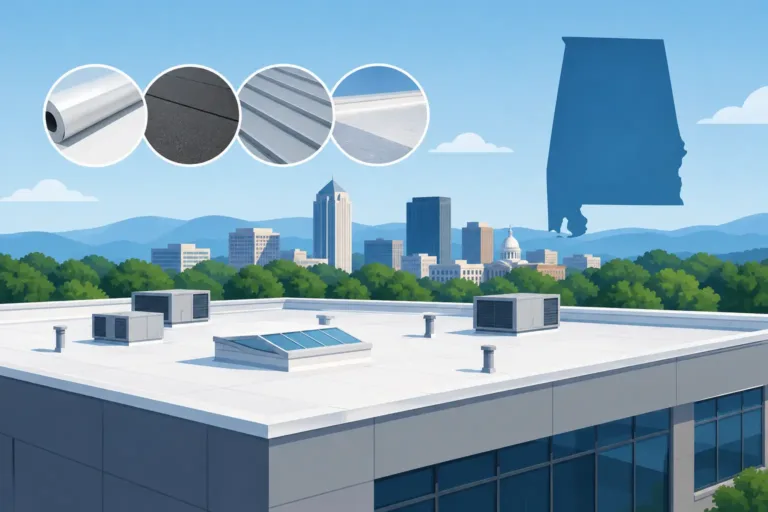
A commercial roof is more than a surface over your building. It protects inventory, equipment, tenants, employees, and daily operations. This commercial roofing systems guide is built for Alabama property owners who need a clear way to compare options, especially after wind, hail, heavy rain, or a leak that cannot wait.
The right system depends on your roof design, drainage, building use, budget, and the condition of the existing roof. There is no single material that works best for every property. A dependable contractor should inspect the roof, explain the findings in plain language, and help you make a decision based on the building’s actual needs rather than a one-size-fits-all recommendation.
Start With the Building, Not the Material
Before choosing a commercial roofing system, consider what is happening below and above the roof. A warehouse with a large low-slope roof has different needs than a restaurant with rooftop equipment, a medical office with strict interior protection needs, or a retail center with several tenant spaces.
Roof slope matters first. Low-slope and flat commercial roofs are commonly finished with single-ply membranes, built-up systems, modified bitumen, or coatings. Steeper roofs may be better candidates for metal panels or shingles, depending on the structure and appearance requirements.
Drainage is equally important in Central Alabama. Standing water can shorten the useful life of many roofs, add stress to seams, and reveal problems that were already developing. If water remains on the roof long after rainfall, installing a new membrane without addressing drainage may leave the building vulnerable to repeat issues.
A thorough inspection should also look at flashing, roof penetrations, edge metal, drains, curbs, skylights, HVAC units, and previous repairs. Leaks often begin at these transition points rather than in the open field of the roof.
Commercial Roofing Systems Guide: Your Main Options
TPO roofing
TPO, or thermoplastic polyolefin, is one of the most common choices for low-slope commercial roofs. It is typically installed in wide sheets with heat-welded seams. Those seams are a major advantage when installed correctly because they create a strong, watertight bond.
TPO is usually white or light-colored, which can reflect sunlight and reduce heat absorbed by the roof. That can be valuable during Alabama summers, particularly on large buildings with broad exposed roof areas. TPO is often a practical balance of performance and cost, but material quality and installer experience matter. Not all TPO products have the same thickness, formulation, or warranty options.
PVC roofing
PVC is another heat-welded single-ply membrane. It is known for strong resistance to chemicals, grease, and oils, making it a frequent choice for restaurants, food-service facilities, and buildings where rooftop exhaust may expose the membrane to those materials.
PVC can cost more than TPO, so it is not automatically the best fit for every property. Where chemical exposure is a real concern, however, the added investment may protect against premature deterioration. A roof evaluation should identify whether that risk exists before selecting the system.
EPDM roofing
EPDM is a synthetic rubber roofing membrane, often recognized by its black surface. It has a long history in commercial roofing and can perform well on properly designed low-slope roofs. EPDM is flexible and handles temperature changes effectively.
The trade-off is that traditional EPDM seams are generally adhered or taped rather than heat-welded. Seam quality, flashing details, and maintenance are especially important. A black EPDM roof also absorbs more heat than a white reflective membrane, although insulation, building use, and local energy priorities can affect whether that is a concern.
Metal roofing
Metal roofing is a strong option for many commercial buildings with adequate slope. Standing seam metal systems offer a clean appearance, long service life potential, and strong wind performance when designed and installed correctly. Metal can be especially appealing for offices, churches, retail buildings, agricultural structures, and properties where appearance is part of the investment.
Metal roofs have details that deserve close attention. Fasteners, panel laps, pipe boots, ridge areas, and transitions must be properly installed and maintained. Hail can also leave cosmetic dents even when the roof remains functional. After a storm, it helps to have a roofing professional document visible damage and explain whether it affects performance, appearance, or both.
Roof coatings
A commercial roof coating can extend the service life of an existing roof when the substrate is still in suitable condition. Coatings are commonly used on metal, modified bitumen, and certain single-ply roof assemblies. They can create a reflective surface and may help seal minor weathering across a roof field.
A coating is not a cure for wet insulation, failed seams, active structural problems, or widespread membrane deterioration. The roof must be cleaned, prepared, repaired, and tested before coating work begins. When someone recommends coating a roof without a close inspection, it is reasonable to ask what repairs and preparation are included.
Repair, Restoration, or Replacement?
The decision is rarely as simple as “leaking” versus “not leaking.” A localized puncture, loose flashing, failed pipe boot, or storm-damaged edge detail may be repaired without replacing the entire roof. Timely repairs can prevent water from reaching insulation, decking, ceiling systems, and electrical components.
Restoration may be appropriate when the existing roof is generally sound but needs seam work, surface repairs, or a properly specified coating system. Replacement becomes more likely when there are multiple active leaks, extensive storm damage, saturated insulation, widespread seam failure, or an aging system with repeated repair history.
A contractor should show you the evidence behind the recommendation. That may include photographs, moisture findings, membrane condition, drainage concerns, and documented storm impacts. This gives property owners a clearer basis for spending decisions and, when applicable, insurance discussions.
What Storm Damage Can Look Like on Commercial Roofs
Commercial storm damage is not always obvious from the ground. Wind may lift membrane edges, loosen flashing, disturb coping, or create openings around rooftop equipment. Hail may puncture or bruise a membrane, crack aged materials, dent metal panels, and damage skylights or vents. Heavy rain can expose clogged drains and weak seams that had not yet leaked into the building.
If your roof is damaged after a storm, document the date of loss, take photos from safe locations, and protect the interior from further water intrusion. Avoid sending untrained personnel onto a wet or damaged roof. A professional inspection can identify visible damage and conditions that may not be apparent from inside the building.
Insurance coverage depends on the policy, deductible, cause of loss, roof age, and the adjuster’s findings. No contractor can promise claim approval. What a knowledgeable roofing contractor can do is provide thorough documentation, explain the scope of damage, and help property owners understand the repair or replacement work being proposed.
Questions to Ask Before Selecting a Contractor
Commercial roofing is a significant investment, and the lowest bid is not always the lowest long-term cost. Ask whether the contractor is licensed and insured, which system manufacturer and thickness are proposed, how drainage and flashing will be handled, and what labor warranty is included.
You should also ask who will manage daily site conditions. On an occupied property, project planning matters. Clear work areas, debris control, protection for landscaping and entrances, and daily cleanup can reduce disruption for tenants, customers, and employees.
For storm-related work, ask how the contractor documents damage and communicates with your insurance carrier. Bluefin Exteriors brings roofing experience and insurance-claim knowledge to commercial property owners who want clear answers without high-pressure sales tactics.
Make Maintenance Part of the Plan
Even a new commercial roof benefits from regular attention. Semiannual inspections, along with checks after major storms, can catch loose flashing, clogged drains, punctures, and sealant issues before they become interior damage. Keep records of inspections, repairs, photos, and invoices. Those records help track roof condition over time and can be useful when evaluating a future claim or replacement.
The best next step is usually not choosing a material from a brochure. It is getting an honest roof inspection that identifies what your building needs now, what can be monitored, and what should be addressed before the next Alabama storm turns a small issue into a costly interruption.
