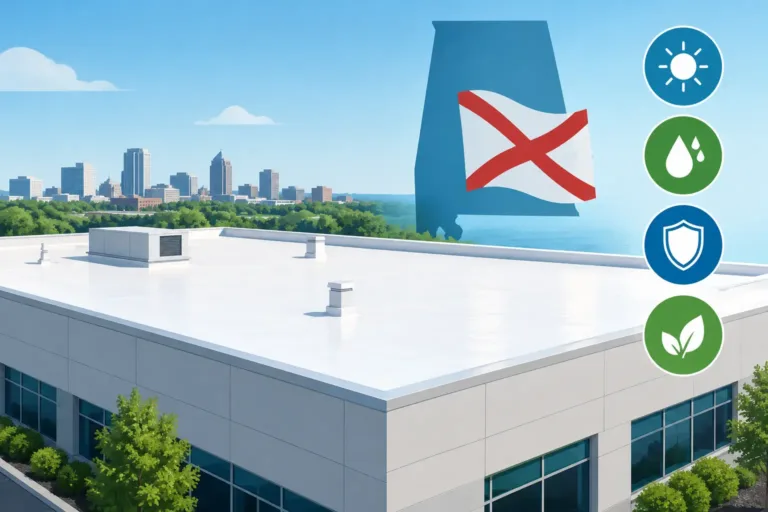
A commercial roof has to do more than keep rain out. In Alabama, it may face intense summer heat, wind-driven rain, standing water after a storm, and frequent temperature swings. Understanding pvc roofing system benefits can help property owners decide whether this single-ply membrane is the right fit before a small roof issue turns into interior damage, business disruption, or an expensive replacement.
PVC roofing is commonly used on low-slope commercial roofs, including offices, retail buildings, churches, warehouses, multifamily properties, and facilities with rooftop equipment. It is not the right answer for every building, but its welded seams and strong resistance to moisture make it a serious option for many Alabama properties.
What Is a PVC Roofing System?
PVC stands for polyvinyl chloride. A PVC roof is a flexible, single-ply membrane installed over an appropriate roof deck and insulation system. Depending on the building and existing roof conditions, it may be mechanically attached, fully adhered, or installed using another approved assembly method.
The membrane sheets are joined with hot-air welding. Rather than relying only on adhesive or tape at the seams, a trained roofing crew heats and fuses the material together. When the system is designed and installed correctly, those welded seams form a continuous layer of protection across the roof.
PVC is often white or light-colored, which can help reflect sunlight. It is also available in other colors and configurations when appearance, local requirements, or building design call for a different approach.
PVC Roofing System Benefits That Matter Locally
The strongest benefits of PVC roofing are practical ones: water management, weather performance, energy considerations, and maintenance predictability. Those advantages are especially relevant to commercial property owners who need to protect tenants, inventory, equipment, and day-to-day operations.
Welded Seams Help Defend Against Water Intrusion
Seams are one of the most important details on any low-slope roof. Rainwater naturally moves toward drains, scuppers, gutters, and low areas. If seams, flashing, penetrations, or edge details are poorly installed, water can find a path below the roofing membrane.
PVC seams are heat-welded to create a fused connection. This is a valuable advantage on roofs with long seam runs, complicated layouts, or multiple rooftop penetrations. HVAC curbs, pipes, drains, skylights, and equipment supports all require careful flashing work, and PVC can be welded around many of these details.
The material is not leak-proof simply because it is PVC. Drainage still matters, and installation quality matters just as much. A roof with clogged drains or damaged flashing can develop problems regardless of membrane type. Still, properly welded seams give a PVC system a meaningful defense against the heavy rain common in Central Alabama.
Strong Resistance to Ponding Water
Low-slope roofs are designed to drain, but water may remain in shallow areas after a major storm. Ponding water can accelerate wear on some roofing materials and expose weak points in an aging roof system.
PVC membranes are known for their ability to withstand prolonged moisture exposure. That does not mean a property owner should ignore standing water. Persistent ponding may point to blocked drainage, settlement, inadequate slope, or insulation problems beneath the membrane. Addressing the cause protects the roof structure and helps preserve the service life of the roofing system.
For buildings that have experienced repeated leaks after storms, a professional inspection should look beyond the visible membrane. Moisture can become trapped in insulation or the deck, where it may continue causing damage long after the surface appears dry.
Reflective Surfaces Can Reduce Heat Gain
Alabama summers put commercial HVAC systems under real pressure. A white PVC membrane reflects a significant amount of sunlight compared with a dark roof surface, which can reduce heat absorbed by the building.
Potential energy savings depend on several factors, including insulation levels, building use, roof color, HVAC efficiency, ceiling height, and how much of the roof is shaded. A reflective membrane is not a substitute for proper insulation or an efficient cooling system. It can, however, be a smart part of a broader plan to manage heat gain and improve indoor comfort.
This benefit is especially worth considering for large buildings with broad, exposed roof areas. Over time, reducing solar heat at the roof level may also lessen thermal stress on the roofing assembly.
Chemical and Grease Resistance for Certain Facilities
PVC roofing is frequently considered for restaurants, food-service facilities, and buildings where grease exhaust is present on the roof. Grease and certain chemicals can damage some roof membranes over time. PVC generally offers better resistance to these exposures than several other common single-ply options.
That does not eliminate the need for maintenance. Grease containment systems should be inspected, rooftop equipment should be serviced carefully, and spills should be cleaned promptly. But for a property with grease-producing exhaust or specific chemical exposure, PVC may offer a better long-term fit than a membrane selected on price alone.
Flexibility for Complex Commercial Roof Layouts
Many commercial roofs are not simple rectangles. They have curbs, transitions, parapet walls, vents, drains, pipes, and mechanical units that create dozens of potential leak points. PVC is a flexible material that can be detailed around these features when installed by an experienced commercial roofing team.
This can be particularly helpful during a replacement project where an older roof has accumulated equipment and modifications over the years. The contractor should document each penetration, inspect flashing conditions, and identify any deck or insulation repairs needed before installing a new membrane.
PVC vs. TPO and Other Commercial Roof Options
PVC and TPO are both single-ply membranes often used on low-slope commercial roofs. Both can be reflective and heat-welded at the seams. Both can be good choices when the roof design, budget, and installation details are appropriate.
PVC is often chosen when grease resistance, chemical resistance, or a long performance history with welded seams is a priority. TPO may be selected when upfront cost is the leading concern or when a building’s conditions make it a suitable system. EPDM, metal roofing, coatings, and modified bitumen may also be better options in certain situations.
A dependable recommendation starts with the roof itself, not a one-size-fits-all product pitch. The age and condition of the existing roof, deck type, drainage, insulation needs, building use, local code requirements, and future plans for rooftop equipment all affect the right decision.
What Determines Whether PVC Performs as Expected?
Even a high-quality membrane can fail early if the complete system is not properly designed or installed. Material selection is only one part of the job.
A thorough evaluation should consider whether wet insulation needs to be removed, whether the roof deck has deteriorated, how water reaches drains, and whether wind uplift requirements have been met. In storm-prone areas, fastening patterns, perimeter details, and flashing at walls and edges deserve close attention.
Roof penetrations also need to be managed carefully. When a new unit, pipe, conduit, or piece of equipment is added after the roof installation, the membrane can be damaged by careless foot traffic or improper flashing. Coordinating roofing work with HVAC and electrical contractors helps prevent avoidable repairs later.
Regular inspections remain worthwhile after installation. A commercial roof should be checked after significant storms and at planned intervals, especially around drains, seams, flashing, and rooftop equipment. Catching a puncture or loose detail early is far less disruptive than responding after water reaches the building interior.
Storm Damage, Insurance, and Roof Documentation
A PVC roof can be damaged by hail, flying debris, wind uplift, or impact from fallen limbs and equipment. Some storm damage is obvious, but other damage requires close inspection to identify. A puncture, pulled flashing, compromised seam, or displaced edge detail may not be visible from the ground.
If a storm has affected your property, document what you can safely see and schedule a professional inspection. Photos, maintenance records, prior repair information, and clear documentation of damage can help support an insurance claim. Coverage depends on the policy, cause of loss, age of the roof, exclusions, deductibles, and the insurer’s assessment.
Bluefin Exteriors helps commercial property owners understand roof conditions, document storm-related damage, and navigate the claim process without pressure. The goal is to provide clear information so you can make a sound decision about repair, restoration, or replacement.
A PVC roof can be an excellent investment when its advantages match the building’s needs and the installation is handled with care. If your commercial roof has leaks, ponding water, storm damage, or signs of age, a no-pressure inspection can identify what is happening before the next heavy rain makes the problem harder to manage.
