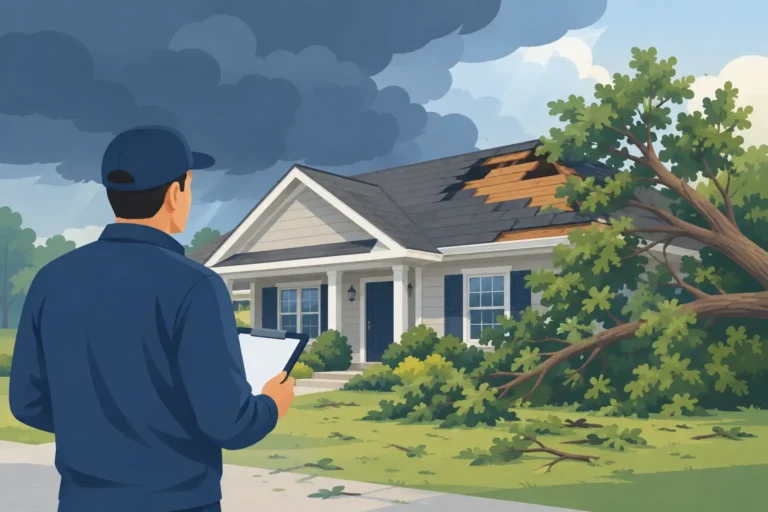
A hard Alabama storm can leave behind more than branches in the yard. Wind-driven rain, lifted shingles, hail strikes, and fallen debris can compromise a roofing system in ways that are not visible from the ground. Storm damage may look minor at first, then show up weeks later as a ceiling stain, wet insulation, mold growth, or a leak during the next heavy rain.
The goal after a storm is not to guess whether your roof is fine. It is to protect the property, document what happened, and get a clear professional assessment before a small issue becomes a larger repair. For homeowners, landlords, and commercial property managers, a calm, organized response can also make the insurance process much easier.
Start With Safety, Not a Roof Climb
The first inspection should happen from the ground. Do not climb onto a wet, steep, or debris-covered roof. Storm damage can weaken shingles, decking, gutters, and tree limbs, creating a serious fall risk even when the roof appears stable.
Walk around the property and look for obvious concerns: missing or crooked shingles, pieces of roofing material in the yard, bent flashing, damaged gutters, loose soffit or fascia, and branches resting on the roof. Check attic spaces and upper ceilings for damp insulation, water marks, active dripping, or daylight coming through the roof deck.
If water is entering the building, take reasonable steps to limit additional damage. Move belongings away from the leak, place containers under drips, and use a temporary covering only if it can be installed safely. Emergency mitigation matters because insurance policies generally expect property owners to prevent avoidable damage after a covered event.
A tree through the roof, an active major leak, or exposed electrical components calls for immediate professional help. In those situations, the priority is making the structure safe and dry enough to prevent further loss. The full repair plan can follow once the property is stabilized.
Signs of Storm Damage That Are Easy to Miss
Not every damaged roof has missing shingles. Wind can break the seal that holds shingles together, allowing them to lift slightly with each gust. Those shingles may settle back into place, but the compromised seal leaves the roof more vulnerable to future wind and rain.
Hail damage can be just as difficult to identify. On asphalt shingles, it may appear as small impact marks where protective granules have been knocked away. On metal roofing, hail may leave dents or scuffs. The severity depends on the roofing material, the hail size, roof age, slope, and the condition of the system before the storm.
Wind-driven rain can also expose weaknesses around roof penetrations. Pipe boots, vents, skylights, chimneys, wall flashing, and roof-to-wall transitions are common leak points. A roof can have plenty of remaining life in its field shingles while still needing targeted repairs around these details.
For commercial buildings, inspect more than the roof surface. Flat and low-slope systems can develop ponding water, membrane punctures, loose edge metal, open seams, or blocked drainage after severe weather. Water that remains on a commercial roof for days can accelerate deterioration and may find its way into insulation or the deck below.
Document the Damage Before Cleanup Removes the Evidence
Take clear photos and short videos from safe locations before major cleanup begins. Capture the roof from several angles, damaged gutters or siding, fallen limbs, interior staining, wet contents, and any debris that appears to have come from the roof. Include wide shots that show the property and close shots that show the specific concern.
Write down the date and approximate time of the storm, along with what you observed. If you saw hail, unusually high wind, or water entering the building, record that while the details are fresh. Keep receipts for emergency services, temporary repairs, water removal, and damaged-property cleanup.
Documentation does not guarantee claim approval, but it gives your insurer a stronger picture of the event and its effect on the property. It also gives the roofing contractor a useful starting point during the inspection.
Avoid throwing away damaged materials immediately if they could help explain what happened. A contractor may be able to identify whether a shingle was lifted by wind, struck by hail, or simply worn from age. That distinction can matter when determining the right repair and discussing the loss with an insurance carrier.
Get a Professional Roof Inspection Before Making Big Decisions
A professional inspection should be thorough, not rushed. The contractor should assess the shingles or membrane, flashing, penetrations, ridge areas, valleys, gutters, ventilation, and visible decking concerns. They should also look for damage patterns across the roof rather than focusing on one isolated spot.
This is where an honest, no-pressure inspection is valuable. Not every storm event requires full replacement. A newer roof with limited wind damage may be a good candidate for repair. A roof with widespread impact damage, multiple leaks, aging materials, or compromised flashing may need replacement to restore dependable protection.
The right answer depends on the condition of the full system. Patching a few shingles can be practical when matching materials are available and the surrounding roof remains sound. It is less practical when shingles are brittle, discontinued, or damaged across many slopes. A repair that cannot seal correctly or blend with existing materials may only delay a bigger problem.
For property owners in Tuscaloosa, Birmingham, and surrounding Alabama communities, Bluefin Exteriors LLC provides free roof inspections and can explain the findings in plain language. You should leave an inspection knowing what was found, what needs immediate attention, and whether a repair or replacement is the more sensible path.
How the Insurance Claim Process Usually Works
If an inspection identifies likely storm-related damage, contact your insurance company and begin the claim process promptly. Have your policy number, storm date, photos, and a brief description of the damage ready. Ask about your deductible and whether the carrier needs any immediate information before repairs begin.
Your insurer may send an adjuster to inspect the property. Be present if possible, or have a qualified roofing professional available to discuss the roof condition and point out documented damage. A roofing contractor does not make the coverage decision, but an experienced contractor can help ensure the adjuster has a complete view of the damage and the work required to restore the roofing system.
Review the insurance estimate carefully. It should account for the materials, labor, removal of damaged roofing, flashing or accessory work, and any code-related items that apply to the property. Estimates sometimes need clarification or supplementation when damage is discovered during repairs or when a necessary component was not included initially.
Do not assume the first number tells the entire story. At the same time, do not assume every roof will qualify for replacement. Coverage depends on your policy, deductible, documented cause of loss, age and condition of the roof, and the insurer’s assessment. A contractor with insurance-adjusting experience can help you understand the scope without making promises no one can guarantee.
Choose Repairs That Protect the Whole Roofing System
A roof is more than its visible shingles. Underlayment, flashing, ventilation, drip edge, decking, fasteners, and water-management details all affect how the system performs in Alabama heat, rain, and wind. When storm repairs are needed, make sure the plan addresses the cause of the issue rather than only the visible symptom.
For example, replacing a few wind-damaged shingles without correcting loose flashing may not stop a leak. Replacing a roof without addressing ventilation can contribute to excess attic heat and moisture. On commercial properties, repairing a membrane puncture while ignoring clogged drains or deteriorated seams can lead to recurring water problems.
Ask the contractor what materials will be used, what warranty applies to labor, how the property will be protected during construction, and how cleanup will be handled. These details matter. A quality roofing project should leave your home or business protected, your grounds clear of debris, and your roof ready for the next storm season.
Do Not Let a Small Leak Set the Timeline
Storm recovery does not have to be confusing, but waiting can make the decision more expensive. Moisture travels. What begins as a small opening near a vent or ridge can affect decking, insulation, drywall, framing, and interior finishes over time.
If you suspect storm damage, schedule an inspection while the evidence is still clear and before the next round of weather tests the roof again. A straightforward assessment, good documentation, and the right repair plan can give you something every property owner wants after a storm: confidence that the building is protected.
