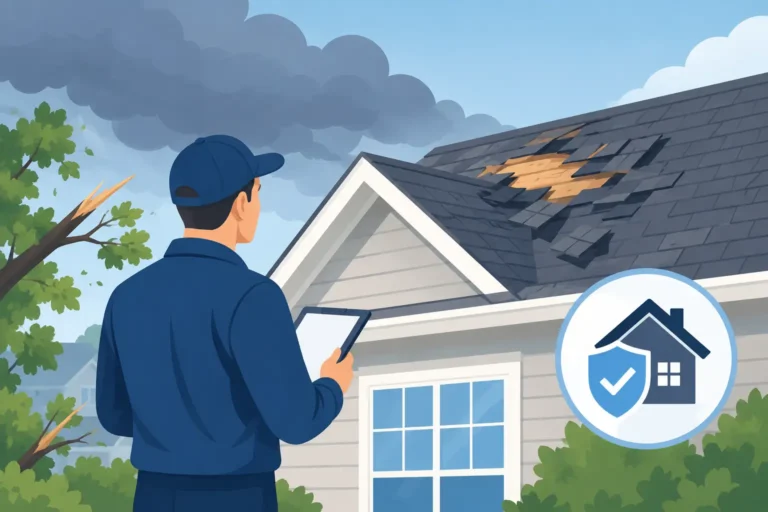
A hard Alabama storm can leave behind more than fallen limbs and scattered debris. Wind-lifted shingles, hail bruising, damaged flashing, and roof leaks may not always be obvious from the ground. Knowing how to file a roof claim promptly and correctly can protect your property, preserve your options with the insurance company, and help you avoid paying for storm-related damage out of pocket.
The goal is not to rush into a replacement before you have answers. It is to document the condition of the roof, prevent additional damage, understand what your policy requires, and get a qualified roofing professional involved early. A clear process makes a stressful situation far more manageable.
Start With Safety and Prevent Further Damage
Do not climb onto a roof after a storm. Wet shingles, damaged decking, loose branches, and downed power lines can turn a simple inspection into a serious safety risk. Walk around the property from the ground, looking for visible signs such as missing shingles, dented gutters, displaced metal, pieces of roofing material in the yard, or water entering the attic or ceiling.
If water is coming into the building, take reasonable steps to limit additional damage. Move belongings away from the leak, place containers under active drips, and use a tarp or other temporary protection only when it can be installed safely by a qualified professional. Most insurance policies require property owners to mitigate further loss. That does not mean making permanent repairs before the adjuster sees the damage. It means taking sensible action to keep a small problem from becoming a larger one.
Keep receipts for emergency services, temporary repairs, and materials. Depending on your policy and the cause of damage, those costs may be part of the claim.
Get a Professional Roof Inspection Before You File
Not every roof that looks weathered has insurance-covered storm damage. Likewise, a roof can have substantial hail or wind damage that is difficult for an untrained eye to identify. A professional inspection helps separate age-related wear from a sudden, covered event.
During an inspection, a roofer should assess shingles or panels, flashing, vents, valleys, ridge caps, gutters, skylights, and the areas where water commonly enters. On commercial roofs, the inspection may include seams, drains, penetrations, membrane condition, and rooftop equipment connections.
Bluefin Exteriors provides honest, no-pressure roof inspections for property owners in Tuscaloosa, Birmingham, and nearby Alabama communities. The purpose is simple: give you a clear explanation of what was found and whether filing an insurance claim is worth considering.
An inspection does not guarantee claim approval. Your insurer makes the coverage decision based on the policy, date of loss, deductible, exclusions, and its own findings. But thorough documentation from a knowledgeable contractor can give you a stronger, more organized starting point.
Document the Damage and the Storm Event
Good documentation gives your claim a timeline. Start as soon as it is safe to do so, especially if your area experienced hail, high winds, heavy rain, or a named storm.
Take clear, dated photos and video from the ground. Capture roof damage where visible, as well as damaged gutters, screens, siding, fencing, windows, outdoor furniture, and interior ceiling stains. Wide photos establish the location, while close-up photos show detail. If water has entered the property, photograph the affected rooms before cleanup begins when possible.
Also gather supporting records. These can include your inspection report, prior roof repair invoices, photos of the roof before the storm, emergency mitigation receipts, and notes showing when you first noticed the damage. Save communications with your insurance company, including claim numbers, adjuster contact information, and appointment dates.
Storm reports can help establish that severe weather occurred near your property, but they do not replace proof of actual roof damage. The strongest file connects the weather event to visible, documented damage at your specific home or building.
How to File a Roof Claim With Your Insurer
Once an inspection indicates likely storm damage, contact your insurance company or agent to open a claim. Many carriers allow claims by phone, online portal, or mobile app. Be prepared to provide your policy number, property address, approximate date of loss, a brief description of the damage, and information about any temporary repairs already completed.
Be accurate, but do not guess about damage you cannot confirm. It is enough to report that a storm occurred and that you have observed conditions such as missing shingles, hail impacts, or interior water staining. Your contractor and the insurance adjuster can assess the full scope.
After opening the claim, write down the claim number immediately. Ask what documentation the insurer needs, whether an adjuster inspection will be scheduled, and if there are time limits for submitting estimates or completing repairs. Claim deadlines vary by policy, so waiting months after a storm can create unnecessary complications.
A roofing contractor can help you organize photos, inspection findings, and repair estimates. However, be cautious of anyone who promises approval, tells you to avoid your insurer, or offers to cover your deductible. Those are red flags. A dependable contractor should explain the process clearly, respect the insurer’s role, and provide factual documentation of the roof’s condition.
Prepare for the Adjuster Inspection
The adjuster inspection is an important part of the process. The insurance adjuster evaluates whether the reported damage is covered and prepares an estimate based on the policy. If possible, have your roofing contractor available to meet the adjuster. This allows the contractor to point out documented storm-related conditions and answer roofing questions on site.
Before the appointment, make sure the adjuster can access the property. Move vehicles if needed, unlock gates, secure pets, and identify interior areas with water damage. Bring your photos, inspection report, and receipts, but do not feel pressured to argue technical points. A professional roofing representative can help keep the conversation focused on observable damage and necessary repairs.
Sometimes the initial insurance estimate does not include every item needed to restore the roof properly. Differences may involve flashing, ventilation components, code-required upgrades, steep or high-access charges, damaged gutters, or materials needed to match the existing roofing system. If legitimate work was missed, your contractor can prepare documentation for a supplement request.
A supplement is not a dispute for the sake of getting a larger check. It is a request for the insurer to review additional necessary, supportable costs. The details matter, which is why accurate measurements, photos, material information, and local code considerations are valuable.
Understand Your Deductible and Settlement
Your deductible is the portion of a covered claim you are responsible for paying. It is not a fee that disappears because a contractor is involved. The deductible may be a fixed dollar amount or a percentage of your insured value, depending on the policy. Review it before selecting materials or signing a construction agreement.
You may also see terms such as actual cash value and replacement cost value. Actual cash value generally accounts for depreciation, while replacement cost coverage may pay additional recoverable depreciation after the work is completed and required documentation is submitted. Policies differ, so read your claim paperwork and ask your insurer to explain how your settlement is structured.
Do not assume every roof claim results in a full replacement. The outcome depends on the extent and type of covered damage, local code requirements, matching considerations, policy language, and repairability. In some cases, a targeted repair is appropriate. In others, a full roofing system replacement is the safest and most practical solution.
Choose the Contractor Before Work Begins
Once your claim is approved, choose a contractor based on more than the estimate total. Ask whether the company is licensed and insured, what materials it recommends, how it protects landscaping and property during construction, and what labor warranty it provides. You should also receive a written scope of work that explains what will be repaired or replaced.
For a roof replacement, the details beyond the shingles matter. Proper underlayment, flashing, ventilation, pipe boots, edge metal, and clean installation practices all affect how the roof performs through future Alabama weather. Commercial property owners should also confirm that the contractor has experience with the appropriate system, whether that is TPO, PVC, EPDM, metal, or a roof coating.
Keep all final invoices, proof of payment, warranty information, and completion photos. If your insurer holds back recoverable depreciation, these documents may be needed to request the remaining payment.
Storm damage is disruptive, but the claim process does not have to be confusing. Start with a careful inspection, document what happened, communicate clearly with your insurer, and work with a contractor who treats your property and your claim with the attention they deserve. Taking the right first step after the storm can make the rest of the repair process feel much more manageable.
