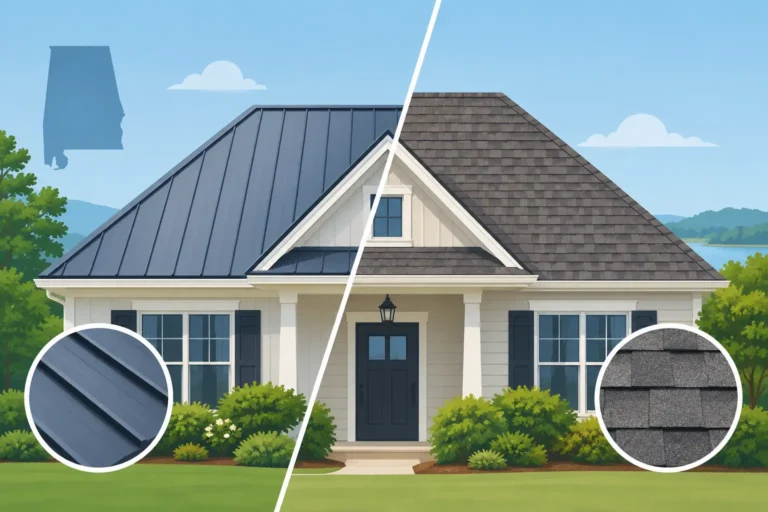
A roof replacement is not a decision most Alabama property owners make on a quiet afternoon. It usually follows a storm, a leak, missing shingles, or an insurance claim that suddenly makes the choice urgent. When weighing a metal roof versus shingles, the right answer comes down to more than appearance. Your budget, roof design, storm exposure, long-term plans, and insurance settlement all matter.
Both materials can protect a home well when they are properly installed. The better choice is the one that fits your property and gives you clear value without creating unnecessary strain on your claim or budget.
Metal Roof Versus Shingles: The Main Difference
Asphalt shingles remain the most common roofing material in Tuscaloosa, Birmingham, and surrounding communities. They are familiar, versatile, available in many colors, and generally cost less upfront. A quality architectural shingle roof can provide dependable protection and a finished look that suits most homes.
Metal roofing costs more initially, but it is built for a longer service life. It can also offer strong wind performance, shed rain quickly, and reflect a portion of the sun’s heat. Metal is not one single product, though. A standing-seam metal roof, with concealed fasteners and raised seams, is a different investment from an exposed-fastener panel system. The material, coating, panel gauge, roof slope, and installation details all affect performance and price.
For many homeowners, shingles are the practical replacement choice after storm damage. For others, especially those planning to stay in the home for decades, metal can make sense as a long-term investment. Neither option is automatically best simply because it costs more.
Upfront Cost and Long-Term Value
Shingles usually win on initial cost. They require less material expense and less specialized labor than many metal systems. That matters when a roof is being replaced after a covered loss and the insurance estimate is based on replacing like kind and quality materials.
A metal roof can cost significantly more than an architectural shingle roof. The exact difference depends on the roof’s size, pitch, complexity, tear-off requirements, flashing, decking repairs, and the type of metal selected. Homes with valleys, dormers, skylights, chimneys, or steep slopes require more detail work regardless of material.
The long-term calculation is different. Metal roofing can last much longer than asphalt shingles when installed and maintained correctly. It may reduce the likelihood of another full replacement during your ownership period. Still, a longer lifespan does not automatically mean lower overall cost for every household. If you expect to move within several years, the additional upfront investment may not deliver the same practical return as it would for a long-term owner.
A well-installed architectural shingle roof can also be an excellent value. It provides reliable protection at a lower starting price and is easier to repair in many situations. The key is choosing a complete roofing system, not just selecting a shingle color. Underlayment, flashing, ventilation, pipe boots, starter material, and workmanship all affect the life of the roof.
Storm Performance in Alabama
Alabama roofs face intense sun, heavy rain, high winds, hail, falling limbs, and sudden temperature changes. No roof is completely storm-proof. The goal is to choose a system that is appropriate for the property and installed to resist the weather conditions it is likely to see.
Metal roofing is known for wind resistance and its ability to shed water. A properly engineered and installed metal system can perform very well during severe weather. It is also noncombustible, which may be a consideration for certain properties. However, metal can dent from hail or falling debris, particularly thinner panels. A dented panel may still keep water out, but cosmetic damage can be frustrating and may affect how an insurance carrier evaluates the claim.
Architectural shingles can also offer strong wind ratings when the correct materials and installation methods are used. They are not immune to wind uplift or hail impact, but damaged shingles are often more straightforward to identify and replace. Color matching can become difficult on an older roof, especially when sun exposure has faded the existing shingles.
The roof deck and the details around penetrations matter just as much as the surface material. Water often enters around flashing, valleys, vents, chimneys, and improperly sealed fasteners. A premium roof covering cannot compensate for poor installation.
Energy Efficiency and Comfort
Metal roofs can reflect solar heat, especially in lighter colors or reflective finishes. That can help reduce heat gain in the attic and may improve cooling efficiency during Alabama summers. The result varies by roof color, insulation, ventilation, attic conditions, and the rest of the home’s construction.
Shingles absorb more heat than reflective metal, particularly in darker colors. Yet a shingle roof paired with proper attic ventilation and insulation can still perform well. If your upstairs rooms are uncomfortably hot, the roofing material may be only part of the issue. Blocked soffit vents, inadequate ridge ventilation, poor insulation, duct leaks, and air gaps can all contribute.
Do not choose metal solely because you expect an immediate dramatic reduction in utility bills. Energy savings can be a meaningful benefit, but they should be considered alongside roof cost, home efficiency, and how long you intend to own the property.
Appearance, Noise, and Maintenance
Today’s metal roofs are available in more than the classic barn-style panel look. Standing-seam panels offer clean vertical lines, while some metal products are designed to resemble shingles, slate, or tile. Metal can be a strong fit for modern homes, farmhouses, cabins, and properties where a distinctive architectural look is part of the goal.
Shingles offer their own design flexibility. Architectural shingles create texture and depth, with color blends that work well across traditional Alabama home styles. They are a familiar choice that can complement many neighborhoods without drawing unwanted attention.
The idea that metal roofs are always loud in the rain is overstated. When installed over proper decking and attic insulation, indoor noise is typically not a major concern. Metal roofs do need periodic inspection for loose fasteners, sealant condition, flashing issues, and debris buildup. Shingle roofs need inspection for lifted, cracked, missing, or granule-worn shingles, particularly after a major storm.
How Insurance Affects Your Roofing Choice
Insurance coverage can influence the decision more than homeowners expect. If a storm damages your existing shingle roof, the carrier generally pays according to the policy terms and the covered damage. That does not necessarily mean the policy will pay the full cost to upgrade from shingles to metal.
In many cases, a property owner can apply insurance funds toward the covered replacement and pay the difference for a metal upgrade. The available amount depends on the policy, deductible, depreciation, local code requirements, scope of damage, and the carrier’s approved estimate. Replacement cost and actual cash value policies can produce very different out-of-pocket results.
Documentation matters. Clear photos, measurements, storm-related damage findings, and a detailed scope help establish what the roof needs. Avoid signing with anyone who promises a guaranteed insurance outcome before the roof and policy have been reviewed. A dependable contractor should explain the findings plainly, help document the damage, and let you make the final material decision without pressure.
Which Roof Is Right for Your Property?
Shingles are often the better choice when you need a cost-conscious replacement, want a traditional appearance, or are working within an insurance-approved budget. They are also a sensible fit for owners who may sell in the near future and want a quality new roof without a substantial upgrade cost.
Metal may be the better fit if you expect to remain in the property long term, prefer its appearance, value its potential lifespan, or want a system with strong rain-shedding and wind-performance characteristics. It can be especially appealing for homes with simpler roof lines, where panel installation is more efficient and the finished design can stand out.
Before choosing either one, schedule an honest inspection. A roof may need targeted repair rather than replacement, or it may have storm damage that should be documented before material decisions are made. Bluefin Exteriors helps Alabama property owners understand the roof condition, the repair or replacement options, and the claim process in clear terms.
The best roof is not the one that wins a generic comparison. It is the one installed correctly for your home, your budget, and the weather it has to withstand. Start with a careful inspection, ask direct questions about the full roofing system, and choose a contractor who treats your property and your insurance claim with the care they deserve.
