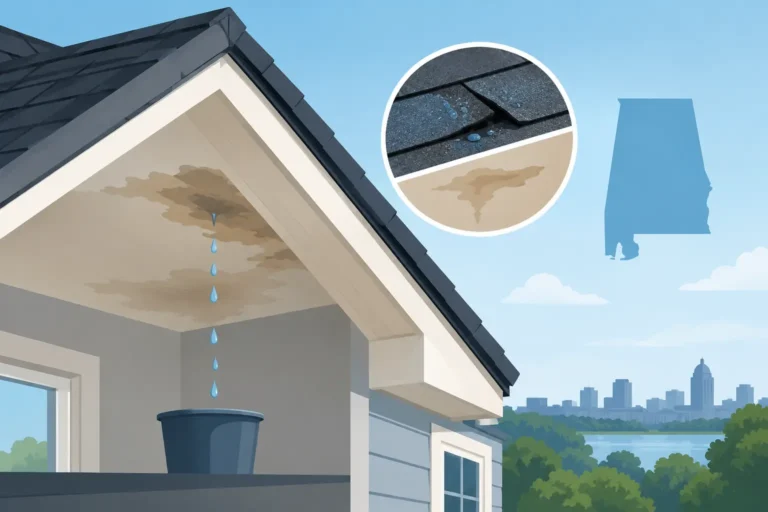
A roof leak rarely begins with water pouring through the ceiling. More often, it starts as a small stain near a light fixture, a faint musty smell in the attic, or a shingle that lifted during the last Alabama storm. Can roofs leak even when they look fine from the ground? Absolutely. And waiting for obvious interior damage can turn a manageable repair into a larger restoration project.
For homeowners and commercial property owners in Tuscaloosa, Birmingham, and nearby communities, the best response is early action: document what you see, limit further water intrusion if it is safe to do so, and schedule a professional roof inspection. A clear assessment gives you the information needed to protect the property and decide whether an insurance claim may apply.
Can Roofs Leak Without Missing Shingles?
Yes. Missing shingles are an easy-to-spot cause of leaks, but they are far from the only one. A roof is a system of shingles or panels, underlayment, flashing, vents, sealants, drainage components, and penetrations. Water only needs one weak point to reach the decking and travel into the building.
Storm damage is a common example. Wind can break the seal between shingles without tearing them completely off. Hail may bruise or fracture shingle surfaces in ways that are difficult to see from the yard. Driven rain can then work beneath compromised materials, especially around roof edges, ridges, vents, chimneys, skylights, and pipe boots.
Age can also contribute. Asphalt shingles gradually lose protective granules, sealants dry out, and flashing can loosen over time. Metal and commercial roofing systems have different failure points, such as failed fasteners, seams, penetrations, or drainage issues. The material matters, but the basic concern is the same: water has found a path where it does not belong.
Signs a Roof May Be Leaking
The leak itself may not appear directly below the damaged area. Water can run along roof decking, rafters, insulation, wiring paths, or wall framing before it becomes visible. That is why a ceiling stain is a warning sign, not a precise map of the problem.
Watch for discoloration on ceilings or upper walls, peeling paint, bubbling drywall, damp insulation, mold-like odors, or dripping around vents and light fixtures. In an attic, look for darkened wood, wet insulation, rusted nails, or daylight showing through areas that should be sealed.
Outside, signs can include cracked, creased, curled, or displaced shingles; exposed nail heads; loose flashing; damaged vent boots; granules collecting heavily in gutters; and debris from shingles after a storm. Commercial property owners should also pay attention to ponding water, open seams, membrane punctures, and clogged drains or scuppers.
Not every stain means the roof is the source. Condensation, plumbing leaks, HVAC issues, and siding or window failures can produce similar symptoms. That is one reason a professional inspection matters. The goal is to identify the actual source before spending money on the wrong repair.
The Most Common Causes of Roof Leaks in Alabama
Alabama roofs handle intense sun, heavy rain, humidity, high winds, and severe thunderstorms. Those conditions can expose weaknesses quickly, particularly on older roofs or roofs that have already experienced storm activity.
Wind damage is often underestimated. Wind can lift shingle edges, break adhesive seals, and create small openings that are not visible from the ground. The roof may appear intact until the next hard rain sends water underneath the shingles.
Hail can cause damage that looks minor but affects the life of the roofing material. A hail strike may dislodge granules on an asphalt shingle or create impacts in metal panels and commercial membranes. Whether that damage has caused an active leak depends on the roof’s condition, the severity of the storm, and where the impacts occurred.
Flashing failures are another frequent issue. Flashing is the material installed where the roof meets a vertical surface or changes direction, including chimneys, walls, valleys, skylights, and vents. When flashing is bent, corroded, improperly installed, or no longer sealed, water can enter at one of the roof’s most vulnerable locations.
Clogged gutters do not always cause a roof leak on their own, but they can make a bad situation worse. Water that backs up at the roof edge can overwhelm aging materials and contribute to fascia, soffit, and decking damage. Keeping drainage clear is simple maintenance that helps protect the entire roof system.
What to Do When You Suspect a Leak
Start by protecting people and property. If water is near electrical fixtures, avoid touching the area and contact a qualified professional as needed. Move furniture, electronics, and valuables away from the affected space. If a ceiling is bulging with trapped water, do not ignore it – the weight can create a sudden collapse risk.
Take photos and short videos of visible staining, damaged materials, water entry, and any storm debris around the property. Include wide shots for context and close-ups for detail. If a storm recently passed through, note the date and the conditions you observed. Good documentation can be useful if an insurance claim becomes necessary.
Avoid climbing onto a wet, steep, or visibly damaged roof. A tarp may help reduce additional water entry in some situations, but temporary protection should be handled safely and should not delay a thorough inspection. Covering symptoms without finding the source can allow hidden moisture damage to continue.
A qualified roofing contractor can inspect the roof, attic, flashing, ventilation components, and likely entry points. The inspection should explain what was found, whether the issue calls for repair or replacement, and what evidence supports that recommendation. Honest answers matter, especially when the condition may involve insurance coverage.
Repair or Replacement: It Depends on the Damage
A small, isolated leak does not automatically mean a full roof replacement. A failed pipe boot, damaged section of flashing, or limited area of wind damage can often be repaired when the surrounding roof is in good condition. Timely repairs may prevent moisture from reaching the decking and interior structure.
Replacement becomes more likely when damage is widespread, materials are near the end of their service life, repeated repairs have not solved the issue, or storm damage affects multiple slopes. On commercial properties, the decision may depend on membrane condition, seam integrity, insulation moisture, drainage performance, and the extent of the affected area.
Insurance may cover qualifying sudden storm damage, but policies differ and normal wear is generally treated differently from a covered event. A roofing professional with claim experience can help document roof conditions and explain the repair scope clearly. The final coverage decision belongs to the insurance carrier, but accurate evidence gives property owners a stronger foundation for the process.
Why Fast Inspections Protect Your Property
A roof leak can affect more than the ceiling beneath it. Moisture may soften decking, damage insulation, create conditions for microbial growth, stain walls, and compromise finishes in rooms far from the original entry point. In commercial buildings, water intrusion can also disrupt tenants, inventory, equipment, and daily operations.
The sooner the source is identified, the more options you typically have. A no-pressure inspection provides clarity without forcing a decision before you understand the condition of the roof. It also creates a record of what was present after a storm, which can be valuable when damage is not immediately visible.
Bluefin Exteriors helps Alabama property owners inspect suspected roof leaks, identify storm-related damage, and navigate the documentation needed for insurance claims. The focus is straightforward: explain the condition, recommend the appropriate solution, and keep the process as clear and low-stress as possible.
If you notice a new stain, a musty attic, loose roofing material, or signs of storm damage, do not wait for the next downpour to provide the answer. A professional inspection can help protect your home or business while the problem is still within reach.
