
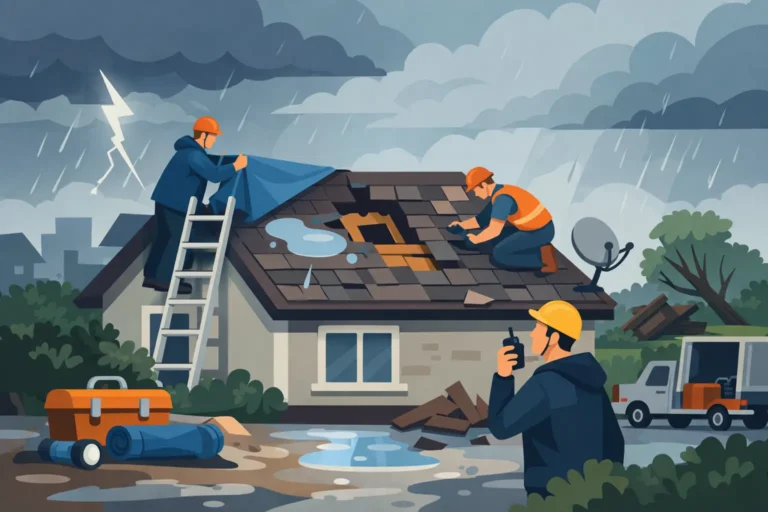
A storm can leave behind more than a few missing shingles. Water may be entering through a lifted flashing edge, a fallen limb may have punctured the decking, or wind damage may have weakened areas that are not visible from the ground. The right emergency roof repair steps protect your property, preserve useful evidence, and help you make calm decisions when the situation feels urgent.
For homeowners and commercial property owners in Tuscaloosa, Birmingham, and nearby Alabama communities, the first priority is safety. The second is stopping additional damage without making the roof problem worse. A professional inspection can determine whether your roof needs a targeted repair, temporary protection, or a full replacement.
Emergency Roof Repair Steps to Take First
1. Keep people away from the damaged area
Do not climb onto a storm-damaged roof, especially during rain, high winds, lightning, or after dark. Wet shingles are slippery, loose decking can fail without warning, and downed utility lines may be difficult to spot. If a tree has fallen on the structure or you see sagging ceilings, active electrical hazards, or signs the building may be unstable, leave the area and contact emergency services as needed.
Inside, move people, pets, furniture, electronics, and valuables away from leaks or bulging ceilings. A ceiling that is holding water can collapse suddenly. If it is safe to do so, place buckets beneath drips and use towels to limit water spread across flooring. For a visibly sagging ceiling, do not stand beneath it or attempt a repair yourself.
2. Document damage from a safe position
Take clear photos and video from the ground, inside the attic if it is safe and dry, and throughout the affected rooms. Capture missing shingles, bent gutters, displaced flashing, punctures, fallen branches, wet insulation, ceiling stains, and damaged personal property.
Do this before cleanup when possible, but do not delay necessary steps to protect the building. Your photos should show both close details and wider views that establish where the damage occurred. Note the date and approximate time of the storm, when you first noticed the issue, and any steps you took to prevent further water intrusion.
This documentation can be useful when reporting damage to your insurance carrier. It also gives a roofing professional a clearer starting point if weather or safety conditions prevent an immediate roof walk.
3. Limit water intrusion without creating a larger problem
Emergency mitigation is about reducing additional damage, not completing a permanent repair with whatever materials are in the garage. If water is entering through a small, accessible opening and conditions are safe, a temporary cover may help. Avoid nailing tarps directly through shingles whenever possible, since unnecessary fasteners can create new leak points.
If you cannot safely secure temporary protection from the ground or a stable ladder position, wait for a qualified roofing team. A tarp installed poorly can tear loose in the next gust, trap water, or cause more damage to shingles and flashing. It is also not a substitute for identifying the source of the leak.
For commercial buildings, notify tenants or on-site staff, protect equipment below the leak, and block off wet floor areas to reduce slip hazards. Flat and low-slope roofs can hold water in ways that are not obvious from below, so prompt professional evaluation matters.
4. Call your insurer and arrange a roof inspection
Report the loss to your insurance company promptly and ask what information they need to open a claim. Keep the claim number, adjuster contact information, and a record of each conversation. Your policy may require reasonable emergency measures to prevent further damage, but coverage depends on the cause of loss, your policy terms, deductibles, and the condition of the roof before the storm.
A free, no-pressure inspection from a qualified local roofer can help separate storm-related damage from ordinary wear. Bluefin Exteriors can inspect the roofing system, explain what was found in plain language, and help property owners organize repair information for the claims process.
What Not to Do After Roof Damage
The hours after a storm can bring plenty of bad advice. Avoid signing a contract based only on a quick driveway conversation or allowing anyone to begin major work without a written scope. A reputable contractor should be licensed and insured, able to explain the condition of the roof, and willing to answer questions without pressure.
Do not assume a roof is fine because you do not see water on the ceiling. Wind can loosen shingles, break seals, crease tabs, or damage flashing without creating an immediate interior leak. Alabama heat and the next hard rain can expose damage that was not obvious on the day of the storm.
It is also wise not to throw away damaged materials or receipts for emergency mitigation. Keep samples only if they can be collected safely, and save invoices for reasonable temporary protection or water cleanup. Your insurer may ask for these records during claim review.
Finally, do not treat an insurance estimate as a complete construction plan without having the roof inspected. An initial estimate may need adjustment if concealed damage, code-required work, or additional affected components are found. The goal is not to inflate a claim. It is to make sure the documented scope accurately reflects storm damage and the work required to restore the roof system.
How a Professional Emergency Inspection Works
A thorough inspection is more than a glance at the shingles. The roofer checks the roof covering, ridges, valleys, penetrations, flashing, vents, gutters, and roof-to-wall transitions. Where appropriate, they also look for evidence of water entry in the attic or upper interior areas.
On an asphalt shingle roof, the inspector may look for missing, creased, lifted, or bruised shingles and exposed nail heads. On metal roofing, attention often turns to fasteners, seams, panels, flashing, and penetrations. For commercial TPO, PVC, EPDM, metal, or coated roofing systems, seams, drains, curbs, ponding areas, and membrane punctures can be especially important.
The repair decision depends on the extent and location of damage. A few damaged shingles in an otherwise sound roof may call for a focused repair. Widespread wind damage, repeated leaks, extensive hail impact, or a roof nearing the end of its service life may make replacement the more practical option. A dependable contractor should explain that trade-off clearly rather than pushing one answer for every property.
Prepare for the Adjuster Visit
If your insurer schedules an adjuster inspection, have your photos, claim number, temporary repair receipts, and notes ready. Point out the areas where you observed leaks or visible exterior damage. If a roofing contractor has completed an inspection, ask whether they can provide findings or be available to discuss the roof condition.
Stay factual. Describe what happened, when it happened, and what you observed. Avoid guessing about damage you cannot verify. Good documentation and a clear professional assessment are usually more helpful than trying to interpret policy language or roofing details on your own.
If the claim is approved, review the scope carefully before work begins. Confirm the materials, affected roof sections, flashing work, ventilation considerations, cleanup expectations, and any items that remain your responsibility, including the deductible. If the claim is denied or the scope appears incomplete, ask questions and provide the documentation available to you. There are times when additional inspection evidence may support a request for reconsideration.
Protect the Property Until Permanent Repairs Begin
After temporary protection is in place, check the affected interior areas after each rain. Watch for new staining, musty odors, damp insulation, peeling paint, or changes in the size of water spots. These signs should be reported promptly because trapped moisture can damage framing, insulation, drywall, and belongings over time.
Keep the roof area clear of debris when it can be done safely from the ground, but leave branch removal from the roof to trained professionals. Avoid parking vehicles or placing equipment beneath compromised gutters, overhangs, or tree limbs.
Storm damage is stressful because the next step often feels uncertain. Start with safety, document what you can, prevent further damage where it is safe, and get a professional inspection before making a major decision. A clear assessment and honest guidance can turn an urgent roof problem into a manageable path forward.
