
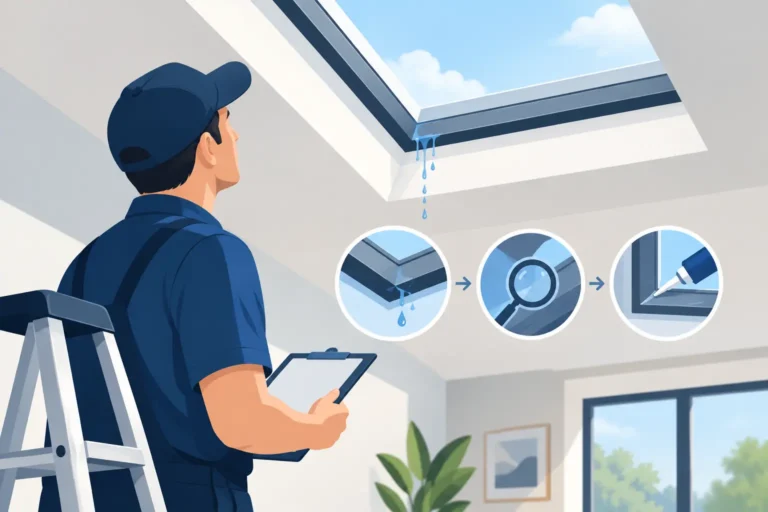
A drip from a skylight can stain a ceiling, damage insulation, and make a perfectly good room feel unusable. But effective skylight leak repair is not about applying caulk around the frame and hoping for the best. The visible water is often traveling from a failed flashing detail, worn roofing material, or storm damage higher on the roof.
For homeowners and property owners in Tuscaloosa, Birmingham, and nearby Alabama communities, the right first step is a professional roof inspection. Heavy rain, wind-driven storms, falling limbs, and years of intense sun can all expose weak points around a skylight. Finding the actual entry point protects more than the glass opening. It protects the roofing system around it.
Why Skylights Leak When the Glass Is Not the Problem
Many people assume a skylight leak means the skylight itself has failed. Sometimes that is true, especially with older units, cracked domes, damaged glazing, or deteriorated seals. More often, however, the issue is where the skylight meets the roof.
A properly installed skylight depends on several layers working together: the unit, its flashing kit, underlayment, surrounding shingles or roofing membrane, and the roof deck beneath them. If one layer is compromised, water can work behind the visible materials and show up inside the building far from the original opening.
Common causes include aging or improperly installed flashing, missing ice-and-water protection around the opening, cracked or lifted shingles, exposed fasteners, and sealant that has dried out over time. On low-slope commercial roofs, ponding water and failed membrane details can also allow moisture around curbs and skylight penetrations.
Storm damage deserves special attention. A hard wind event may loosen shingles or metal panels near the skylight without creating an immediate leak. Then the next heavy rain reveals the problem. Hail can bruise shingles, fracture older skylight lenses, or weaken seals that were already nearing the end of their service life.
Signs You Need Skylight Leak Repair
A ceiling drip is an obvious warning, but it is not the only one. Brown rings around the skylight well, bubbling paint, soft drywall, a musty smell, or damp insulation in the attic can all point to a moisture problem. If condensation collects on the inside glass, that may be a ventilation or humidity issue rather than a roof leak, though a contractor should evaluate it before assuming the cause.
Pay attention to when the problem happens. Water that appears only during wind-driven rain often points to flashing or roof-covering damage. A leak that occurs after every rain may indicate a more direct opening near the skylight. Moisture that develops during cold mornings without rain may be interior condensation.
This distinction matters because each issue requires a different solution. Replacing a skylight will not fix water entering through damaged shingles above it. Likewise, patching roof shingles will not solve a cracked skylight frame or failed glazing seal.
What a Proper Skylight Leak Inspection Should Cover
A reliable inspection should look beyond the stain on the ceiling. The goal is to trace the water path from the roof surface to the interior and determine whether repair is appropriate or whether replacement offers better long-term value.
Roof and flashing conditions
The exterior inspection should include the skylight flashing, roofing materials around the opening, exposed nails or fasteners, sealant condition, and signs of lifted or damaged shingles. A contractor should also check the roof slope and drainage pattern. Water moving slowly or collecting above a skylight can reveal a larger roof issue.
The skylight unit and curb
The skylight frame, glass or acrylic lens, seals, and mounting components need close review. On curb-mounted skylights, the curb itself must be sound and properly integrated with the roof system. Wood rot around the opening, cracked frames, or failed factory seals can make repair less dependable, particularly on older units.
Interior and attic evidence
An attic inspection can reveal wet decking, stained rafters, mold growth, or insulation damage that is not visible from the room below. This helps identify whether water is entering at the skylight, traveling along framing, or coming from another damaged area of the roof.
A good contractor explains what was found in clear terms. You should know whether the recommended work is a targeted repair, a skylight replacement, or part of a broader roof restoration plan. No-pressure guidance is especially valuable when the visible symptom is small but the underlying issue may not be.
Repair or Replacement: Which Makes Sense?
Skylight leak repair is often the right choice when the skylight unit is in good condition and the failure is limited to flashing, surrounding shingles, a minor seal issue, or isolated storm damage. A focused repair can restore the water-shedding layers without replacing more material than necessary.
Replacement may be the smarter investment when the skylight is old, the lens is cracked, the frame has deteriorated, or the unit has leaked repeatedly. It is also worth considering during a full roof replacement. Reinstalling an aging skylight into a new roofing system can create an avoidable weak point and may cost more later if it fails soon after the roof work is complete.
The decision depends on the age of the skylight, the condition of the roof, and the type of roofing system. For example, a relatively new skylight with damaged flashing after a storm may be repairable. A 20-year-old unit surrounded by worn shingles may be better replaced as part of a larger project.
Avoid relying on surface caulk as a permanent answer. Sealant has a role in certain roof details, but it should not substitute for correctly installed flashing, underlayment, and roofing materials. Quick patches can redirect water temporarily while allowing hidden damage to continue.
Storm Damage, Documentation, and Insurance Claims
When a skylight leak follows a storm, documentation can be helpful. Take photos of ceiling stains, active dripping, damaged shingles, debris, and any visible skylight damage before emergency measures are taken. Keep records of the date the damage was discovered and the weather event that may have caused it.
Insurance coverage depends on your policy, the source of the damage, and the adjuster’s findings. Sudden storm-related damage may be handled differently from long-term wear, deferred maintenance, or an aging seal failure. That is why an inspection that clearly separates storm damage from ordinary deterioration matters.
Bluefin Exteriors LLC can inspect the roof, document qualifying damage, and help property owners understand the claim process without adding pressure to an already stressful situation. The objective is straightforward: identify the work your roof needs and provide the information required to make an informed decision.
If water is actively entering the building, protect the interior first. Move furniture, place containers under drips, and contact a qualified roofing contractor promptly. Do not climb onto a wet roof or attempt to remove skylight components yourself. The risk of a fall, broken glass, or additional roof damage is not worth it.
Preventing the Next Skylight Leak
A skylight does not have to be a recurring maintenance concern. The best protection is periodic roof inspection, especially after severe weather and as the roof approaches the later stages of its expected service life. Keep nearby gutters and valleys clear so water can drain as intended, and trim branches that can scrape roofing materials or strike the skylight during high winds.
It also helps to address small roof repairs promptly. A missing shingle, loose metal panel, or cracked pipe boot may not be directly connected to the skylight, but moisture can travel across the deck and appear at the skylight opening. What looks like one localized leak can sometimes be evidence of a wider roofing issue.
For commercial properties, scheduled maintenance is particularly useful around rooftop penetrations. Skylights, curbs, HVAC equipment, vents, and drains all need to work within a watertight roofing system. Small membrane or flashing failures are far less disruptive to repair before insulation and interior finishes are affected.
Choose a Contractor Who Looks at the Whole Roof
The right repair begins with an honest diagnosis, not a rushed patch. Look for a licensed and insured contractor that can evaluate both the skylight and the roofing system around it, explain the findings plainly, and provide a repair recommendation that fits the condition of the property.
For storm-related concerns, experience with insurance documentation is another practical advantage. Your contractor should be able to identify visible damage, communicate the scope of necessary work, and help you avoid confusion during the claims process. At the same time, no contractor should promise coverage before the insurer completes its review.
A skylight should bring natural light into your home or building, not ongoing worry. Addressing the first sign of moisture with a careful inspection gives you the best chance to make a targeted repair before a small leak becomes a larger roofing and interior restoration project.
