
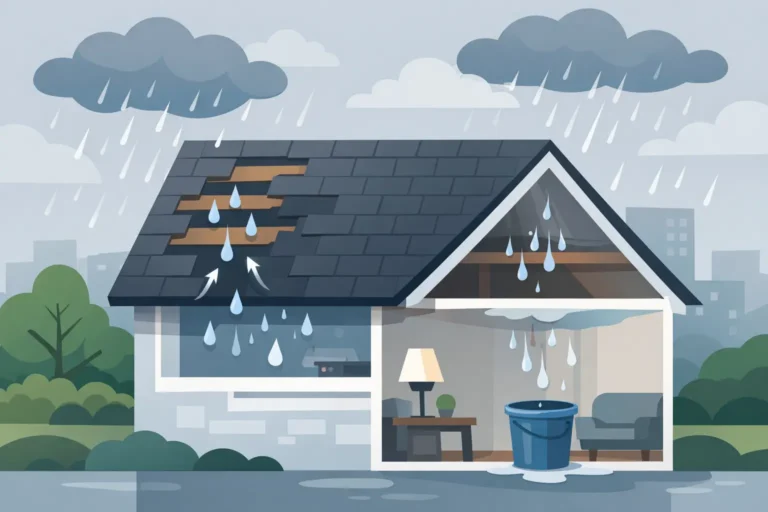
A roof can look mostly fine from the ground and still be one hard rain away from a leak. If you are asking, can missing shingles cause leaks, the short answer is yes. Even a small patch of exposed roof can let water work its way into places it does not belong, especially after Alabama wind and storm activity.
The part that catches many property owners off guard is timing. A leak does not always start the same day a shingle blows off. Sometimes the roof holds for a while, then a wind-driven rain, a flashing weakness, or aging underlayment turns a minor problem into a ceiling stain, wet insulation, or interior damage.
Can missing shingles cause leaks right away?
They can, but not always. That is why missing shingles are easy to underestimate.
Shingles are the outer layer of a roofing system. Their job is to shed water and protect the materials underneath from sun, wind, and impact. When one goes missing, the underlayment below may still offer temporary protection. If that underlayment is in good shape and the weather stays mild, you may not notice a problem immediately.
But temporary protection is not the same as safe protection. Underlayment is not designed to serve as the main weather barrier for long. Once it is exposed, UV rays, heat, wind, and repeated rain can weaken it quickly. On older roofs, the exposed area may already be brittle or compromised, which raises the chance of water intrusion.
So yes, missing shingles can cause leaks right away, but even when they do not, they still create an opening for future leaks.
Why one missing shingle can be a bigger problem than it looks
A lot depends on where that missing shingle is located. A single missing shingle on a steep, open slope is serious. A missing shingle near a valley, roof edge, vent, chimney, or other transition is often even more urgent because those areas already handle more water movement.
Water does not always travel straight down. Wind can push rain sideways and upward. Roof decking can absorb moisture before a drip ever appears inside. That means the visible leak may show up far away from the actual damage.
This is one reason homeowners sometimes think a ceiling stain came out of nowhere. In reality, water may have been entering around missing shingles for weeks before it became visible indoors.
What happens when shingles go missing
Once the shingle layer is broken, the roof becomes more vulnerable in several ways. Water can reach the underlayment and decking more easily. Wind can catch the surrounding shingles and loosen more of them. Nails that were previously covered may become exposed. Seal strips that help hold shingles in place can fail when adjacent pieces are gone.
That chain reaction matters after a storm. What starts as one missing tab can become a wider repair area if it is not addressed promptly. On commercial or multifamily properties, the same principle applies. A small breach in one section can lead to insulation saturation, membrane issues, and interior disruption if ignored.
Common signs a missing shingle has already led to a leak
Sometimes the warning signs are obvious, and sometimes they are subtle. A water spot on the ceiling is the one most people recognize, but it is not the only one. You might also notice a musty smell in the attic, damp insulation, peeling paint, warped drywall, or granules collecting in gutters after a wind event.
From the outside, the roof may show dark patches, uneven lines, exposed underlayment, lifted surrounding shingles, or debris from storm impact. If your area has recently had high winds or hail, it is worth taking a closer look even if you do not see interior damage yet.
The key point is this: waiting for a visible leak inside the house usually means the roof problem has already progressed.
Can missing shingles cause leaks even on newer roofs?
Yes. A newer roof is not immune.
If a roof loses shingles because of storm damage, improper installation, poor attic ventilation, or defective materials, water can still get in regardless of the roof’s age. Newer systems may have stronger underlayment and better overall performance, but they still rely on complete shingle coverage to do the job correctly.
That said, the age of the roof affects how repairable it is. On a newer roof, replacing a limited damaged area may be straightforward if matching shingles are available and the surrounding materials are still in good condition. On an older roof, repairs can be less predictable because the shingles may be brittle, faded, discontinued, or nearing the end of their service life.
This is where an honest inspection matters. Sometimes a simple repair is the right move. Other times, the missing shingles are just the visible part of broader storm damage.
Storm damage changes the risk
In Alabama, strong winds, heavy rain, and hail can turn small roof issues into bigger ones fast. When shingles go missing after a storm, there is often more going on than what you can see from the yard.
Hail can bruise surrounding shingles. Wind can break seals on nearby rows. Flashing may shift. Ridge caps can loosen. Water can enter around vents or penetrations that look intact from below. That is why a roof inspection after a storm is not just about counting missing shingles. It is about checking the full system.
For many property owners, there is also the insurance question. Storm-related shingle loss may be part of a covered claim, but documentation matters. Photos, scope details, and a clear record of storm impact help support the process. That is one reason many homeowners prefer working with a contractor who understands both roofing and claim documentation.
Should you repair missing shingles or replace the roof?
It depends on the extent of damage, the roof’s age, and whether the missing shingles are isolated or part of a larger pattern.
A repair often makes sense when the damage is limited, the roof still has useful life left, and matching materials are available. In that case, acting quickly can prevent interior damage and extend the roof’s performance.
Replacement may be the better option when the roof has widespread wind or hail damage, repeated leaks, aging materials, or repairability issues. If shingles are missing in several areas and the surrounding roof is brittle or compromised, spot repairs may only delay a larger problem.
A dependable contractor should be clear about that distinction. You should not be pushed toward replacement when a repair will do the job. At the same time, you should not be given a small patch job when the roof has broader storm-related failure.
What to do if you notice missing shingles
Start by staying off the roof. Walking on a damaged roof can be unsafe, and it can make the problem worse.
If you can safely view the area from the ground, note any visible exposed spots, debris, or related damage around gutters, flashing, and ridge lines. If there is active leaking inside, protect floors and belongings, place a bucket if needed, and document the damage with photos.
Then schedule a professional roof inspection as soon as possible. A no-pressure inspection should tell you whether the issue is isolated, whether water has already penetrated, and whether storm damage may support an insurance claim. Bluefin Exteriors, for example, helps property owners in the Tuscaloosa and Birmingham area understand both the roof damage and the next steps with insurance when a storm is involved.
Can missing shingles cause leaks if there is no attic water yet?
Yes. No attic drip does not mean no problem.
Some leaks stay hidden inside roof decking, insulation, or wall cavities before becoming visible. Others only show up under certain wind directions or heavy rainfall. By the time you see water inside, the repair may involve more than just replacing shingles.
That is why missing shingles should be treated as an early warning, not a cosmetic issue. A fast response is usually simpler and less expensive than waiting for proof in the form of interior damage.
If your roof has missing shingles after a storm, the best next step is not guessing from the driveway. It is getting a clear inspection, understanding whether the damage is isolated or part of a larger claim, and fixing the problem before a small opening turns into a much bigger repair.
