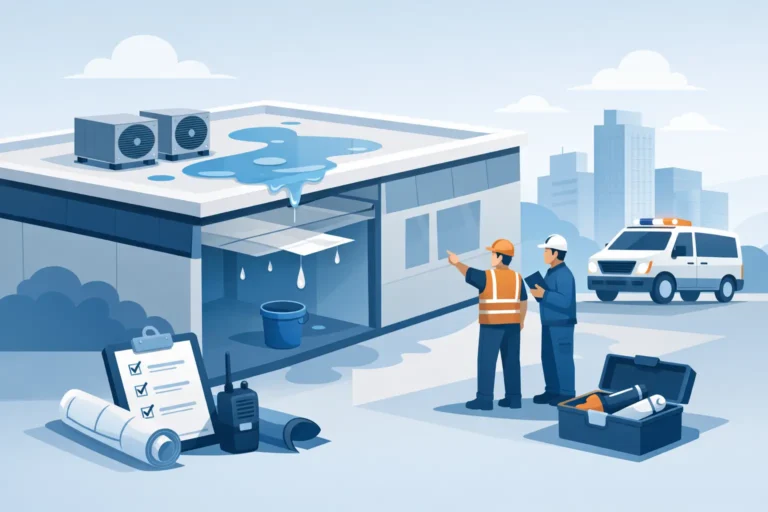
A commercial roof leak response needs to begin before a ceiling tile falls, inventory is damaged, or a tenant calls with water spreading across the floor. On a busy property, even a small active leak can disrupt operations, create slip hazards, damage electrical systems, and turn a repairable roofing issue into a costly interior restoration project. The first few hours matter.
For commercial property owners and facility managers in Tuscaloosa, Birmingham, and surrounding Alabama communities, the goal is not to guess at the source or rush an unqualified repair. The goal is to protect people and property, document the conditions, and get a trained commercial roofing professional involved quickly.
Put Safety and Water Control First
Start by keeping employees, customers, tenants, and visitors out of the affected area. Water near outlets, light fixtures, equipment, or electrical panels requires extra caution. If water is coming through a light fixture or you suspect an electrical hazard, contact a qualified electrician or emergency service provider before anyone attempts cleanup nearby.
Move inventory, electronics, furniture, and equipment away from the leak when it is safe to do so. Use containers to catch dripping water and place plastic sheeting over materials that cannot be moved. For a larger leak, absorbent materials and wet vacuums may help control floor water, but do not allow cleanup efforts to distract from the source of the problem.
Avoid sending untrained staff onto the roof. A wet commercial roof can be slippery, and the visible leak inside may be several feet away from the actual roof opening. Puncturing a membrane, walking on damaged insulation, or applying the wrong sealant can make the damage worse and complicate a future insurance claim.
Document the Leak Before Conditions Change
Good documentation protects your property and gives the roofing contractor and insurer a clearer starting point. Take time-stamped photos and video of the interior leak, wet ceilings or walls, damaged materials, standing water, and any affected equipment or inventory. If rain is still falling, capture the weather conditions as well.
Keep a written record of when the leak was discovered, who reported it, which areas are affected, and the steps your team took to reduce further damage. If tenants occupy the building, ask them to provide photos and a brief description of what they observed. Details such as a recurring drip near a roof drain, water appearing after high wind, or staining that was present before a storm can help identify the likely cause.
Do not discard damaged materials until they have been photographed and documented. Your insurer may need evidence of the loss, especially when damaged contents, interior finishes, or business interruption are involved.
Know What the Leak May Be Telling You
Water does not always enter directly above the spot where it appears indoors. On low-slope commercial roofs, water can travel along decking, insulation, structural members, conduit, or interior framing before it reaches the ceiling below. That is why a stain in one office may be connected to a problem near a seam, flashing detail, pipe penetration, rooftop unit, or drain several feet away.
Storm damage is one possibility, particularly after high winds, hail, or wind-driven rain. However, commercial leaks can also result from aging membrane seams, cracked flashing, ponding water, clogged drains, deteriorated sealant, foot traffic damage, or failed repairs from prior work. A professional inspection should identify the source rather than simply cover the visible symptom.
Contact Your Roofing Contractor Early
After immediate safety measures are in place, contact a commercial roofing contractor experienced with your roof system. The right response depends on whether your building has TPO, PVC, EPDM, metal roofing, modified bitumen, a coating system, or another assembly. Materials that look similar from the ground can require very different repair methods.
A qualified contractor should inspect the roof surface, flashings, penetrations, drains, edge details, and areas affected by recent weather. They should also evaluate the interior damage and explain whether the immediate need is emergency water control, a targeted repair, or a larger restoration plan.
For many properties, a temporary repair is the responsible first move. A temporary patch, cover, or seal may prevent additional interior damage while materials are ordered, weather clears, or the claim process moves forward. Temporary work should be documented carefully, because it demonstrates that you took reasonable steps to protect the building from further loss.
Bluefin Exteriors can inspect commercial roof damage, explain the condition in straightforward terms, and help property owners organize the documentation needed for a smoother insurance conversation. The focus should be on the repairs your building actually needs, not pressure to commit to work before you understand the scope.
Report Potential Storm Damage Promptly
If the leak followed a storm, report the damage to your insurance carrier promptly. Be prepared to provide the date of loss, photos, video, notes, estimates for emergency mitigation, and contact information for your roofing contractor. A contractor can help explain roof findings, but the policyholder should remain involved in communications and understand what is being submitted.
Commercial insurance policies vary. Coverage may depend on the cause of damage, the age and condition of the roof, deductibles, policy endorsements, and whether the carrier determines that the damage was sudden or related to deferred maintenance. This is why accurate inspection findings matter. A storm-related opening and a long-term maintenance issue may require different documentation and lead to different claim outcomes.
Do not assume a claim will cover every roof condition discovered during the inspection. At the same time, do not accept a quick diagnosis without supporting evidence. Ask for clear photos, a written explanation of the damage, and a repair or replacement recommendation that matches the roof’s actual condition.
Prevent Common Claim and Repair Problems
Property owners often make decisions under pressure when water is entering the building. A few practical safeguards can prevent a difficult situation from becoming more expensive.
Do not authorize a full roof replacement based only on an interior leak. A leak may be isolated and repairable, or it may reveal wider damage that calls for replacement. The inspection should establish which is true.
Do not rely on caulk as a permanent fix for every roof problem. Some sealants are incompatible with commercial membranes, and even compatible sealant has limits. Failed seams, saturated insulation, widespread membrane deterioration, or drainage problems require a repair plan designed for the roof system.
Do not delay because the leak stops after the storm. Water can remain trapped in insulation or above ceilings, where it may lead to mold growth, corrosion, stained finishes, and further deterioration. A roof that leaks once under storm conditions may leak again when the next severe weather system arrives.
Build a Better Plan After the Emergency
Once the active leak is controlled, ask for a practical plan that addresses both immediate repairs and future risk. That plan may include membrane repair, replacement flashing, drain cleaning, seam reinforcement, coating restoration, damaged insulation replacement, or a recommendation for a full roofing system replacement.
The right choice depends on the roof’s age, condition, drainage performance, repair history, and budget. A newer roof with localized storm damage may be a strong candidate for repair. An older roof with repeated leaks, brittle materials, multiple failed patches, or widespread ponding may cost less to own in the long run when replaced rather than repeatedly repaired.
This is also the right time to establish a maintenance routine. Periodic commercial roof inspections can identify clogged drains, loose flashing, punctures, open seams, and early material wear before they become interior leaks. Inspections are especially valuable after major Alabama storms and before periods of heavy rain.
Keep Your Response Plan Simple
Every commercial property benefits from a short internal leak-response procedure. Staff should know who to call, where emergency supplies are stored, how to isolate an affected area, and who is authorized to communicate with tenants, vendors, and the insurance carrier. Keep the roofing contractor’s contact information available instead of searching for help while water is entering the building.
A roof leak is disruptive, but the response does not have to be chaotic. Protect the area, document what happened, bring in the right roofing professional, and make decisions based on a clear inspection. Quick action today can protect your building, your operations, and your budget when the next storm arrives.
