
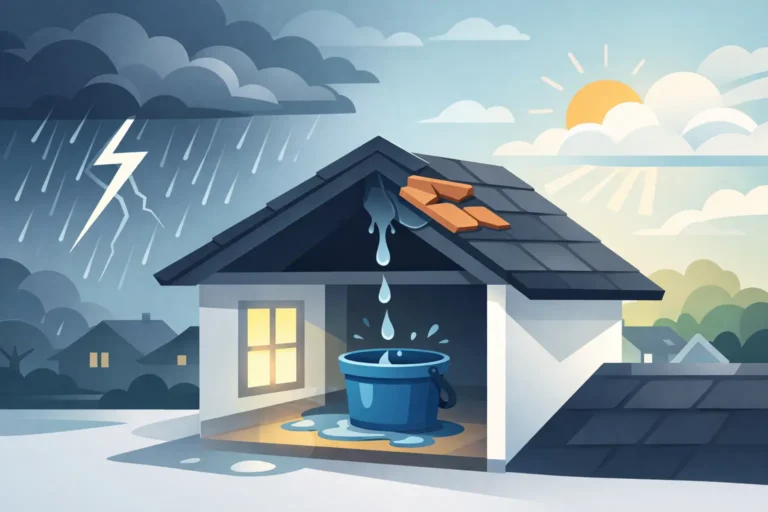
The stain on the ceiling usually shows up hours after the weather clears. Sometimes it is a slow drip in the attic. Sometimes it is water running down a wall near a window, chimney, or vent. If you are dealing with a roof leak after storm damage, the biggest mistake is waiting to see if it dries up on its own. Storm-related leaks rarely stay small for long.
A leak after heavy wind, hail, or driving rain can come from more than one place. Shingles may be missing, lifted, or creased. Flashing around chimneys, skylights, and pipe boots may have pulled loose. On metal and commercial roofing systems, seams, fasteners, or penetrations may have taken the hit. What looks minor from inside can point to widespread damage on the roof itself.
What to do first when you find a roof leak after storm damage
Start inside. Move furniture, electronics, rugs, or inventory out of the affected area if you can do it safely. Put down towels or a bucket to catch active drips. If the ceiling is bulging with trapped water, that can become a collapse hazard. In that case, avoid standing directly under it and call a professional right away.
Take clear photos and short videos of everything you can see. Document the ceiling stain, wet insulation, damaged drywall, soaked flooring, and any personal property that was affected. If the storm included hail or strong wind, note the date and approximate time. That record can matter later if you need to file an insurance claim.
If water is near light fixtures, outlets, or electrical panels, use caution. You may need to shut off power to that area if it can be done safely. If not, leave it alone and call for help. Water and electricity are not worth guessing on.
Then arrange for a roof inspection as soon as possible. A no-pressure inspection is the fastest way to confirm where the leak is coming from and whether the damage is limited to a repair or points to a larger insurance-covered loss.
Why a roof leak after storm weather is not always where it looks
One of the more frustrating parts of roof leaks is that the entry point and the visible water stain are often not in the same spot. Water can travel along rafters, decking, insulation, and even wiring before it finally shows up inside. A stain in the hallway may trace back to damaged flashing several feet away. A drip around a window may be roof-related, siding-related, or both.
That is why quick patchwork from the ground does not always solve the problem. Caulking the first visible gap might slow the leak for a day or two, but it can also cover up the real failure point. A proper inspection looks at the entire roofing system, not just the place where water came through indoors.
In Alabama, storm patterns make this especially important. Wind-driven rain can force water uphill under shingles. Hail can bruise materials without leaving obvious holes. Trees and branches can create impact damage that is easy to miss unless someone gets on the roof and checks every slope, ridge, valley, and penetration.
Signs the storm caused more than a simple leak
Some storm leaks truly are isolated. A damaged pipe boot or a few missing shingles may be repairable without a full replacement. But sometimes the leak is just the first visible sign of broader roof failure.
You may be looking at a larger issue if you notice shingle granules in gutters, lifted shingle tabs, dented vents or metal components, water in multiple rooms, or leaks that appear after every rain. On commercial properties, membrane punctures, open seams, ponding water, and wet insulation can all point to a more extensive problem.
Age matters too. An older roof that takes a hard storm may not respond the same way as a newer system. Even if the leak seems small, the combination of storm damage and material wear can make repairs less reliable. That does not always mean full replacement is necessary, but it does mean the roof should be evaluated carefully before anyone promises a quick fix.
Should you call your insurance company right away?
It depends on what happened and how clear the damage is. If a major storm just passed through and you already have interior water intrusion, there is a good chance an insurance claim should at least be considered. But before you assume anything, it helps to have a roofing professional inspect the property and document the storm-related damage.
That step can save time and confusion. Many property owners are not sure what their policy covers, what damage is actually claim-worthy, or what photos and notes will support the file. A contractor with insurance-claim experience can identify whether the leak is likely tied to covered storm damage or normal wear and tear. That distinction matters.
If the damage is clearly storm-related, good documentation helps the process move more smoothly. Photos, measurements, marked damage areas, and an on-site meeting with the adjuster can make a big difference. For homeowners and commercial property managers, that kind of support takes a lot of pressure off during an already stressful situation.
What not to do after a storm leak
Do not climb onto the roof yourself unless you have the right safety equipment and training. Wet shingles, soft decking, and hidden damage create real fall risk. Even a one-story roof can become dangerous fast after a storm.
Do not assume the leak is minor just because it slows down when the rain stops. Water can stay trapped in insulation, underlayment, decking, and wall cavities. That leads to mold, rot, and interior repairs that get more expensive the longer they sit.
And do not wait too long to have the roof inspected. Delays can make documentation harder, especially after widespread storms when many homes in the same area are affected. The earlier the damage is confirmed and recorded, the better your position if a claim needs to be filed.
Repair or replacement? It depends on the damage
This is where honest guidance matters. Not every roof leak after storm conditions requires a full replacement, and a trustworthy contractor should say that plainly. If the damage is limited to a defined area and the surrounding roof is still in good shape, a targeted repair may be the right call.
But if wind or hail has compromised multiple sections, if the roof is older and brittle, or if matching materials are not available, replacement may be the better long-term decision. The goal is not just to stop the current leak. It is to restore the roof system so the next storm does not send you back to the same problem.
For commercial buildings, the same principle applies. A single puncture in a membrane might be repaired. Widespread seam failure or moisture intrusion below the surface may call for a larger solution. A thorough inspection helps separate the urgent issue from the full scope of what needs attention.
Choosing the right contractor matters
After a storm, property owners often hear from out-of-town crews moving through the area. Some are legitimate. Some are not. The safest choice is usually a licensed and insured local roofing contractor with a clear reputation, documented inspection process, and experience handling storm-related claims.
Look for someone who explains the damage in plain language, provides photos, answers insurance questions clearly, and does not pressure you into signing on the spot. You want a contractor who protects your property, keeps a clean job site, and stands behind the work after the project is complete.
That service-first approach matters even more when insurance is involved. The roofing work is only part of the job. Documentation, adjuster communication, and scope review all affect how smoothly the project moves from damage discovery to final restoration. Bluefin Exteriors works with Alabama property owners through that process with straightforward inspections and claim support built around getting the roof and the paperwork handled correctly.
A fast response can limit a lot more than roof damage
When a storm leaves you with a leak, speed matters, but so does accuracy. The right next step is not panic and it is not guesswork. It is getting the roof inspected, the damage documented, and the problem addressed before water spreads further into the structure.
A roof leak can start with one storm and turn into drywall damage, insulation loss, mold growth, and denied claim questions if it sits too long. Getting clear answers early gives you options. And when the process is handled correctly from the start, recovery feels a lot more manageable.
