A roof in Central Alabama has to do more than look good from the street. It has to manage hard rain, summer heat, high humidity, falling limbs, and the wind events that can turn a small weakness into an interior leak. This standing seam metal roof review gives homeowners and property owners a clear look at where this roofing system performs well, where it requires caution, and whether the investment makes sense for your property.
Standing seam metal is often presented as a premium, long-term roofing option. That can be true, but the results depend heavily on the panel system, the condition of the roof deck, and the quality of installation. A good roof is a complete system, not just attractive metal panels.
What Is a Standing Seam Metal Roof?
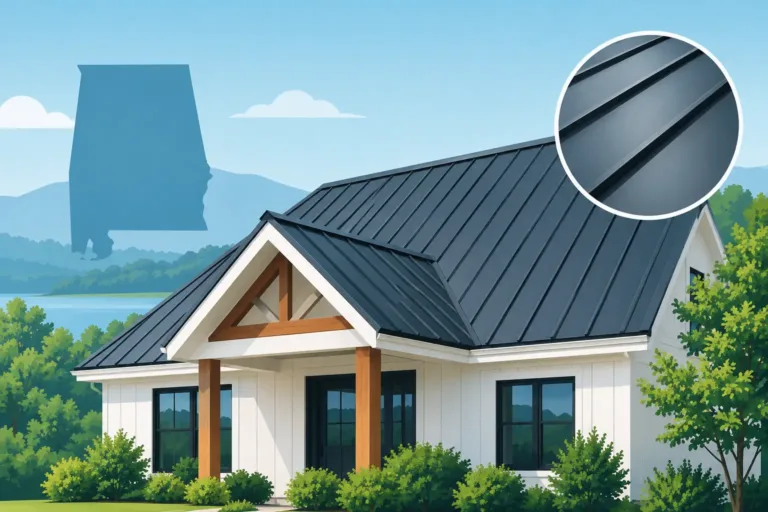
Standing seam roofing uses long metal panels that run from the roof ridge to the eaves. The raised vertical seams between panels conceal or protect the fastening system, depending on the panel profile. Unlike exposed-fastener metal roofs, there are fewer visible screws through the face of the panels.
That design is a major reason standing seam roofs are popular on homes, churches, offices, and commercial buildings. The raised seams direct water down the roof plane, while concealed clips or fasteners allow the metal to expand and contract as temperatures change.
For Alabama properties, that movement matters. Metal can become very hot in direct sun and cool quickly during storms or overnight. A system that is not installed to accommodate thermal movement can develop oil canning, loose trim, stressed fasteners, or leaks around penetrations over time.
Standing Seam Metal Roof Review: The Main Benefits
The strongest advantage of standing seam metal is durability when the roof is designed and installed correctly. Quality metal panels do not absorb moisture, crack like aging shingles, or lose granules. They also shed rain efficiently on properly pitched roofs.
Standing seam systems can offer strong wind performance because the panels are secured with clips and engineered fastening patterns rather than rows of exposed screws. That does not mean every metal roof will withstand every severe storm without damage. Wind resistance depends on the panel profile, roof geometry, decking, fastener schedule, edge metal, and installation quality. A high-end panel cannot compensate for weak roof decking or poorly detailed flashing.
Metal can also be a practical choice for managing summer heat. Many standing seam panels are available in reflective colors and finishes that reduce heat absorption compared with darker, heat-holding roofing materials. However, the roof’s insulation and attic ventilation still play an important role in indoor comfort and energy use. A metal roof is not a substitute for correcting poor attic ventilation or inadequate insulation.
Homeowners also appreciate the clean appearance. Vertical standing seams work well with modern farmhouses, traditional homes, metal accents, and commercial buildings. Because panels are custom-cut for the roof, the finished result can look crisp and intentional when ridge caps, valleys, transitions, and flashing are properly fabricated.
The Trade-Offs to Consider Before You Buy
The upfront cost is the biggest concern for most property owners. Standing seam metal generally costs more than a standard architectural shingle roof because it requires specialized materials, custom fabrication, skilled labor, and more detailed trim work. Complex roofs with many valleys, dormers, skylights, chimneys, and wall transitions can increase labor substantially.
The value calculation is different for every property. A homeowner planning to sell soon may not recover the full premium through resale value alone. A long-term owner who wants fewer replacement cycles and a more durable roof may view the higher initial cost differently. Commercial property owners may also weigh the reduced disruption of a longer-lasting roof against the larger first investment.
Noise is another common concern, but it is often misunderstood. A properly installed standing seam roof over solid decking, underlayment, and an insulated attic is not usually dramatically louder during rain than other roofing materials. Noise can be more noticeable in open structures, buildings with minimal insulation, or installations over purlins rather than a fully decked roof.
Appearance can also be subjective. Some panel systems show slight waviness in certain light conditions, known as oil canning. This is a visual characteristic of formed metal panels, not automatically a failure or installation defect. Heavier-gauge metal, panel design, roof deck flatness, color selection, and careful installation can reduce its visibility, but no contractor should promise that it will never occur.
Installation Quality Matters More Than the Sales Pitch
A standing seam roof should never be selected based on panel color alone. The details around the panels are where many long-term problems begin. Flashing around chimneys, pipe boots, skylights, walls, valleys, and roof transitions must be designed for the specific panel system.
A reliable installer starts with the roof deck. Damaged or deteriorated decking should be repaired before new roofing is installed. The crew should also evaluate ventilation, drainage, existing flashing conditions, and areas where water has historically collected or entered the building.
Underlayment selection matters as well. Metal roofing needs an underlayment appropriate for the roof assembly and local conditions. In Alabama, where heat, humidity, wind-driven rain, and sudden storms are common, the roofing system should be built to manage water at more than one level. Panels are the primary water-shedding layer, but underlayment and flashing provide critical backup protection.
Ask how the contractor will handle penetrations and transitions. A simple roof with uninterrupted panels is easier to install than a roof crowded with vents, pipes, dormers, and adjoining walls. Experienced crews plan panel layout before installation so seams, cuts, and flashing locations work together rather than being improvised on the roof.
Choosing the Right Panel and Finish
Not all standing seam systems are equal. Panel width, seam height, metal gauge, coating type, clip design, and attachment method vary by manufacturer and application. A panel that works well on a low-slope commercial structure may not be the best match for a steep residential roof.
For many residential applications, thicker metal and a high-quality painted finish are worth discussing. The finish affects long-term color retention and resistance to chalking or fading. Lighter colors may help reduce heat absorption, while darker colors can make a strong architectural statement but may show oil canning or surface dust more readily.
The best choice depends on the building, not simply the trend. A historic home, a contemporary home, a rural residence, and a retail building may all need different visual and technical approaches. Your contractor should explain the options in plain language and identify where a particular system may be a poor fit.
Storm Damage and Insurance Considerations
Standing seam metal roofing can be damaged by hail, windborne debris, falling trees, and extreme wind. Damage may be obvious, such as dented panels or lifted trim, but it can also be less visible. A storm may affect seams, clips, flashing, pipe boots, or the underlying roof deck.
After a major storm, avoid assuming a metal roof is fine because it is still in place. A professional inspection can identify compromised components before a small opening leads to water damage inside the property. Documenting the condition promptly is also helpful if you need to file an insurance claim.
Insurance coverage depends on your policy, the documented cause of loss, and the adjuster’s assessment. Some policies have special provisions for cosmetic damage, actual cash value, or metal roofing. Review your policy before a storm if possible, and keep records of the roof’s age, materials, installation, and any prior repairs.
Bluefin Exteriors can inspect storm-related roofing concerns and help property owners understand the documented condition of the roof when an insurance claim may be involved. The goal is not to pressure you into replacement. It is to give you clear information about what the roof needs and what should be addressed next.
Is Standing Seam Metal Worth It?
A standing seam metal roof is often worth considering if you expect to own the property for many years, want a clean architectural look, and are prepared to invest in skilled installation. It is especially appealing for homeowners who are tired of frequent shingle replacement or property owners seeking a durable system for a building with a straightforward roof design.
It may be less practical when the budget is tight, the roof is highly complex, or the property will likely be sold in the near future. In those cases, a quality architectural shingle system may provide better value while still delivering dependable storm protection.
Before committing, schedule a no-pressure roof inspection and ask for an explanation of the full roofing assembly, not just a panel sample. The right decision is the one that fits your roof’s condition, your budget, and the way you plan to use the property for years ahead.
