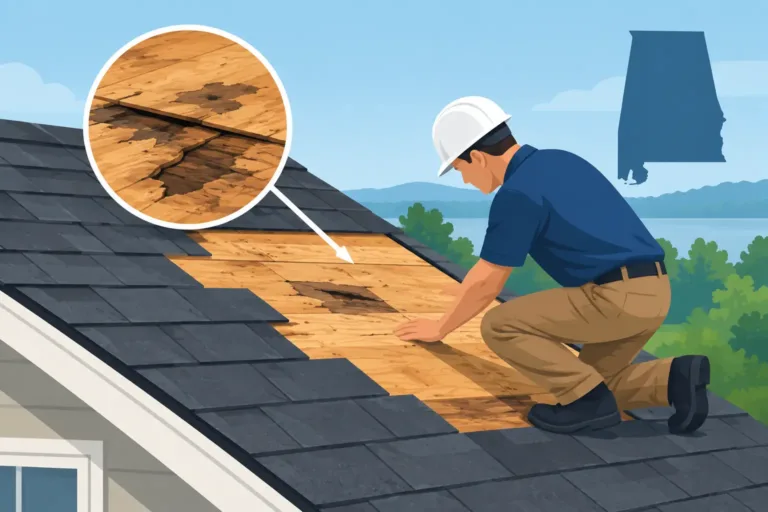
A roof can look acceptable from the driveway while the wood beneath its shingles is absorbing moisture, softening, and losing strength. That is why roof decking repair should never be treated as a cosmetic fix. The decking is the structural layer that supports your roofing materials. When it is damaged, even a small leak can become a larger problem involving interior water damage, mold conditions, sagging roof areas, and shortened shingle life.
For homeowners and property owners in Tuscaloosa, Birmingham, and nearby Alabama communities, decking damage is often discovered after severe wind, hail, or heavy rain. The right response is a clear inspection, honest explanation of the condition, and a repair plan that addresses the cause of the damage – not just the visible symptoms.
What Roof Decking Does for Your Roof
Roof decking, sometimes called roof sheathing, is the layer of plywood or oriented strand board attached to the roof framing. Underlayment and shingles, metal panels, or another finished roofing material are installed over it. It gives the roof system a flat, stable surface and helps fasteners hold properly.
When the decking is sound, your roof covering can do its job. When the wood is wet, warped, delaminated, or deteriorated, new shingles alone may not perform as intended. Nails can pull loose, the roof surface can feel uneven, and water may find a path into the attic or living space.
Decking problems do not always mean the entire roof deck needs replacement. Damage may be limited to a small section around a leaking pipe boot, valley, chimney, skylight, or storm-damaged area. The scope depends on how long water has been present, the extent of material deterioration, and whether the structural framing below has also been affected.
Warning Signs That Point to Decking Damage
Some decking damage is hidden until a roofing professional removes shingles during a repair or replacement. Still, several signs deserve prompt attention. A soft or spongy feeling underfoot on the roof is one concern, although property owners should not walk on a roof to investigate. Sagging areas, visible dips in the roofline, or shingles that appear wavy may also point to weakened decking.
Inside the building, watch for water stains on ceilings, peeling paint near the upper walls, damp attic insulation, or a persistent musty odor. These signs can come from many sources, but a roof leak should be ruled out quickly. In Alabama, repeated storms and high humidity can allow a minor opening in the roof system to create more extensive moisture damage over time.
A roof leak after a storm is not always obvious. Wind can lift or crease shingles without tearing them completely away. Hail can fracture the protective surface of a shingle. Wind-driven rain can enter around flashing or roof penetrations. If water reaches the decking, it may remain trapped beneath the roof covering long after the weather clears.
When Roof Decking Repair Is the Right Solution
Targeted roof decking repair is often appropriate when the damage is localized and the surrounding roof system remains in serviceable condition. For example, a small area of rotted decking beneath a failed flashing detail may be removed and replaced, followed by proper underlayment, flashing, and matching roofing materials.
The repair must begin with locating the water source. Replacing damaged wood without correcting the failed shingle, flashing, vent, or drainage detail only postpones the next leak. A dependable contractor should explain what caused the damage, what materials need to be removed, and how the repaired section will be tied back into the existing roof system.
In other cases, a full roof replacement makes more sense. If damaged decking is found across multiple areas, the existing roof is near the end of its service life, or storm damage affects a broad portion of the roof, repeated spot repairs may not be the most cost-effective option. This is especially true when the roof covering has been compromised enough that matching materials or creating reliable transitions becomes difficult.
Commercial roofs require the same careful evaluation, though the details differ. On low-slope systems such as TPO, PVC, EPDM, metal, or roof coatings, moisture can travel beneath the membrane and affect insulation, cover boards, and decking. The visible leak location may not match the location where water entered. A professional inspection helps identify the actual source before repairs begin.
What a Proper Repair Process Looks Like
A sound repair is more than covering a dark spot on the roof. It starts with an inspection of the exterior roof surface, attic where accessible, roof penetrations, flashing, and interior signs of moisture. The goal is to determine whether the issue is active, isolated, storm-related, or part of a larger roofing failure.
Once the affected area is identified, damaged roofing materials are carefully removed. Any wet, rotten, warped, or structurally unsound decking is cut out and replaced with material that matches the needed thickness and support requirements. The repair area is then protected with appropriate underlayment and finished with properly installed shingles, metal, or commercial roofing components.
Good workmanship matters at every transition. New materials must integrate with the surrounding roof so water sheds correctly. Fasteners, flashing, sealants, and ventilation details all play a role. A repair that looks fine on the day it is completed can fail early if the water-management details are overlooked.
Clean job site practices matter, too. Roofing work can create debris, exposed areas, and noise, but a professional crew should protect landscaping and property, keep the work area organized, and perform a thorough cleanup when the job is complete.
Could Insurance Cover Decking Damage?
Insurance coverage depends on the policy, the cause of damage, and the documentation. Sudden storm damage may be covered, while deterioration from a long-term maintenance issue may not be. The decking itself can be part of a covered repair when a covered event caused the roof opening and resulting water damage, but every claim is different.
If a recent storm may have damaged your roof, document visible concerns from the ground and any interior water intrusion. Avoid making temporary repairs that conceal evidence unless immediate action is needed to prevent further damage. If emergency protection is necessary, take photos first and keep records of the work completed.
An experienced roofing contractor can provide photos, measurements, and a detailed assessment of observed damage. That information can make the insurance process easier to understand, but it does not guarantee coverage or replace the insurer’s final decision. Bluefin Exteriors helps property owners document roof conditions and navigate claim-related questions with straightforward, no-pressure guidance.
Do Not Wait for a Ceiling Stain to Grow
A small stain, a few missing shingles, or an uneven roofline may feel like something that can wait until the next season. Unfortunately, moisture does not wait. Once decking begins to break down, the repair can expand from a small section of roof to insulation, drywall, framing, and interior finishes.
If you suspect storm damage or a roof leak, schedule a professional inspection before making assumptions about the scope of the problem. You deserve a clear explanation of what is happening above your ceiling, what repair options make sense, and whether the condition calls for a repair or a larger roofing solution. Acting early protects the roof structure and gives you more control over the next step.
