
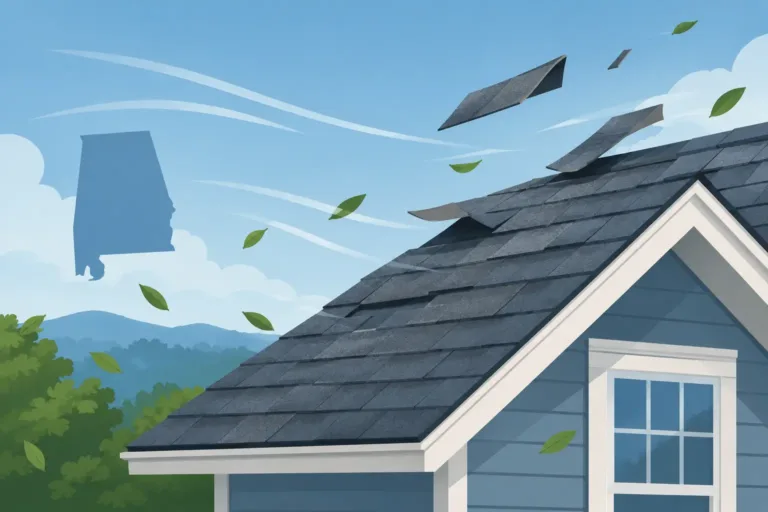
A strong thunderstorm can leave a roof looking perfectly normal from the driveway while causing damage at the edges, ridges, and slopes you cannot safely see. So, can wind lift shingles? Yes. Wind can break the seal between shingles, bend or crease them, pull fasteners loose, and eventually remove shingles altogether. In Alabama, where severe storms can bring sudden gusts, heavy rain, and hail in the same afternoon, a lifted shingle deserves prompt attention.
The concern is not only the shingle that moved. Once wind gets beneath the roof covering, it can create a path for wind-driven rain to reach the decking, underlayment, and interior of the property. Addressing damage early is often far less disruptive than waiting for a ceiling stain or active leak.
Can Wind Lift Shingles Without Blowing Them Off?
Absolutely. Wind damage does not always look like bare patches on a roof. A shingle may lift during a gust, then settle back into place when the wind stops. From the ground, it can appear intact. But the adhesive strip may no longer be sealed, the shingle may be creased, or the nail area may have weakened.
That matters because shingles are designed to work as an overlapping system. Each course helps protect the one below it. When a shingle loses its seal, the next storm has an easier point of entry. Repeated lifting can turn a small, hidden issue into missing shingles, exposed underlayment, or a leak around a vulnerable roof area.
Wind damage is especially common along roof edges, hips, ridges, valleys, and around vents, chimneys, and skylights. These areas experience changing wind pressure and are often the first places a trained inspector checks after a storm.
What Wind Does to an Asphalt Shingle Roof
Not every roof responds to wind in the same way. Age, installation quality, roof design, ventilation, and the condition of the materials all affect how well shingles stay in place. Still, most wind-related shingle damage falls into a few familiar patterns.
A shingle can be lifted and creased. Creasing often leaves a visible line or bend where the shingle folded under wind pressure. Even if it lies flat afterward, a creased shingle may have lost part of its protective surface and may be more likely to lift again.
Wind can also break the factory seal. Asphalt shingles use a self-sealing adhesive strip that bonds courses together once exposed to adequate warmth. If that bond breaks, the shingle may flutter in lighter winds. This repeated movement can loosen nails and shorten the roof’s remaining service life.
In more severe cases, wind pulls shingles off entirely. Missing shingles create an obvious exposure, but they are not the only sign of damage. Loose ridge caps, displaced flashing, damaged pipe boots, and lifted starter shingles can all allow water into the roofing system.
Signs You May Have Lifted Shingles After a Storm
It is not safe to climb onto a roof to inspect it yourself, particularly after rain or high winds. A ground-level check can still help you spot reasons to schedule a professional inspection.
Look for shingles that appear uneven, curled, raised, or out of alignment. Check your yard, driveway, and gutters for granules or pieces of asphalt shingles. Look closely at ridge lines and roof edges with binoculars from a safe location. A shingle corner that is no longer lying flat can be a warning sign.
Inside, inspect attic spaces and upper ceilings for damp insulation, dark spots on wood, water stains, peeling paint, or a musty smell. These signs do not always mean the roof is the source, but they should be investigated. Water can travel before it becomes visible, so a stain may appear several feet from the actual entry point.
Commercial property owners should also watch for interior drips, wet ceiling tiles, ponding water near drains, and damaged metal coping or edge details. Wind can affect commercial roofing systems differently than asphalt shingles, but the basic concern is the same: a breached roof system can allow moisture into the building.
Why Some Roofs Are More Vulnerable to Wind Lift
A newer roof can sustain wind damage, and an older roof can sometimes perform well during a storm. The difference often comes down to the roof’s condition and how it was installed.
Shingles become more brittle as they age. Sun exposure and Alabama heat gradually reduce flexibility, making shingles more likely to crack or crease when lifted. Older adhesive strips may also lose their ability to reseal after being disturbed.
Installation details matter just as much. Incorrect nail placement, too few fasteners, improperly installed starter strips, or poor flashing work can all make a roof more vulnerable. Shingles must be fastened in the manufacturer-designated nailing zone. Nails placed too high, too low, or driven through the shingle can reduce wind resistance.
Roof geometry plays a role as well. Tall, exposed homes, open rural properties, and buildings near ridgelines may experience stronger wind forces than sheltered homes. A complex roof with many transitions has more areas that require careful installation and inspection. This does not mean those properties are destined for damage, but it does mean storm checks are worth taking seriously.
What to Do When You Suspect Wind Damage
Start by documenting what you can safely see. Take photos of shingles or roof components on the ground, visible damage from a safe distance, interior staining, and any storm-related debris. Make a note of the date of the storm and the approximate time you noticed the problem. This information can be helpful if you decide to file an insurance claim.
Next, schedule a professional roof inspection. A qualified roofing contractor can inspect the slopes, test for lifted or unsealed shingles, examine flashing and penetrations, and look for damage that is not visible from the ground. A proper inspection should give you clear findings, not pressure to replace a roof that only needs a targeted repair.
If there is an active leak, protect the interior first. Move valuables away from the affected area, place a container beneath drips if it is safe to do so, and contact a roofing professional promptly. Avoid attempting a roof repair during wet or windy conditions. Temporary fixes made without the right materials or safety equipment can cause further damage.
Insurance Claims for Wind-Lifted Shingles
Whether insurance covers wind damage depends on the policy, deductible, roof age, and documented condition of the roof. Wind damage from a sudden storm may be covered, while long-term wear, poor maintenance, or pre-existing issues may not be. That distinction is one reason a detailed inspection and clear documentation matter.
A contractor experienced with storm restoration can help identify storm-related damage, provide photographs and repair or replacement information, and explain the roofing scope in plain language. The contractor should not promise coverage or tell you what your insurer will decide. What they can do is help make sure the damage is accurately documented and that the work described is appropriate for the roof system.
Bluefin Exteriors provides no-pressure roof inspections and insurance claim assistance for homeowners and property owners in Tuscaloosa, Birmingham, and surrounding Alabama communities. The goal is simple: understand the condition of the roof, explain the practical options, and help you move forward with confidence.
Can Wind Lift Shingles on a New Roof?
Yes, although a newer roof should generally have better adhesive bonding and material flexibility than one near the end of its lifespan. A major storm can damage any roof. If a new roof has shingles lifting in mild wind, however, the installation details should be evaluated carefully.
Do not assume a lifted shingle will reseal on its own. In hot weather, an undamaged shingle that was briefly disturbed may lie back down and bond again. But a shingle that is creased, cracked, torn, or has pulled around the fasteners usually needs attention. A professional inspection can distinguish between a minor issue and damage that calls for repair.
Waiting is the risky choice when a shingle has lost its ability to protect the roof deck. The next storm may be the one that turns a small lift into a larger opening. A timely inspection gives you a clear answer before that happens.
