
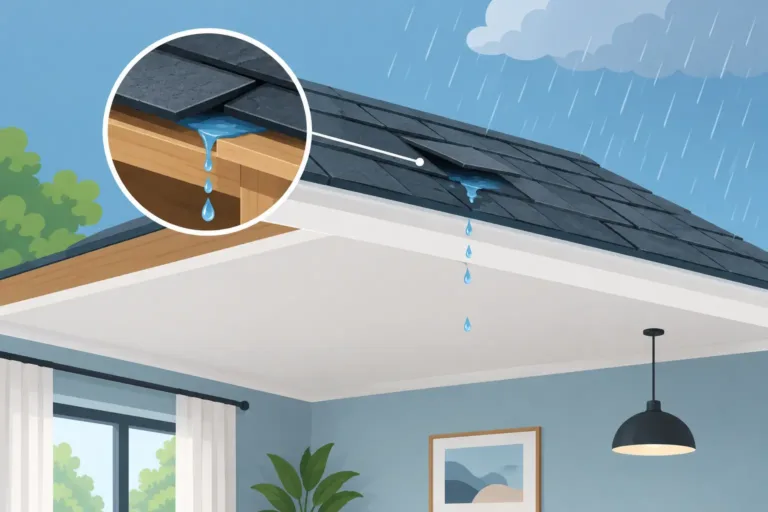
A brown spot on the ceiling is an obvious reason to worry about your roof. The problem is that can a roof leak without ceiling stains is not just a common question – it is a situation many Alabama property owners face. Water can enter through a compromised roof and remain hidden in the attic, insulation, wall cavities, or roof decking long before it reaches a visible ceiling surface.
That delay can make a small issue harder and more expensive to repair. After a strong storm, heavy rain, or a season of high winds, a roof can need attention even when the rooms below look completely normal.
Why a Roof Leak May Not Leave Ceiling Stains
Water does not always take a direct path from a damaged shingle to the ceiling below. Once it enters the roof system, it can travel along rafters, roof decking, wiring, pipes, or insulation. It may collect in one area, evaporate during warmer weather, or drain outside a wall instead of soaking through drywall.
Ceiling stains usually develop only after enough water has repeatedly saturated the drywall or ceiling material. By then, the leak may have been active for weeks or months. A lack of staining is reassuring only to a point. It does not rule out moisture where you cannot see it.
Attic ventilation can also affect what you see indoors. A well-ventilated attic may dry minor moisture before it reaches the ceiling, while insulation can absorb water and hide it. That does not mean the moisture caused no damage. Wet insulation loses effectiveness, damp wood can deteriorate, and persistent moisture can create conditions for mold growth.
Hidden Signs of a Roof Leak Without Ceiling Stains
The roof is only one part of a larger system. Looking for subtle changes around the house can help you catch an issue earlier.
A musty odor in an upstairs room, attic, or closet may point to moisture that has not become visible. Peeling paint near exterior walls, bubbling drywall, warped trim, or a soft spot in a ceiling can also be early warnings. These symptoms can have other causes, but they are worth checking after storms.
In the attic, look for damp or compressed insulation, dark marks on framing, rust around nails or metal components, and water trails on the underside of the roof decking. During daylight hours, visible pinpoints of light through the roof deck deserve attention as well. Not every small gap causes an active leak, but it can become an entry point during wind-driven rain.
Outside, damaged or missing shingles, lifted shingle edges, exposed nail heads, cracked pipe boots, bent flashing, and loose ridge caps are all potential trouble spots. Alabama storms often bring wind and rain together, which can push water beneath shingles that appear mostly intact from the ground.
Common Causes of Hidden Roof Leaks
A hidden leak can come from a single damaged component rather than an obvious hole in the roof. The source is not always directly above the area where moisture eventually appears.
Storm Damage Around Vulnerable Roof Details
Flashing protects the transitions where the roof meets a chimney, wall, skylight, vent, or valley. When wind loosens flashing or debris damages its seal, water can work into the roof system. Pipe boots are another frequent issue. The rubber collar around a plumbing vent can crack with age and exposure, allowing water to enter around the pipe.
Wind can also break the seal beneath shingles without tearing them completely off. A shingle that lifts during a storm and settles back down may look normal from the yard, yet its protective seal may be compromised.
Aging Materials and Small Openings
Roofs do not need dramatic damage to leak. As shingles age, their granules wear away, edges become brittle, and sealant points deteriorate. Tiny openings can admit rain during certain wind directions while staying dry during lighter, straight-down rainfall.
This is why a leak may seem to come and go. The roof may perform acceptably in one storm and leak during the next because rainfall, wind direction, and storm duration are different.
Condensation That Looks Like a Roof Leak
Not all attic moisture comes from a roof opening. Inadequate ventilation, bathroom exhaust vents that terminate in the attic, and air leaks from the living space can create condensation. This is especially possible when warm, humid air meets cooler roof surfaces.
The distinction matters because the repair is different. Replacing shingles will not solve an attic ventilation problem, and adding ventilation will not repair damaged flashing. A qualified inspection should identify whether the moisture is rain intrusion, condensation, or a combination of both.
What to Do if You Suspect a Leak
Start with safety. Do not climb onto a wet, steep, or storm-damaged roof to investigate. From the ground, note any visible shingle damage, fallen limbs, or debris. Inside, check accessible attic areas with a flashlight, but avoid stepping on insulation or walking between framing members.
Take clear photos of anything you find, including attic moisture, damaged shingles visible from the ground, or changes to walls and ceilings. Record when you noticed the problem and whether it appeared after a specific storm. Those details can help a roofing professional locate the source and may be useful if storm damage leads to an insurance claim.
If active water is entering the home, protect belongings and place a container under dripping water if it is safe to do so. Avoid puncturing a ceiling unless you understand the risk and can safely control the water. A water-filled ceiling can collapse without much warning, so keep people and valuables away from sagging areas.
When to Schedule a Professional Roof Inspection
A professional inspection is a practical next step after a hailstorm, strong wind event, or repeated heavy rain, even if there are no interior stains. It is also wise to schedule one if your roof is older, you find granules in gutters, or you notice attic moisture, odors, or changes around roof penetrations.
An inspection should look beyond the shingles. The contractor should assess flashing, valleys, ridge caps, vents, pipe boots, decking condition where accessible, drainage patterns, and storm-related damage. For commercial properties, the inspection should also consider seams, penetrations, drainage, and membrane condition, since low-slope roofing systems hide moisture differently than steep-slope shingle roofs.
If storm damage is found, do not assume you need to handle the insurance process alone. Documentation matters. Photos, inspection findings, and a clear scope of damage can help you understand whether filing a claim makes sense. Coverage depends on your policy, deductible, cause of damage, and the insurer’s determination, so an honest contractor should explain the evidence without promising an outcome.
A Small Leak Is Still a Reason to Act
Waiting for a ceiling stain can turn a manageable repair into damaged insulation, deteriorated decking, mold cleanup, or interior repairs. On the other hand, not every suspected leak requires a full roof replacement. Sometimes the right solution is a targeted repair to flashing, a pipe boot, a few wind-damaged shingles, or an attic ventilation issue.
The value of a no-pressure inspection is getting a clear answer before guesswork becomes costly. Bluefin Exteriors helps Tuscaloosa, Birmingham, and surrounding Alabama property owners assess storm-related roof concerns, document visible damage, and understand their repair or insurance claim options. If something about your roof or attic does not seem right, arranging an inspection before the next hard rain is a sensible way to protect the property you work hard to maintain.
