A roof emergency rarely happens at a convenient time. A hard Alabama thunderstorm, falling limb, wind-driven rain, or sudden leak can turn an ordinary evening into a stressful decision: What should you do first, and what can wait until morning? This emergency roofing guide gives homeowners, business owners, and property managers a clear path for protecting people, limiting damage, and preparing for a proper repair.
The first goal is not to diagnose every roofing issue from the ground. It is to make the property safe and prevent a manageable problem from becoming a larger interior restoration project.
Start With Safety, Not the Roof
If water is entering the building, move people, pets, electronics, furniture, and valuables away from the affected area. Place buckets or other containers beneath active drips, and use towels to contain water on floors where safe to do so. If a ceiling is sagging, keep everyone out of that room. Water can collect above drywall and create a collapse hazard.
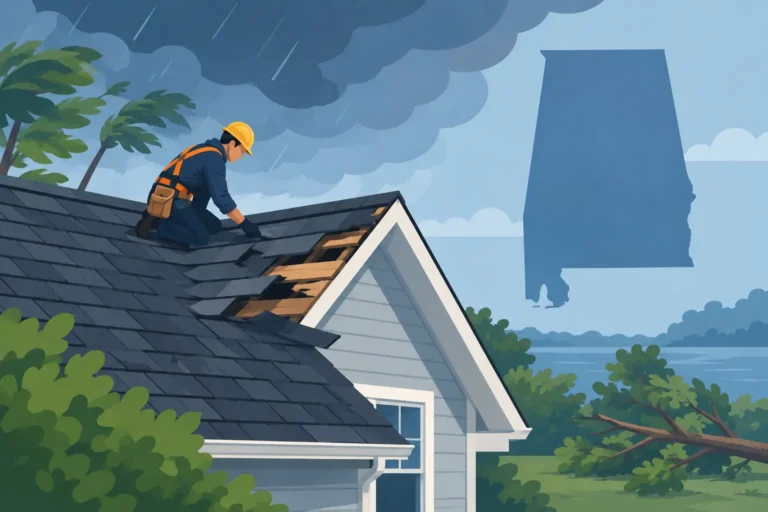
Do not climb onto the roof during rain, high winds, lightning, darkness, or immediately after a storm. Wet shingles, loose debris, and hidden structural damage make emergency roof access dangerous even for experienced people. A roof may look stable from the ground while having missing shingles, soft decking, or damaged flashing.
If water is near electrical outlets, fixtures, or your breaker panel, treat it as an electrical concern. Turn off power to the affected area only if you can do so safely, then contact a qualified electrician if there is any question about exposed wiring or moisture near electrical components.
For commercial properties, notify tenants or staff promptly and block off any unsafe areas. A small leak over a ceiling grid can affect insulation, lighting, inventory, and operations faster than many building owners expect.
Identify the Type of Roof Emergency
Not every roof problem requires the same response. Understanding the likely issue helps you explain the situation clearly when requesting an inspection or speaking with your insurance carrier.
A visible opening caused by a tree limb or falling debris needs quick temporary protection because rain can enter directly. Missing shingles after high winds may leave the underlayment exposed, which can lead to leaks if another storm arrives. Water stains on a ceiling may point to a roof leak, but water can travel along decking, rafters, or insulation before it becomes visible indoors.
A roof leak also is not always caused by the main roof field. Flashing around chimneys, vents, skylights, wall transitions, and pipe boots are common leak points. On low-slope commercial roofs, standing water, punctures, failed seams, and drainage issues can allow water into the structure.
From the ground, look for obvious signs such as lifted or missing shingles, debris impact, displaced metal, damaged gutters, or a tarp already blown loose. Take photos from a safe location, but do not attempt to confirm damage by walking the roof yourself.
Take Practical Steps to Limit Interior Damage
Once everyone is safe, focus on controlling the water that has already entered. Move furniture and belongings away from the leak. If items cannot be moved, cover them with plastic sheeting or a waterproof covering. Empty buckets regularly and dry wet flooring, walls, and contents as soon as possible to reduce the chance of mold growth.
If a ceiling is holding water and visibly bulging, do not stand beneath it or try to handle it without professional guidance. The safest response depends on the amount of water, ceiling condition, electrical hazards, and room layout. A restoration professional may be needed alongside a roofing contractor if water damage is extensive.
For businesses, document any affected inventory, equipment, tenant spaces, or interrupted operations. Clear records can help establish the full scope of the loss later, especially when roofing damage has led to interior damage.
Document Damage Before Temporary Repairs
Good documentation supports a smoother insurance conversation and gives your roofer a clearer starting point. Take wide photos of the home or building from several angles, then photograph specific areas such as missing shingles, fallen branches, damaged gutters, water spots, wet insulation, and affected personal property.
Include photos of the date and weather conditions when possible. Save storm alerts, contractor invoices, receipts for emergency supplies, and notes about when the leak began. If you make a temporary repair, photograph the area before and after the work.
There is a balance here. You should take reasonable steps to prevent additional damage, but you should not discard damaged materials, cover everything before documenting it, or authorize a full replacement based only on a quick visual opinion. Insurance coverage depends on your policy, cause of loss, deductible, and documented damage. A thorough inspection helps you make decisions based on evidence rather than pressure.
When a Tarp Is Necessary
A properly installed emergency tarp can protect exposed roof areas until permanent repairs can be completed. It is not a repair, and it should not become a long-term solution. Tarps can trap moisture, shift in wind, and conceal worsening damage if left in place too long.
Temporary protection is often appropriate after a tree strike, major shingle loss, an opening around a vent or skylight, or an active leak that cannot wait for a scheduled repair. The method matters. Nailing or fastening a tarp carelessly can create additional holes and cause more damage. A professional should assess whether the roof can be safely covered and use a method suited to the roof system.
If conditions are unsafe, waiting until the weather clears is the right call. No temporary measure is worth a fall or injury.
Contact Your Insurance Carrier, Then Get a Professional Inspection
After major storm damage, notify your insurance carrier as soon as practical. Ask about your claim number, deadline requirements, emergency mitigation coverage, and whether they need specific documentation. Keep notes of each call, including the representative’s name, date, and what was discussed.
It also helps to schedule a professional roof inspection early. An experienced contractor can identify storm-related damage that may not be obvious from the ground, distinguish old wear from recent impact, and explain the recommended scope of work in plain language. This is especially valuable when an adjuster inspection is scheduled.
Bluefin Exteriors provides no-pressure roof inspections and insurance claim help for property owners in Tuscaloosa, Birmingham, and surrounding Alabama communities. The goal should be clear documentation and an honest explanation of your roof’s condition, not a rushed decision while the property owner is under stress.
Do not sign an agreement you do not understand, and be cautious of anyone promising a specific claim outcome before the roof has been properly inspected. A reputable contractor can work with the information available, explain repair versus replacement considerations, and help you understand the next step without overpromising.
Repair or Replace? The Answer Depends on the Damage
A focused repair may be the right solution when damage is limited to a small area and the rest of the roofing system is in good condition. Replacing damaged shingles, flashing, pipe boots, or a localized section of membrane can restore protection without the cost of a full replacement.
Replacement may make more sense when the roof has widespread wind damage, repeated leaks, aging materials, extensive hail impact, or underlying decking problems. Matching existing shingles can also be difficult on older roofs, particularly when color has faded over time. For commercial properties, the decision may involve insulation moisture, drainage performance, membrane condition, and how repairs affect the system warranty.
The best choice is based on the roof’s age, material, extent of damage, future maintenance needs, and insurance findings. A good inspection should explain those trade-offs clearly.
Avoid Common Emergency Roofing Mistakes
The pressure after a storm can lead to expensive decisions. Do not let an unfamiliar contractor begin major work without confirming licensing, insurance, scope, and warranty details. Be cautious of cash-only demands, unusually low bids with vague descriptions, and contractors who cannot show local experience.
Avoid putting off a leak simply because it seems small. Water can damage decking, insulation, drywall, framing, and electrical systems long before the visible stain grows. At the same time, do not assume every shingle mark or ceiling stain means a full roof replacement is required. An honest assessment protects both your property and your budget.
A Clear Next Step After the Storm
Once the immediate danger has passed, arrange a prompt inspection, keep your documentation organized, and ask direct questions about temporary protection, repair options, insurance-related documentation, and timing. A roof emergency is stressful, but you do not have to make every decision at once. Start by protecting the property and getting clear information from a qualified local professional.
