
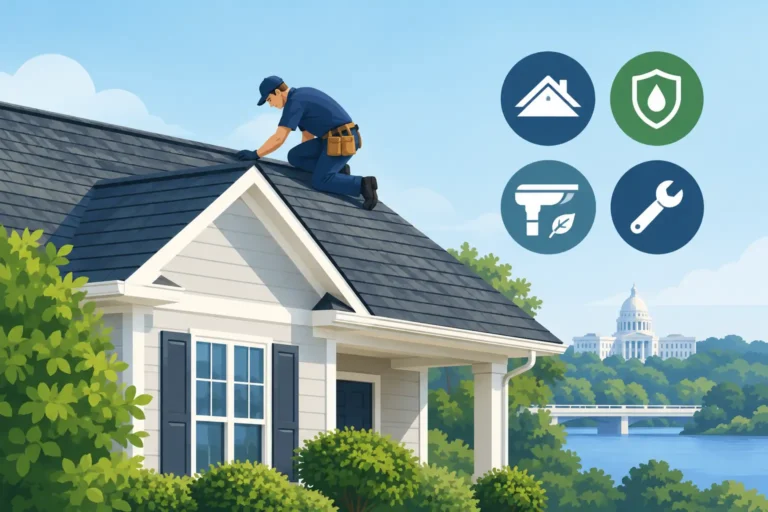
A roof problem rarely starts with water dripping into the living room. In Alabama, damage often begins quietly after a hard thunderstorm: a lifted shingle, a missing seal, loose flashing, or granules washed into a gutter. This residential roof maintenance guide helps homeowners catch those warning signs early, protect their property, and know when a professional inspection is the safer next step.
Your roof is a complete system, not just a layer of shingles. Shingles, underlayment, ventilation, flashing, gutters, and attic conditions all work together to move water away from your home. A small issue in one area can create a larger repair if it is ignored through another storm season.
Start With a Safe Ground-Level Inspection
You do not need to climb onto your roof to keep an eye on it. In fact, walking on a roof can be dangerous and may damage aging shingles. A walk around the home after major weather and a closer look from the ground can reveal plenty.
Look for shingles that are missing, curled, cracked, buckled, or visibly lifted along their edges. Dark patches may indicate moisture retention or algae growth, while exposed areas that look different in color can point to granule loss. Check the ground and driveway for shingle pieces, nails, or an unusual amount of gritty material after rain.
Pay close attention to roof valleys, ridges, chimneys, skylights, vents, and pipe boots. These transition areas rely on flashing and sealants to keep water out. They are also common places for leaks to begin, especially after wind-driven rain.
From the ground, inspect gutters and downspouts for sagging sections, loose fasteners, or overflow marks on the siding. A gutter that cannot drain properly can force water back toward the roof edge and fascia. Keeping water moving away from the home protects more than the roof – it also helps protect siding, landscaping, and the foundation.
Check the Attic Before a Leak Gets Worse
The attic often shows roof trouble before the ceiling does. On a dry day, use a flashlight to look for water stains, damp insulation, darkened wood, mold-like growth, or rusted nails protruding through the roof decking. A musty smell can also signal a moisture issue.
If you see a stain, do not assume the leak is directly above it. Water can travel along framing members before it reaches the ceiling or attic floor. A roofing professional can trace the likely entry point and determine whether the concern is related to shingles, flashing, ventilation, or condensation.
Attic ventilation deserves attention as well. During Alabama summers, trapped heat can raise attic temperatures and place extra stress on roofing materials. In cooler months, poor airflow can allow moisture to build up. Balanced intake and exhaust ventilation can support roof longevity, though the right setup depends on your roof design and existing system.
Follow a Seasonal Roof Maintenance Routine
A simple routine is more effective than waiting for a visible leak. For most homeowners, a visual inspection twice each year plus checks after significant storms is a practical baseline. Spring and fall are natural times to look for issues before the most demanding weather arrives.
Spring: Clear Debris and Check Drainage
Remove leaves, pine needles, and small branches from gutters and roof-adjacent areas where they can be reached safely from the ground or a secure ladder. Debris holds moisture against roofing materials and can block drainage paths. Trim tree limbs that touch the roof or hang closely over it, but use a qualified tree professional for large limbs or work near power lines.
Spring is also a good time to look for winter wear. Check for loose gutter sections, damaged screens, worn pipe boots, and shingle edges that may have lifted during high winds.
Summer: Watch for Heat and Storm Damage
Alabama heat is hard on roofs, particularly older asphalt shingles. Look for curling, cracking, blistering, and excessive granule loss. After a thunderstorm or hail event, inspect your yard, vehicles, window screens, and outdoor equipment. If those items show storm impact, your roof may have been affected too.
Hail damage is not always obvious from the ground. It can leave small bruised areas that shorten shingle life and compromise protection over time. Wind damage can be even harder to spot because a shingle may appear intact while its seal has broken. That is why a professional inspection after a severe storm can be worthwhile even when there is no active leak.
Fall and Winter: Prepare for Heavy Rain
Before the wettest stretches of the year, make sure gutters and downspouts are clear and secure. Watch for water spilling over gutter edges during rainfall. Overflow can signal a clog, an improper slope, or a downspout issue that needs correction.
Also check interior ceilings around exterior walls, chimneys, and upper-story rooms after extended rain. Fresh yellow-brown stains, peeling paint, or a bubbling ceiling texture should be addressed promptly. Waiting until the next storm can turn a limited repair into damaged insulation, framing, drywall, and flooring.
Know the Difference Between Wear and Storm Damage
Every roof ages, but normal wear and sudden storm damage are not the same thing. Aging shingles may gradually lose granules, become brittle, or show consistent wear across the roof. Storm damage is often more localized or directional, such as missing shingles on one slope, creased tabs, damaged ridge caps, or hail impacts scattered across exposed areas.
The difference matters when insurance may be involved. Homeowners should document the date of a major storm, take clear photos from the ground, save any fallen materials, and avoid making permanent repairs before the damage is properly documented when possible. Emergency steps to prevent further water intrusion are sensible, but keep receipts and photographs of any temporary work.
Do not rely on a quick glance to decide whether to file a claim. A qualified roofer can inspect the roof, explain what is visible, and provide documentation that helps you make an informed decision. If a claim is appropriate, having clear evidence from the start can reduce confusion later.
When a Professional Roof Inspection Makes Sense
Some maintenance tasks are reasonable for homeowners, but certain situations call for a trained eye. Schedule an inspection if you notice a leak, missing shingles, loose flashing, recurring gutter overflow, attic moisture, or visible storm debris. It is also wise to have the roof checked after hail, strong winds, falling limbs, or a storm that damaged nearby homes.
Age is another factor. If your asphalt shingle roof is approaching the later part of its expected service life, annual professional inspections can help you plan rather than react. A repair may be the right choice when damage is limited and the surrounding roof is in good condition. If widespread wear, repeated leaks, or multiple damaged areas are present, replacement may offer better long-term value.
A reliable contractor should explain that distinction clearly. You should understand what was found, what work is recommended, and why. There should be no pressure to replace a roof that can be repaired responsibly.
Avoid Maintenance Mistakes That Create Bigger Problems
Homeowners often mean well but accidentally make roof issues worse. Pressure washing shingles can remove protective granules and shorten their service life. Smearing roofing cement over a leak without identifying the source can trap water or delay a proper repair. Installing a new layer of shingles over a failing roof may also hide decking, flashing, and ventilation problems that need attention.
Avoid hiring based only on the lowest estimate or a door-to-door offer after a storm. Ask whether the contractor is licensed and insured, how damage will be documented, what materials will be used, and what workmanship warranty is provided. For insurance-related work, choose a roofing company that understands how to communicate damage findings clearly without making promises about claim outcomes.
Bluefin Exteriors provides honest, no-pressure roof inspections for homeowners who need clear answers after Alabama storms. A careful inspection can identify whether your roof needs a small repair, claim documentation, or a plan for replacement.
The best time to address roof damage is before the next hard rain tests it. If something looks out of place, smells damp in the attic, or appeared after a storm, get it checked while the repair is still manageable.
