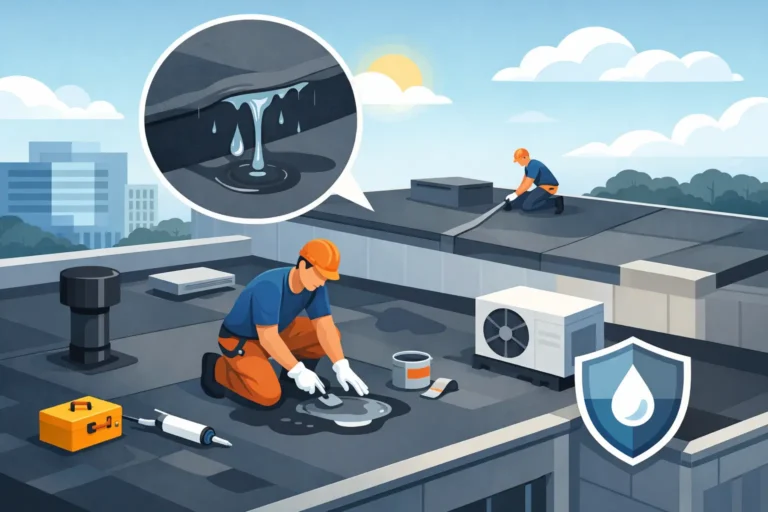
A water stain on the ceiling rarely sits directly below the actual leak. On a low-slope EPDM roof, water can travel beneath insulation, along a deck seam, or around a penetration before it reaches the inside of the building. That is why effective EPDM roof leak repair begins with locating the source, not simply covering the visible symptom.
For Alabama property owners, a leak may follow a severe thunderstorm, wind event, fallen limb, or years of standing water and normal wear. Acting quickly helps protect insulation, decking, interior finishes, inventory, and electrical systems. It also creates a clearer record if storm damage may be part of an insurance claim.
Start by Containing Water and Documenting the Damage
If water is actively entering the building, move furniture, equipment, and stored materials out of the affected area. Place containers under drips where it is safe to do so, and avoid electrical fixtures, outlets, or wet ceiling materials that may collapse. If the roof is unsafe to access, do not climb onto it to investigate.
Take clear photos and videos from inside the building before cleanup begins. Capture ceiling stains, dripping water, damaged insulation, wet walls, and any affected contents. If it is safe to photograph the roof from the ground, note visible debris, displaced edge metal, punctures, or ponding water.
Documentation matters for two reasons. First, it helps a roofing professional understand how the leak is behaving. Second, it can support an insurance claim when a covered storm event caused or worsened the damage. A temporary emergency repair may be necessary, but it should be documented rather than used to hide the condition of the roof.
Why EPDM Roofs Leak
EPDM is a durable synthetic rubber membrane used on many commercial and low-slope residential roofs. It performs well when properly installed and maintained, but no roof system is immune to damage. The membrane itself may be in good condition while a seam, flashing, drain, or rooftop penetration has failed.
Open or weakened seams
EPDM seams are sealed with specialized tape or adhesives. Over time, movement, age, trapped moisture, poor surface preparation, and installation defects can weaken those connections. A seam opening may look minor from the roof surface but allow substantial water below the membrane during a hard rain.
Punctures and impact damage
Branches, loose equipment, dropped tools, foot traffic, or storm debris can puncture EPDM. Some punctures are obvious. Others are hidden beneath leaves, standing water, or loose material. A puncture should be repaired with a compatible EPDM patch system, not ordinary roofing cement or a generic caulk.
Failed flashings and penetrations
Pipes, HVAC curbs, vents, skylights, wall transitions, and roof edges are common leak locations. These areas move more than the open field of the roof and require careful detailing. Cracked sealant around a penetration may be the visible issue, but the underlying flashing can also be loose or deteriorated.
Drainage problems
Standing water does not always mean a roof is leaking, but persistent ponding puts added stress on seams, flashings, and the membrane. Clogged drains, blocked scuppers, sagging insulation, or inadequate slope can keep water on the roof long after a storm. The repair may need to address both the leak and the reason water is collecting there.
The Right EPDM Roof Leak Repair Depends on the Cause
A proper repair starts with an inspection of the entire roof area, not just the place where water appeared indoors. A contractor may trace moisture, inspect seams and flashings, check drains, and look for storm-related damage across the system. In some cases, a controlled water test or other diagnostic method is needed to confirm the entry point.
For a small, isolated puncture on an otherwise sound membrane, the solution may be straightforward. The area is cleaned, dried, primed when required, and covered with a properly sized compatible patch. The patch must extend beyond the damaged area and be rolled securely to create a watertight bond.
Seam repairs are more involved. The existing seam must be evaluated for contamination, adhesion loss, and moisture beneath the membrane. Depending on the condition, a contractor may clean and prime the area before applying seam tape or a cover strip. Simply applying mastic over an open seam can create a short-term appearance of repair without restoring dependable protection.
Flashing repairs may require new uncured EPDM flashing, termination details, sealant, or replacement of damaged metal edging. If wet insulation is found below the membrane, it may need to be removed and replaced. Leaving saturated insulation in place can trap moisture, reduce thermal performance, and allow problems to spread below the roof surface.
When a Patch Makes Sense and When It Does Not
A patch is often a practical, cost-effective repair when damage is limited, the membrane is still flexible, and the rest of the roof is performing well. This is especially true after a single puncture or localized flashing issue.
Repair becomes less economical when leaks appear in several locations, seams are failing throughout the roof, insulation is widely wet, or the membrane is near the end of its service life. Repeated patching can become more expensive than a planned restoration or replacement, particularly when ongoing leaks threaten the building interior.
The decision should not be based on age alone. A well-maintained EPDM roof may have useful life remaining, while a newer roof with poor drainage or installation defects may require more extensive work. An honest inspection should explain what is damaged now, what may become a problem later, and which option protects the property without pushing unnecessary replacement.
Avoid Temporary Fixes That Create Bigger Problems
Property owners understandably want to stop a leak fast. However, several common shortcuts can complicate a future repair. Applying incompatible coatings, asphalt products, household caulk, or excessive roof cement can interfere with EPDM adhesion. Screws driven through the membrane without proper flashing create new entry points for water.
Pressure washing can also force water into weak seams and damage vulnerable areas. Walking across a wet roof is risky and can cause additional punctures, especially where insulation has softened beneath the membrane.
If an emergency cover is necessary after a storm, it should be installed carefully and removed or incorporated into a permanent repair by a qualified roofing professional. The goal is to limit immediate damage without making it harder to identify the original source of the leak.
Storm Damage and Insurance Claim Considerations
Wind and debris damage can be difficult to spot from the ground, especially on a low-slope roof. A membrane may have lifted at an edge, a seam may have separated, or debris may have punctured an area hidden by water. After a major storm, a professional inspection provides a factual assessment before minor damage turns into an interior loss.
If the damage may be insurance-related, keep photos, dates, repair invoices, and records of temporary mitigation. Do not delay emergency work solely because you are waiting on an adjuster. Most policies expect property owners to take reasonable steps to prevent further damage.
Bluefin Exteriors can inspect storm-affected roofing, document visible conditions, and help property owners understand the roofing side of the claims process. The final coverage decision belongs to the insurer, but clear documentation and an accurate repair scope can reduce confusion during a stressful situation.
What to Expect From a Professional Inspection
A dependable inspection should be clear and no-pressure. The contractor should examine the membrane, seams, flashing details, drains, roof edges, penetrations, and accessible interior areas affected by moisture. You should receive a straightforward explanation of the likely source, the recommended repair, and whether there are signs of broader system issues.
Ask whether the proposed materials are specifically compatible with your EPDM system and whether wet insulation or decking was found. It is also reasonable to ask how the repair will be tested and what workmanship warranty applies. A clean job site and careful protection of the building interior matter just as much as the work performed on the roof.
A leak does not automatically mean your EPDM roof needs replacement, but it does deserve prompt attention. The right repair protects more than the membrane – it protects the building, the people inside it, and your ability to make a confident decision before the next Alabama storm arrives.
