A low-slope roof may look simple from the ground, but the membrane you choose affects energy use, leak resistance, maintenance, and long-term replacement costs. When comparing EPDM versus TPO roofing, Alabama property owners should look beyond the material name. The best choice depends on your building, drainage, roof traffic, insulation, budget, and the condition of the existing roof.
For commercial buildings in Tuscaloosa, Birmingham, and surrounding communities, both systems can perform well when they are properly designed and installed. The key is selecting the membrane that fits the roof’s real conditions, not simply choosing the option that appears less expensive on an initial estimate.
EPDM versus TPO roofing at a glance
EPDM and TPO are single-ply roofing membranes designed for low-slope commercial roofs. They are common on offices, retail centers, warehouses, churches, multifamily properties, and other buildings with broad, mostly flat roof areas.
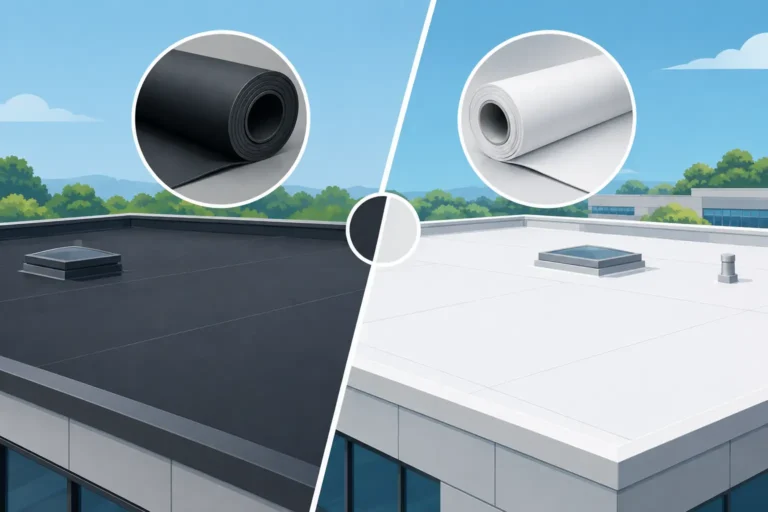
EPDM is a synthetic rubber membrane. It is most often black, although white EPDM is available. Black EPDM has a long track record and is known for flexibility, weather resistance, and dependable performance over time. Seams are typically joined with adhesives or specialized seam tape.
TPO stands for thermoplastic polyolefin. It is commonly white and highly reflective, which can be useful under Alabama’s intense sun. TPO seams are heat-welded, creating a bonded connection that can be very strong when installed correctly.
Neither material is automatically better for every property. A well-installed EPDM roof can outperform a poorly installed TPO roof, and the reverse is also true. The roofing contractor’s installation methods, flashing details, drainage plan, and quality control matter as much as the membrane itself.
Heat and energy use in Alabama
Alabama summers put every commercial roof to work. Direct sun, high temperatures, humidity, and frequent afternoon storms can expose weaknesses quickly.
TPO’s white surface reflects more sunlight than traditional black EPDM. That can help keep the roof surface cooler and may reduce cooling demand in some buildings. The actual energy benefit depends on insulation levels, building use, HVAC efficiency, roof layout, and whether the roof is shaded by equipment or nearby structures. A reflective roof is helpful, but it is not a replacement for proper insulation or ventilation planning.
Black EPDM absorbs more heat, which can make the roof surface much hotter in summer. That does not mean it is the wrong choice for Alabama. EPDM remains a proven option, particularly when durability, flexibility, and repairability are higher priorities than surface reflectivity. White EPDM may also be worth discussing when a property owner wants the characteristics of EPDM with a lighter-colored surface.
If energy performance is a major concern, ask for the roofing system to be evaluated as a complete assembly. Membrane color is one part of the decision. Insulation thickness, cover boards, attachment method, and air movement inside the building all influence operating costs.
Seams, leaks, and storm exposure
Most low-slope roof leaks occur at seams, penetrations, drains, curbs, edges, or flashing transitions rather than in the middle of an open membrane field. That is why details matter so much after a severe storm.
TPO’s heat-welded seams are one of its strongest features. Proper welding creates a continuous bond that can stand up well to water exposure and normal thermal movement. However, a seam must be welded at the correct temperature and speed. Inconsistent workmanship can leave weak areas that may not be obvious until water finds them.
EPDM seams rely on adhesives or seam tape. Modern seam tapes have improved substantially and can provide excellent performance when the surface is properly cleaned, primed, and installed. EPDM is also very flexible, which helps it accommodate movement as temperatures change.
Storm damage can affect either system. Wind can stress perimeter edges and flashing, branches can puncture the membrane, and standing water can expose drainage issues. After hail, wind, or falling debris, a professional inspection should document visible damage, hidden punctures, displaced metal, and interior signs of moisture. For insured losses, clear documentation can make the claims process easier, though coverage always depends on the specific policy and the cause of damage.
Durability and maintenance needs
EPDM has been used on commercial roofs for decades and has a well-established performance history. Its rubber-like flexibility can be especially useful on roofs that experience regular expansion and contraction. It is often a practical choice for large roof areas with limited foot traffic.
TPO is also durable, but it should be selected with attention to membrane thickness, manufacturer specifications, and expected rooftop activity. A roof with frequent service calls for HVAC equipment, solar components, or other mechanical systems needs designated walk pads and well-protected pathways regardless of membrane type.
Neither material should be treated as maintenance-free. At least twice a year, and after major storms, have the roof checked for clogged drains, loose flashing, damaged sealant, open seams, punctures, and debris. Leaves and standing water may seem minor, but they can turn into expensive problems when ignored.
Repairs should also match the original system. EPDM and TPO require different materials and techniques. Using the wrong patch, adhesive, or sealant can compromise the repair and make future maintenance harder.
Installation and cost considerations
The installed cost of EPDM versus TPO roofing is not always predictable from material pricing alone. Roof size, tear-off requirements, insulation upgrades, deck condition, number of penetrations, drainage corrections, edge metal, access, and warranty requirements can all affect the final number.
A fully adhered system may cost differently than a mechanically attached or ballasted system. Tear-off and replacement may be necessary when the existing roof is saturated or structurally unsound, while some buildings may qualify for a recover system over an existing roof. That decision should be based on a thorough inspection, moisture assessment, local code requirements, and the condition of the current assembly.
Property owners should be careful with estimates that only provide a price per square foot without explaining what is included. A complete proposal should identify the membrane type and thickness, insulation, attachment method, flashing details, drain work, edge metal, warranty terms, and any repairs needed to the deck or substrate.
The lowest bid can leave out critical parts of the roofing system. A better value is a clearly scoped installation that addresses the reasons the old roof failed in the first place.
Which roofing system fits your property?
TPO may be a strong fit if your building has significant sun exposure and you want a reflective white membrane with heat-welded seams. It is commonly chosen for facilities where cooling costs and surface temperature are key concerns.
EPDM may make more sense if you value its long service history, flexibility, and established repair methods. It can be especially appealing for owners who want a proven rubber membrane and have a roof design that does not place unusual emphasis on reflectivity.
Drainage can change the answer. If your roof holds water after a storm, solve the drainage problem before expecting any membrane to perform at its best. Likewise, frequent rooftop traffic may call for walk pads, reinforced protection, or a different system design regardless of whether you choose EPDM or TPO.
For a roof with storm-related damage, start with an honest inspection before choosing a replacement material. Bluefin Exteriors can assess the roof condition, explain the practical differences between systems, and help document damage for an insurance claim when appropriate.
The right roof is the one built around your building’s needs, installed with care, and inspected before small issues become active leaks.
