
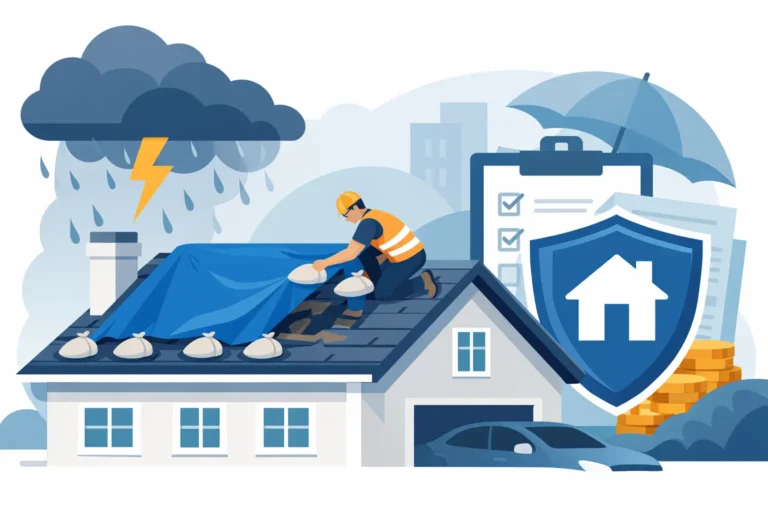
A fallen limb punches through your shingles during an Alabama storm. Rain is coming through the ceiling, insulation is getting wet, and you need protection now – not after a claim is reviewed. So, is emergency roof tarping covered by insurance? In many cases, yes. Homeowners and commercial property policies commonly cover reasonable temporary measures taken to prevent additional damage after a covered loss.
The key words are covered loss and reasonable temporary measures. A tarp does not turn a worn-out roof or an excluded issue into a covered claim. But when wind, hail, a fallen tree, or another covered event damages a roof, your policy may pay for emergency tarping as part of the claim. The specific answer depends on your policy, deductible, the cause of the damage, and the documentation you provide.
When emergency roof tarping is usually covered
Most property insurance policies require you to take reasonable steps to protect the building from further damage after a loss. That may include placing a tarp over an opening, removing wet materials, boarding a broken window, or arranging temporary repairs. In other words, protecting the property is often part of your responsibility as the policyholder.
If a covered storm event creates an opening in the roof, the cost of a professional emergency tarp is often considered a necessary mitigation expense. For example, a tarp installed after wind lifts shingles and exposes the roof deck may help prevent rain from damaging ceilings, drywall, flooring, and personal property. The insurer may include that cost in the claim, subject to your policy terms.
This does not necessarily mean the tarp is paid as a separate check or before your deductible is applied. It may be included within the overall settlement for roof and interior damage. If the total covered damage does not exceed your deductible, you could still be responsible for the expense.
Covered event versus pre-existing roof problems
Insurance is designed for sudden, accidental damage, not routine maintenance. A roof that leaks because it is old, poorly maintained, or near the end of its useful life may not qualify for coverage. If the insurer determines the leak was caused by normal wear, faulty installation, deterioration, or an issue that existed before the storm, it may deny the roof portion of the claim and the emergency tarp cost.
Real situations are not always that simple. A roof can have some age-related wear and still sustain legitimate wind or hail damage during a storm. That is why a thorough inspection and clear documentation matter. A qualified roofer can identify storm-related damage, locate active entry points, and explain the difference between recent damage and long-term wear.
What to do before you tarp the roof
Safety comes first. Do not climb onto a wet, steep, damaged, or storm-affected roof. Downed power lines, loose shingles, hidden soft spots, and high winds can turn a temporary repair into a serious injury. If the roof is actively leaking, move valuables away from the area, place containers under drips where possible, and contact a professional roofing contractor for emergency protection.
Before a tarp is installed, take photos and short videos from a safe location. Capture the affected roof area, fallen branches or debris, visible shingle damage, water entering the building, and any interior damage. If weather conditions make photos impossible, document the condition as soon as it is safe to do so.
Then notify your insurer promptly. You do not always need to wait for an adjuster before taking action to stop active water intrusion. In fact, waiting can allow additional damage to spread. Still, you should avoid permanent repairs until the damage is documented and the insurer has an opportunity to inspect, unless immediate work is necessary to make the property safe.
Keep every invoice, receipt, estimate, and photo related to the emergency service. Ask the roofing contractor for an itemized invoice that describes the temporary tarp installation, materials used, labor, date of service, and the storm-related conditions observed. This creates a clearer record for the claim.
How insurance companies evaluate tarp claims
An insurance adjuster will generally look at the cause of loss, the condition of the roof before the event, the scope of storm damage, and whether the temporary work was appropriate. They may inspect the roof, review weather data, request photos, and compare the emergency invoice with the damage they observe.
A proper tarp installation should be large enough to protect the damaged area and secured in a way that minimizes further harm to the roof. It should be temporary, not a substitute for a full repair. The goal is to stop or reduce water intrusion while the claim and permanent repair plan move forward.
Be cautious of anyone who promises that insurance will pay for everything before reviewing your policy and damage. No contractor can guarantee claim approval. A dependable contractor can document the condition, provide a clear scope of work, and help you understand what questions to ask your insurer.
Your deductible still matters
A deductible is the amount you pay before insurance contributes to a covered claim. In Alabama, wind and hail claims may have a separate deductible, sometimes based on a percentage of the insured value of the home. That amount can be significantly higher than a standard flat deductible.
For a smaller roof opening with limited interior damage, the tarp cost and repair may fall below the deductible. Filing a claim may still be appropriate if the damage is more extensive than it first appears, but it is worth understanding the likely scope before assuming insurance will reimburse every expense.
For commercial properties, deductibles, policy language, and coverage limits can be even more varied. Building owners and facility managers should review their policy’s emergency services and protective safeguards provisions, especially before severe weather season.
Common reasons a tarp expense may be denied
A tarp claim can be denied when the underlying damage is not covered, the work appears unnecessary or excessive, or the documentation does not establish a storm-related need. Delaying action until water has caused preventable interior damage can also complicate a claim.
Problems may arise when a temporary tarp is installed over a long-standing leak without evidence of a recent covered event. The same can happen when an invoice is vague, inflated, or does not distinguish emergency protection from permanent repair work. A clear estimate protects you from confusion and gives the insurer a more complete picture of what was done.
It is also possible for the roof claim to be approved while some related costs are questioned or adjusted. If that happens, review the insurer’s written explanation, compare it with your contractor’s documentation, and ask for clarification. You have the right to understand how the decision was made.
Is emergency roof tarping covered if you have already filed a claim?
Usually, filing the claim does not remove your responsibility to protect the property from additional damage. If rain is entering through a storm-damaged roof, a temporary tarp may still be the right next step while you wait for the inspection. Let the insurer know that emergency mitigation is being performed, save your records, and do not discard damaged materials unless they create a safety or health concern.
A professional emergency tarp can also make the adjuster’s inspection easier by stabilizing the situation without hiding the evidence. Photos taken before, during, and after installation help show both the original damage and the work completed to protect the building.
Bluefin Exteriors helps homeowners and property owners in Tuscaloosa, Birmingham, and surrounding communities document storm damage, install appropriate temporary protection, and navigate the repair process with clear, no-pressure guidance.
When your roof is exposed, the best decision is rarely to wait and hope the next storm passes by. Protect the property safely, document what happened, and get a qualified roofing professional involved early so temporary damage does not become a much larger repair.
