
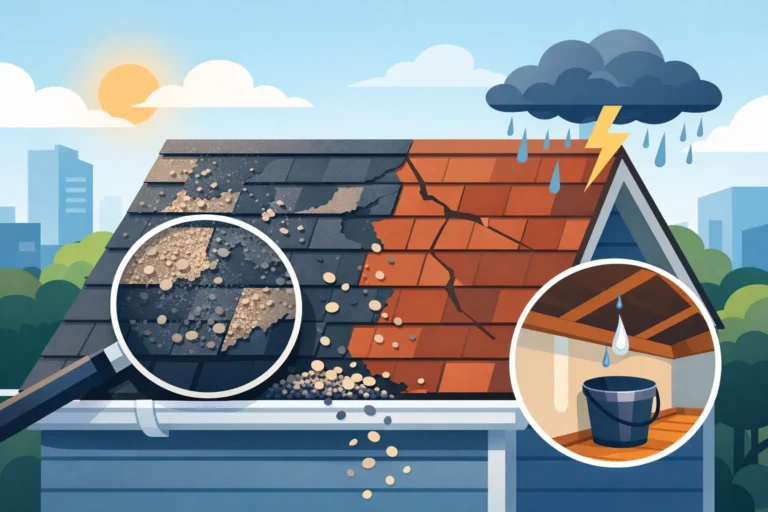
A few loose granules in a gutter are easy to overlook. But shingle granule loss can be one of the first visible signs that an asphalt roof has been weakened by age, heat, hail, wind, or repeated Alabama storms. The question is not simply whether granules are coming off. It is whether the loss is normal, isolated, or a sign that your roof may no longer protect your property as it should.
For homeowners and property owners in Tuscaloosa, Birmingham, and surrounding communities, a clear answer often starts with a professional roof inspection. A no-pressure inspection can separate cosmetic wear from damage that deserves repair, documentation, or an insurance claim.
What Are Shingle Granules and Why Do They Matter?
Asphalt shingles are covered with small, mineral-coated granules. These granules are not just for appearance. They help shield the asphalt layer underneath from the sun’s ultraviolet rays, add fire resistance, and give shingles some protection from normal weather exposure.
When granules wear away, the darker asphalt beneath becomes more exposed. That exposure can speed up shingle aging, make the roof more vulnerable to cracking, and eventually contribute to leaks. Granule loss does not always mean a roof needs immediate replacement, but it should never be dismissed without looking at the condition of the roof as a whole.
A roof can lose some granules over its life and still perform well. The concern grows when loss is widespread, concentrated in storm-hit areas, or accompanied by other signs of damage.
Is Some Shingle Granule Loss Normal?
Yes. New shingles often shed a small amount of excess granules after installation. You may notice them in gutters or at the bottom of downspouts during the first few rains. This is generally normal and does not automatically indicate a problem.
Older roofs also lose granules gradually as part of the aging process. In Alabama, intense summer sun, humidity, temperature changes, heavy rain, and wind can all accelerate normal wear. A roof nearing the end of its expected service life may show a more noticeable amount of granule loss, especially on slopes that receive the strongest afternoon sun.
The difference is pattern and severity. A light, occasional amount in the gutter is different from finding piles of granules after every storm or seeing dark, bare-looking spots across the roof. If the roof is relatively new, sudden shingle wear deserves even closer attention.
Common Causes of Granule Loss on Alabama Roofs
Hail and Wind Damage
Hail can knock granules loose on impact, sometimes leaving small bruised areas that are difficult to see from the ground. On asphalt shingles, hail damage may appear as dark spots, exposed asphalt, or areas where the surface texture looks disturbed. Even modest hail can cause damage if the shingles are older or already brittle.
High winds can create a different problem. Wind may lift or bend shingles, weakening the seal and scraping granules away along the edges. After a strong storm, shingles may lie back down and look mostly normal from the driveway, while the damaged areas remain vulnerable to water intrusion.
Age, Heat, and Sun Exposure
Alabama roofs take a lot of heat. Years of direct sunlight can dry the oils in asphalt shingles and make them less flexible. Once shingles become brittle, they are more likely to release granules during rain, wind, and temperature changes.
This type of loss usually develops gradually. You may see fading, thinning texture, curling corners, cracking, or dark patches in addition to loose granules. Repairs may be possible when the issue is limited to a small area, but widespread aging often makes replacement the more dependable option.
Heavy Rain and Poor Drainage
Rain does not usually cause healthy shingles to shed large amounts of granules on its own. It can, however, wash away granules that were already loosened by hail, wind, or age. That is why gutters can provide an early warning sign after a storm.
Clogged gutters and standing water can also create problems along roof edges. If water backs up under the shingles, it can affect the roof deck and surrounding materials. Granule buildup in gutters should be cleaned out carefully, but it should also be treated as useful information about your roof’s condition.
Foot Traffic and Physical Damage
Walking on shingles can dislodge granules, especially during hot weather when asphalt is softer or during cold weather when shingles are brittle. Satellite work, holiday-light installation, tree trimming, and other roof access can leave scuffs or damaged areas.
That does not mean no one should ever walk on a roof. It means roof access should be limited and handled by trained professionals who know how to inspect the surface without causing additional damage.
Signs Granule Loss May Need Professional Attention
You do not need to climb onto the roof to spot every concern. Start with what you can safely see from the ground, in the gutters, and around the property after a storm.
Pay attention when you notice several issues together, such as:
- Granules collecting heavily in gutters, downspouts, or on the ground after rain
- Dark spots, bare patches, or uneven-looking sections on the shingles
- Lifted, cracked, curled, or missing shingles
- Water stains on ceilings, damp attic insulation, or active leaks
- Hail, strong winds, or fallen limbs in your area
One sign alone may not prove the roof has failed. For example, a small amount of granules in a gutter may be normal. But granule loss combined with storm activity, visible shingle damage, or interior moisture should be inspected promptly. Waiting can turn a manageable roofing issue into damage to decking, insulation, walls, or personal property.
Can Shingle Granule Loss Be Covered by Insurance?
It depends on what caused it and what your insurance policy covers. Insurance commonly addresses sudden, accidental storm damage, such as covered wind or hail damage. It generally does not cover normal wear, poor maintenance, or a roof that has simply reached the end of its useful life.
This is where documentation matters. After a storm, take clear photos of visible conditions from the ground, including fallen branches, damaged gutters, or loose shingles. Make note of the storm date and any interior water issues. Then schedule a qualified roof inspection before making assumptions about the cause or cost of repairs.
A professional inspection can identify storm-related damage that is not obvious to an untrained eye and provide the information needed for a claim. A contractor with insurance-adjusting experience can also help explain the findings, document the scope of damage, and support you through the claim process without making promises your policy may not support.
What to Do If You Find Granules in Your Gutters
First, avoid climbing onto the roof or attempting a repair based only on what you see in the gutter. Loose granules are a reason to investigate, not a diagnosis by themselves.
If a recent storm passed through, document the date and photograph any visible property damage. Check the attic for water stains, dampness, or daylight coming through the roof deck, but do not disturb wet insulation or electrical components. If there is an active leak, place a container under it and call for help quickly.
Next, arrange a roof inspection. The inspection should look beyond the granules to assess shingles, flashing, vents, pipe boots, roof valleys, gutters, and the condition of the roof deck where accessible. A thorough assessment provides a practical recommendation: monitor the roof, complete a targeted repair, or consider replacement when the damage or wear is more extensive.
Repair or Replacement: How the Right Decision Is Made
A few damaged shingles or a localized storm impact area may be repairable if matching materials are available and the surrounding roof remains in good condition. Repair can be a sensible, cost-conscious choice when it restores the roof’s ability to shed water and protects the underlying structure.
Replacement becomes more likely when granule loss is widespread, shingles are brittle or cracked across multiple slopes, or the roof has sustained significant hail or wind damage. It may also make more sense when repairs would be repeated, highly visible, or unlikely to provide long-term protection.
The right recommendation should be based on evidence, not pressure. Bluefin Exteriors helps property owners understand what the roof is showing, what the options are, and what documentation may be needed if storm damage is involved.
A roof does not have to be leaking before it deserves attention. If granules are showing up in your gutters or a recent storm has you concerned, a timely inspection can give you clear answers and help protect the property before a small warning becomes a larger repair.
