A roof in Central Alabama has to handle more than rain. It faces hard sun, humid summers, sudden wind events, hail, and the occasional storm that leaves homeowners wondering whether their roof will make it through another season. Metal roofing is a serious option for property owners who want long-term performance, but it is not a one-size-fits-all answer.
The right choice depends on your building, budget, roof design, and the condition of the existing roof. A professional inspection can help separate a worthwhile investment from an upgrade that does not fit the property.
Why Metal Roofing Appeals to Alabama Property Owners
Metal roofs have earned a reputation for durability because they are designed to shed water quickly, resist rot, and stand up well to severe weather when properly installed. Unlike traditional roofing materials, metal does not absorb moisture. That matters in Alabama, where humidity and repeated rain can expose weak points in an aging roof.
Many homeowners also choose metal because of its service life. While asphalt shingles are often replaced sooner, a properly installed metal roof can last for decades. The higher initial cost may make sense for an owner planning to stay in the home long term, for a property with recurring storm-related repairs, or for a commercial building where avoiding disruption is a priority.
Metal can also reflect a portion of the sun’s heat rather than absorbing it the way darker roofing materials often do. Energy savings vary by roof color, insulation, attic ventilation, building design, and HVAC use. It should be viewed as a possible benefit, not a guaranteed utility-bill reduction.
What Type of Metal Roof Fits Your Property?
Not every metal roof looks or performs exactly the same way. The material, panel profile, coating, fastener system, and installation details all affect cost, appearance, and long-term maintenance.
Standing seam panels
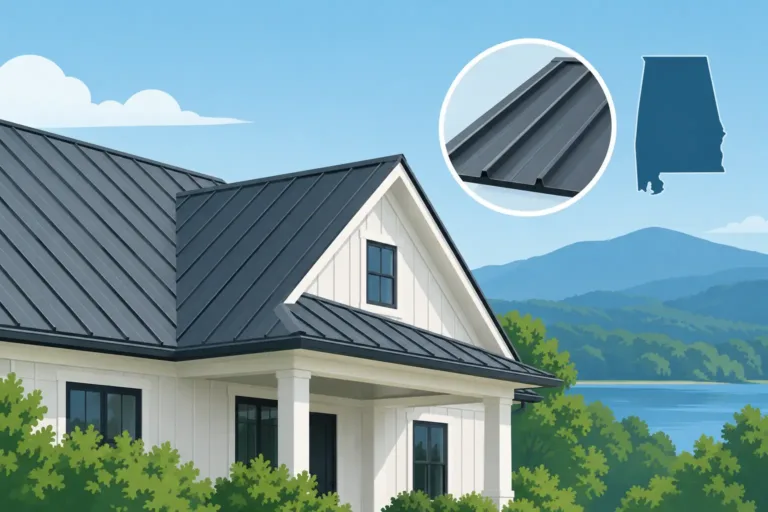
Standing seam roofing has raised seams that run vertically from the ridge to the eave. Its concealed-fastener design means the screws are generally not exposed to weather, which can reduce potential leak points over time. This style has a clean, modern appearance and is a popular choice for homes, churches, agricultural buildings, and many commercial properties.
It is also commonly one of the higher-priced metal options. Complex rooflines with valleys, dormers, skylights, chimneys, or multiple pitch changes require more detail work, and that work matters as much as the panels themselves.
Exposed-fastener metal roofing
Exposed-fastener panels are often selected for garages, workshops, barns, and some commercial structures because they can be more economical. As the name suggests, the fasteners are visible. The screws use sealing washers, but those components need periodic attention as the roof expands and contracts through seasonal temperature changes.
This option can perform well when installed correctly and maintained on schedule. It may not be the best fit for every residence, especially when appearance or minimum maintenance is the main goal.
Metal shingles, slate, and tile profiles
Metal can also be formed to resemble traditional shingles, slate, or tile. These systems appeal to owners who want the durability of metal without the look of long vertical panels. They can be especially useful for homes with a more traditional architectural style.
The trade-off is usually cost and installation complexity. A product that looks like slate or tile may require more components and more labor than a straightforward panel system.
Storm Performance Starts With Installation
A metal roof is not automatically storm-proof. It must be installed as a complete system with the correct underlayment, flashing, trim, fastening pattern, ventilation plan, and connections around penetrations. A high-quality panel cannot compensate for poor work around a chimney, pipe boot, valley, or roof-to-wall transition.
Wind resistance depends on the specific roofing system and how it is attached to the roof deck. Hail can still leave dents or finish damage, particularly with certain panel types and gauges. Large hail or windblown debris can damage any roof, including metal. The advantage is that metal systems are generally built to be tough, but property owners should still inspect after significant weather.
After a storm, look for loose trim, displaced panels, damaged flashing, punctures, exposed underlayment, or water stains inside the building. Some damage is difficult to see from the ground. A no-pressure roof inspection gives you a clearer picture before a small problem becomes a leak.
The Cost Question: Upfront Price Versus Long-Term Value
Metal roofing usually costs more upfront than a standard asphalt shingle replacement. The final price is influenced by roof size, slope, height, accessibility, material type, panel thickness, tear-off needs, decking repairs, and the amount of custom flashing required.
A simple, low-slope roof with easy access is very different from a steep roof with multiple valleys and architectural features. This is why square-foot estimates found online can be misleading. They rarely account for the details that protect the roof from leaks.
For some owners, the longer expected service life and lower replacement frequency justify the investment. For others, a high-quality asphalt shingle roof may be the more practical choice, particularly if the property will be sold soon or the budget needs to address other repairs. Honest recommendations should reflect the condition of the property and your plans, not push the most expensive material.
Can Metal Roofing Be Installed Over Existing Shingles?
Sometimes, but it is not always the right move. Installing metal over one existing layer of shingles may reduce tear-off labor and limit debris, but it can also hide damaged decking, trapped moisture, or underlying installation issues. Local code requirements and manufacturer specifications also matter.
Tearing off the old roof allows the contractor to inspect the deck and address soft, rotten, or loose areas before the new system goes on. That is often the better path after storm damage or when the existing roof has a history of leaks. A proper inspection should determine whether an overlay is appropriate rather than treating it as an automatic cost-saving measure.
Insurance Claims and Metal Roof Replacement
If a storm has damaged your roof, insurance coverage may help with eligible repairs or replacement depending on the policy, the cause of loss, and the documented damage. Insurance does not simply replace a roof because it is old, and an adjuster may not see every issue during an initial inspection.
Documentation is important. Photos, measurements, repair history, and a clear scope of damage can help support a claim. A roofing contractor with insurance-adjusting experience can explain the roof findings, provide the information your carrier needs, and help you understand the scope once it is issued. The contractor should not promise claim approval or tell you what your policy covers, but knowledgeable claim support can make the process far less confusing.
If you are considering an upgrade from shingles to metal after an approved claim, ask about the difference in cost. Insurance may pay for like-kind replacement based on the policy and approved scope, while the owner pays the upgrade amount.
Questions to Ask Before Choosing a Metal Roof
Before signing a contract, ask what metal system is being installed, how it will be fastened, and what underlayment and flashing details are included. Confirm whether damaged decking is addressed if found, how penetrations will be sealed, and what workmanship warranty applies.
You should also ask how the crew will protect landscaping, manage nails and debris, and leave the site at the end of each day. A roof replacement is a major project, but it should not leave your property looking like a construction zone for weeks.
Bluefin Exteriors helps homeowners and property owners across the Tuscaloosa and Birmingham areas evaluate storm damage, roofing options, and claim-related documentation with clear, straightforward guidance. Whether metal is the right fit or not, the first useful step is knowing the actual condition of the roof you have. A careful inspection gives you the facts needed to make that decision with confidence.
