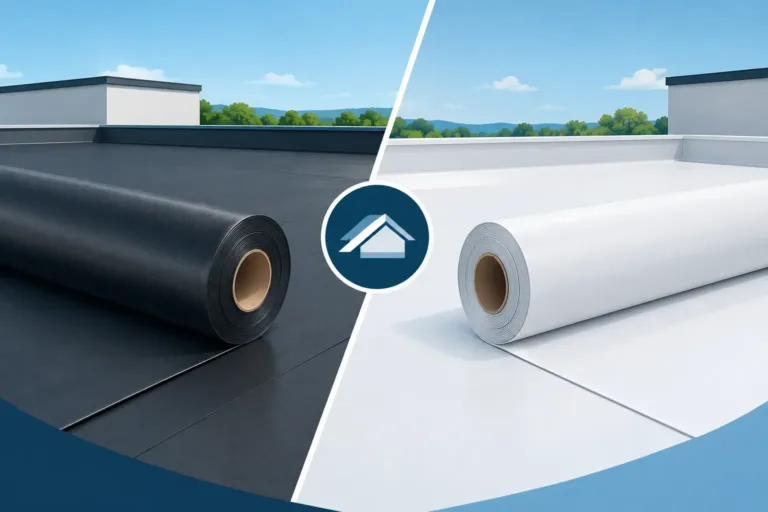
A flat or low-slope roof has to do more than cover a building. In Alabama, it must handle intense sun, standing water, high humidity, wind-driven rain, and the occasional severe storm. When comparing EPDM versus PVC roofing, the right choice depends on the building, its use, its drainage, and the condition of the existing roof – not simply the lowest initial price.
Both systems are proven single-ply roofing options for commercial buildings. Each can provide long-term protection when it is properly designed and installed. The differences matter, though, especially for property owners who want fewer disruptions, manageable maintenance, and a roof system that performs when the weather turns rough.
EPDM Versus PVC Roofing: The Main Difference
EPDM is a synthetic rubber membrane. It is typically black, although white EPDM products are also available. It has been used on low-slope roofs for decades and is known for flexibility, weather resistance, and straightforward repairs.
PVC is a thermoplastic membrane, usually white or light-colored. Its seams are heat-welded together, creating a continuous, watertight bond. PVC is valued for its reflective surface, resistance to certain chemicals and grease, and strong seam performance.
Neither material is automatically better in every situation. A warehouse with a broad roof and limited chemical exposure may be well served by EPDM. A restaurant, manufacturing facility, medical building, or property seeking a highly reflective white roof may be a stronger candidate for PVC.
How EPDM Performs on Alabama Commercial Roofs
EPDM has earned its reputation because it is durable without being complicated. The membrane remains flexible through temperature changes and can accommodate normal building movement. That flexibility can be useful on large roof areas where materials expand and contract through hot summers and cooler winter nights.
Black EPDM absorbs more heat than a white membrane. That does not mean it is a poor choice in Alabama, but it does mean the complete roofing assembly deserves attention. Insulation levels, deck type, building use, and HVAC demand all affect whether a dark membrane makes financial sense. White EPDM may be considered when reflectivity is a priority, though it does not have every performance characteristic of PVC.
EPDM seams are commonly joined with specialized tape or adhesive. Modern seam tape performs well when installed on clean, properly prepared surfaces. However, installation details are critical. Improper primer application, contamination, or rushed workmanship can create weak points at seams, penetrations, and flashing transitions.
One practical advantage of EPDM is repairability. Experienced roofers can often locate and patch punctures, open seams, or isolated damage without replacing the entire roof. That can be valuable after a branch strike, service-contractor damage, or a storm event.
Where EPDM Makes Sense
EPDM is often a practical fit for large, uncomplicated low-slope roofs, particularly when a property owner wants a time-tested system with a competitive installed cost. It can also be a smart choice where future repairs need to be straightforward and where roof drainage is adequate.
The key word is adequate. EPDM tolerates weather well, but no membrane performs at its best under long-term ponding water. If water remains on the roof days after rain, the drainage issue should be addressed as part of the replacement plan.
How PVC Performs on Alabama Commercial Roofs
PVC roofing is designed around heat-welded seams. A trained installer uses hot-air welding equipment to fuse overlapping membrane sheets together. When welded correctly, those seams are one of PVC’s biggest advantages. They are not dependent on adhesive alone and are designed to remain watertight under normal roof movement and weather exposure.
Most PVC membranes are white, which reflects a meaningful amount of solar heat. On buildings with high cooling demands, that reflectivity can help reduce heat absorbed at the roof surface. Energy savings vary by building and should not be treated as guaranteed, but a reflective system can be worth considering for many Alabama properties.
PVC also performs especially well around grease, oils, and some chemical exposures. This is one reason it is frequently considered for restaurants, commercial kitchens, facilities with exhaust systems, and certain industrial settings. Grease is a serious concern on a roof because it can degrade some membrane materials over time.
PVC does require qualified installation. Heat welding is a skilled process, and seam quality depends on the crew’s training, equipment, and quality control. A membrane with excellent specifications still needs properly welded seams, secure edge details, and correctly flashed drains, curbs, pipes, and rooftop equipment.
Where PVC Makes Sense
PVC can be an excellent option for buildings where energy efficiency, chemical resistance, and welded seams are top priorities. It is commonly selected for restaurants, retail centers, medical offices, multifamily buildings, and commercial properties with extensive rooftop equipment.
Its upfront cost may be higher than some EPDM installations. For the right building, however, the long-term value may justify that difference. A property owner should look beyond the membrane price and consider expected service life, maintenance needs, insulation, drainage improvements, and the cost of protecting daily operations during future repairs.
Cost Is More Than the Price Per Square Foot
It is understandable to start with price, especially after storm damage or an unexpected leak. But comparing roof systems strictly by a per-square-foot number can lead to the wrong decision.
The installed cost of EPDM or PVC can change based on roof size, tear-off requirements, deck repairs, insulation upgrades, tapered insulation for drainage, perimeter metal, flashing details, rooftop penetrations, and access to the building. A roof with many HVAC units and vents takes more labor and more detail work than an open, rectangular roof of the same size.
There is also a major difference between recovering an existing roof and completing a full tear-off. A recover may reduce cost and disruption when the existing assembly is dry and structurally suitable. If moisture is trapped below the membrane, simply covering the problem can create larger issues later. A professional inspection should include moisture evaluation and a close look at the deck, insulation, drains, and existing flashings.
Storm Damage, Leaks, and Insurance Considerations
Alabama storms can damage low-slope roofs in ways that are not obvious from the ground. Wind can pull at perimeter edges, lift membrane seams, damage flashing, or drive debris across the roof surface. Hail can leave punctures, fractures, or subtle impacts that deserve closer inspection.
If a storm has caused damage, document the condition promptly. Photos, dates of the storm, maintenance records, and a detailed roofing inspection can help establish what happened. Insurance coverage depends on the policy, cause of loss, deductible, age of the roof, and the adjuster’s findings. No contractor should promise that a claim will be approved.
A good roofing contractor can make the process less confusing by documenting visible damage, explaining repair and replacement options, and providing clear scope information for the property owner and insurer. Bluefin Exteriors helps property owners understand roof conditions and claim-related documentation without pressure to make a rushed decision.
The Details That Matter More Than the Membrane
An EPDM or PVC roof is only as reliable as the full system beneath and around it. Drainage, insulation, attachment method, edge metal, flashing, and workmanship all affect performance. In many leak investigations, the membrane itself is not the primary failure. The issue is often a drain, penetration, wall transition, curb, or perimeter detail.
Before choosing a material, ask how the roof will be fastened, how seams will be tested, how water will be moved to drains, and how rooftop equipment will be flashed. Ask whether the proposal includes replacing damaged insulation or decking if discovered during tear-off. Clear answers upfront help prevent change-order surprises and protect the finished system.
Manufacturer warranty options also deserve careful review. A longer warranty can be useful, but it does not replace good installation or routine maintenance. Property owners should understand what the warranty covers, what maintenance is required, and whether ponding water, unauthorized penetrations, or storm damage are excluded.
Choosing the Right Roof for Your Property
EPDM may be the better fit when you need a proven, flexible membrane for a large low-slope roof and want a practical balance of cost and repairability. PVC may be the stronger choice when a reflective surface, welded seams, or resistance to grease and chemicals is especially valuable.
The best decision starts with the actual roof, not a sales pitch. A thorough inspection can identify wet insulation, storm damage, drainage concerns, and weak details before they become expensive failures. For commercial property owners in Tuscaloosa, Birmingham, and nearby Alabama communities, a clear assessment gives you the information needed to protect the building, budget confidently, and move forward on your own timeline.
