A roof replacement after an Alabama storm can feel urgent, especially when you are weighing insurance paperwork, water concerns, and a major investment at the same time. A thoughtful metal roofing comparison helps you look beyond the material label and choose a system that fits your property, budget, roof design, and long-term plans.
Metal roofing has earned its reputation for durability, but not every metal roof performs, looks, or costs the same. The best choice for a simple ranch home may not be the right fit for a historic residence, a steep roof, or a commercial building. The details matter: panel profile, metal thickness, finish, installation method, ventilation, and the condition of the roof deck all affect the result.
What a Metal Roofing Comparison Should Include
Many property owners compare metal roofing only against asphalt shingles. That is a useful starting point, but it does not answer the full question. Metal roofing includes several distinct systems, and their price, appearance, maintenance needs, and storm performance can vary significantly.
For homeowners in Tuscaloosa, Birmingham, and nearby communities, the comparison should also account for Alabama weather. Heavy rain, high winds, falling limbs, hail, heat, and humidity put pressure on every roofing system. A roof that is well suited to a dry, mild climate may require different installation details here.
When comparing options, focus on the complete roofing system rather than the panel alone. Underlayment, flashing, fasteners, ridge ventilation, pipe boots, and workmanship are just as important as the visible metal. A quality panel installed poorly can still leak.
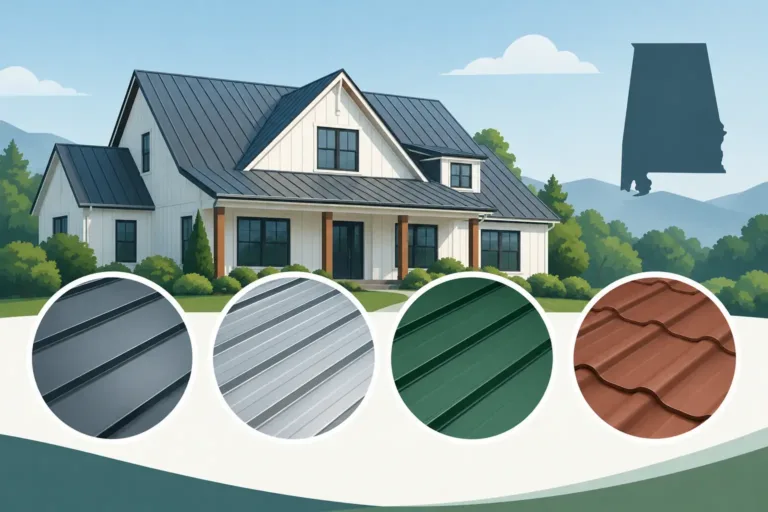
Exposed-Fastener Metal Panels
Exposed-fastener panels, sometimes called screw-down panels, are one of the most budget-friendly ways to install a metal roof. The screws remain visible on the surface of the panels and secure the metal directly to the roof deck or framing system.
This option can make sense for barns, workshops, garages, agricultural structures, and some homes where cost is the primary concern. It is available in a range of colors and offers a clean, practical appearance. Installation is generally more straightforward than a standing seam system, which can help keep initial costs lower.
The trade-off is maintenance. The fasteners use washers to create a seal, and those washers can wear over time due to sun exposure and temperature changes. Metal expands and contracts, so screws may eventually need inspection, tightening, or replacement. On a residential home where long-term low maintenance is a priority, that consideration deserves real weight.
Exposed-fastener roofs can perform well when properly installed, but panel layout and screw placement must be precise. Overdriven or underdriven screws create opportunities for water intrusion. This is not a system where cutting corners on installation pays off.
Standing Seam Metal Roofing
Standing seam metal roofing is often the premium residential choice. Its vertical panels connect with raised seams, while the fasteners are concealed beneath the panels rather than exposed to sun and weather. The result is a crisp architectural look that works well on many modern, traditional, and rural Alabama homes.
Because the fasteners are hidden, standing seam systems typically have fewer surface penetrations. That can reduce long-term leak concerns and maintenance compared with exposed-fastener panels. The panels are designed to accommodate movement as metal expands and contracts, which is especially useful through Alabama’s hot summers and changing weather.
The trade-off is higher upfront cost. Standing seam requires more specialized labor, careful panel fabrication, and detailed flashing work around valleys, chimneys, skylights, and penetrations. On a simple roof, the price difference may be manageable. On a roof with many angles or features, labor can increase substantially.
For a homeowner planning to stay in the home for many years, the added investment may be worthwhile. For a property owner focused on the lowest immediate replacement cost, a different system may fit better. There is no one right answer without inspecting the roof and understanding your goals.
Metal Shingles, Tile, and Stone-Coated Steel
Metal roofing does not have to look like long vertical panels. Metal shingles, metal tile, and stone-coated steel products are designed to mimic traditional roofing materials while offering the benefits of metal construction.
These systems can be a good option for homes where appearance is a major concern. A homeowner may like the durability of metal but prefer the look of dimensional shingles, clay tile, slate, or wood shake. Certain neighborhoods, homeowners associations, and architectural styles may also make a profile that resembles conventional roofing more appealing.
These products are usually more expensive than basic exposed-fastener panels and can be comparable to, or higher than, standing seam depending on the manufacturer and roof complexity. Installation is also more involved. Still, they offer a middle ground for owners who want a distinctive appearance without moving away from metal.
Cost: Initial Price Versus Long-Term Value
Metal roofing generally costs more upfront than asphalt shingles. The exact difference depends on the roof size, pitch, number of valleys, accessibility, tear-off requirements, decking repairs, chosen metal profile, gauge, coating, and local labor conditions.
A lower-priced metal roof is not automatically a poor choice, and a higher quote is not automatically better. Ask what is included. Does the proposal address underlayment, drip edge, flashing, ventilation, disposal, and replacement of damaged decking if needed? Is the metal thickness clearly specified? Are the fasteners and trim components designed for the system being installed?
Long-term value depends on ownership plans. A properly installed metal roof can offer a long service life and may require less frequent replacement than standard shingles. It can also help reflect solar heat, although energy savings vary based on color, attic insulation, ventilation, roof orientation, and how the home is used.
If a storm has damaged your current roof, insurance may cover eligible repairs or replacement based on the policy and documented damage. Insurance does not simply pay for an upgrade because an owner prefers metal. However, it may be possible to apply covered claim funds toward a new roofing choice while paying the difference out of pocket. A professional inspection and clear documentation can make that conversation easier.
Storm Performance in Alabama
Metal roofs are often chosen for wind and rain performance, but the rating of a system matters more than broad marketing claims. Wind resistance depends on panel type, fastening pattern, deck condition, edge metal, roof geometry, and installation quality. A strong panel cannot make up for weak attachment at roof edges or poorly installed flashing.
Hail is another area where expectations should be realistic. Metal can resist damage well, but it can also dent under certain hail conditions. Whether a dent is considered cosmetic or functional can affect an insurance claim, and policy language matters. A contractor should document the condition of the roof honestly rather than promise a claim outcome.
Metal is noncombustible, which can be an advantage, but the entire roof assembly still matters. Underlayment, decking, surrounding construction, and local code requirements all play a role in overall fire performance.
Installation Details That Protect Your Property
The best metal roofing comparison includes the contractor, not just the material. Ask how the installer handles roof deck repairs, ventilation, flashing at walls and chimneys, pipe penetrations, valleys, and transitions to other roof sections. These are the areas where roofing experience shows up after the first hard rain.
You should also ask whether the existing shingles will be removed. In some cases, metal can be installed over an existing roof, but that approach is not appropriate for every property. Hidden decking damage, trapped moisture, uneven surfaces, local requirements, and manufacturer instructions may make a full tear-off the better decision.
A clear scope of work protects you from surprises. You should know what materials are being used, what work is included, how the property will be protected during construction, and how cleanup will be handled when the project is complete.
Choosing the Right Metal Roof for Your Needs
If your priority is the lowest upfront cost for a garage, workshop, or straightforward structure, exposed-fastener panels may be a practical fit. If you want a long-term residential roof with concealed fasteners and a refined appearance, standing seam is often worth considering. If your home needs a more traditional architectural look, metal shingles, tile, or stone-coated steel may offer the best balance.
Before making a final decision, start with an honest roof inspection. Bluefin Exteriors can evaluate storm damage, explain your roofing options in plain language, and help document conditions for your insurance claim when applicable. The goal is not to pressure you into a material. It is to give you a roof system that protects the property and makes sense for the years ahead.
