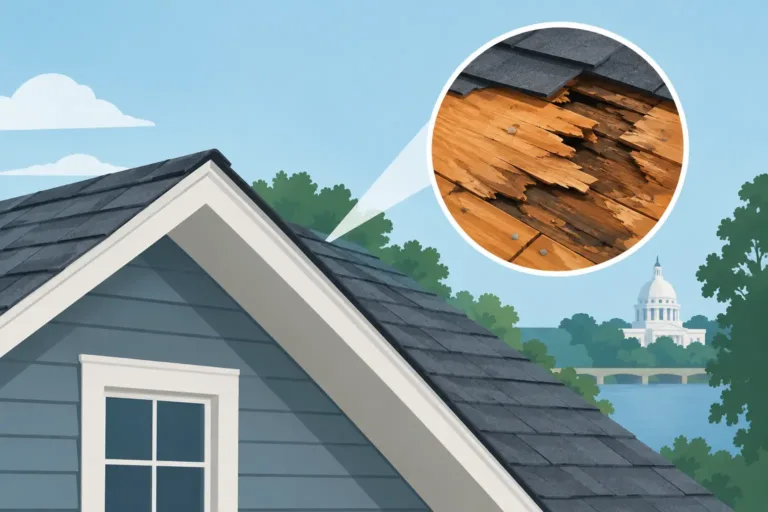
A roof can look fine from the driveway while the wood beneath the shingles is beginning to fail. That is why roof decking damage explained clearly matters to Alabama homeowners and property managers, especially after heavy rain, wind, hail, or a long period of small leaks. The decking is the structural surface that supports your roofing system. When it is weakened, covering it with new shingles alone does not solve the problem.
Roof decking damage is not always an emergency, but it should never be ignored. Early attention can limit repairs to a few sheets of wood. Waiting can allow moisture to spread, sagging to worsen, and interior damage to develop.
What Roof Decking Does
Roof decking, also called roof sheathing, is the layer of wood panels attached to the roof framing. In most homes, it is plywood or oriented strand board, commonly called OSB. Underlayment, shingles, metal panels, or another roofing material are installed over that surface.
The decking gives roofing materials a solid, even base. It helps the roof hold fast against wind uplift, supports foot traffic during service work, and keeps the roofing system from sagging between rafters or trusses. If the deck is soft, rotted, delaminated, cracked, or separated from the framing, the rest of the roof system cannot perform as intended.
A damaged deck is different from cosmetic shingle wear. Missing granules, faded shingles, and a few lifted tabs may be repairable at the surface. Decking issues involve the structure beneath the surface and often require removing roofing materials in the affected area to inspect and replace the wood.
Roof Decking Damage Explained: Common Causes
Most decking damage starts with moisture. A roof leak around a pipe boot, valley, chimney, skylight, or damaged shingle can let water reach the wood. Even a slow leak can cause significant deterioration because it may go unnoticed in an attic or behind insulation.
Storm damage can also create the opening that leads to decking failure. Wind can lift or tear shingles, hail can bruise or crack roofing materials, and falling limbs can puncture the roof. Alabama’s frequent storms make a prompt inspection worthwhile after a significant weather event, even when water has not yet appeared inside.
Poor attic ventilation is another contributing factor. Warm, humid air trapped in an attic can condense on the underside of the roof deck. Over time, that repeated moisture exposure can stain wood, encourage mold growth, and reduce the panel’s strength. Ventilation problems do not always require a full roof replacement, but they should be addressed with the roofing repair so the same conditions do not continue.
Age and prior workmanship matter, too. Older decking may have been exposed to decades of minor leaks, while improperly installed roofing can leave vulnerable areas at flashing, penetrations, and edges. A contractor should examine the entire roofing system rather than treating damaged wood as an isolated issue.
Warning Signs Property Owners Can See
Some signs are visible from the ground or inside the home. Others only become clear during a professional inspection or after old shingles are removed. Do not walk on a questionable roof to investigate it yourself. Soft decking can make the surface unsafe.
Watch for several warning signs at once, including:
- A roofline that appears wavy, dipped, or uneven
- Soft spots, spongy areas, or movement underfoot on a roof
- Water stains on ceilings, walls, or attic framing
- Damp insulation, musty odors, or visible mold in the attic
- Shingles that look sunken, distorted, or unusually uneven
- Daylight visible through the attic roof structure
A ceiling stain does not automatically mean widespread decking damage. Water can travel along rafters or other framing before it becomes visible indoors. On the other hand, a small stain can point to a recurring leak that has already weakened a larger area of sheathing. This is why an inspection should trace the source, not just patch the visible symptom.
How Professionals Confirm the Problem
A proper roof inspection starts with the exterior. The inspector looks for storm impacts, missing or displaced materials, damaged flashing, exposed fasteners, and areas where water can enter. They also evaluate the roofline for sagging or irregularities.
The attic provides valuable information when access is safe. From below, a roofing professional may find water staining, active drips, darkened wood, fungal growth, nail rust, or panels that are visibly bowed. Moisture readings can help distinguish an old, dry stain from an ongoing leak.
The full extent of decking damage is sometimes impossible to confirm until the roofing material is removed. That is common during a replacement following storm damage or at the end of a roof’s service life. An honest contractor should explain this possibility before work begins and document any rotten or compromised decking found during tear-off.
For commercial buildings, the investigation may look different. Low-slope systems can hide wet insulation or deteriorated deck areas beneath membranes. The right repair depends on the roof type, drainage pattern, structural deck, and whether moisture has moved beyond one localized area.
Repair or Replacement: What Is the Right Answer?
The answer depends on the condition and scope of the damage. A small, isolated section of soft or rotted plywood may only require targeted removal and replacement, followed by repairs to the underlayment, flashing, and exterior roofing material. This is often the most practical option when the rest of the roof is sound.
If damage is widespread, the existing roof is near the end of its life, or a storm has affected multiple sections, a full replacement may be the better long-term decision. During a replacement, damaged decking can be replaced before the new roofing system is installed. That creates a clean, stable surface for shingles, metal, or a commercial membrane.
The cheapest repair is not always the best value. Placing new roofing materials over soft wood may save money briefly, but it can lead to nail pull-through, uneven installation, recurring leaks, and a more expensive repair later. The goal is a roof system that is secure from the framing outward.
Insurance Considerations After Storm Damage
Insurance may help cover roof and decking repairs when covered storm damage created the opening that allowed water intrusion. Documentation matters. Photos of wind, hail, impact damage, interior staining, and compromised decking can help show the condition of the property and support the claim process.
Coverage depends on your policy, deductible, exclusions, roof age, and the insurer’s assessment. Damage caused by long-term deterioration, deferred maintenance, or an old leak may not be covered the same way as sudden storm damage. Property owners should avoid assuming approval before the claim is reviewed.
A roofing contractor with insurance claim experience can provide a detailed inspection, identify storm-related conditions, and help organize the repair scope. Bluefin Exteriors helps Alabama property owners understand what the roof needs and navigate claim-related documentation without pressure to make a rushed decision.
What to Do If You Suspect Damaged Decking
If you see a fresh ceiling stain or water entering the building, protect the interior first. Move furniture and valuables away from the area, contain dripping water if it is safe to do so, and take dated photos. Do not climb onto the roof during or after a storm.
Then schedule a professional roof inspection. If a leak is active, temporary protection may be needed while a permanent repair is planned. For storm-related damage, document the condition before making non-emergency alterations whenever possible, but do not delay reasonable steps to prevent additional damage.
Ask the contractor to explain whether the issue is limited to the outer roofing material or has reached the decking. You should understand where the damage is located, what caused it, which materials need replacement, and whether ventilation or flashing improvements are recommended.
A sound roof starts with a solid deck. If your roof has been through a recent storm, shows signs of leaking, or simply looks uneven, a no-pressure inspection can replace uncertainty with a clear plan for protecting your property.
