A roof can look acceptable from the driveway while moisture is quietly breaking down the wood beneath it. That is what makes the top signs of roof rot easy to miss and expensive to ignore. In Tuscaloosa, Birmingham, and surrounding Alabama communities, wind-driven rain, humid summers, fallen limbs, and aging shingles can all create the conditions rot needs to spread.
Roof rot is not simply an appearance issue. Once water reaches roof decking, rafters, fascia, or other wood components, it can weaken the structure that supports your roofing system. The sooner the source of moisture is found and repaired, the more likely you are to avoid a larger repair or premature roof replacement.
What Roof Rot Means for Your Property
Roof rot occurs when wood stays damp long enough for fungi to break it down. It usually starts after water gets past the outer roofing materials through damaged shingles, lifted flashing, worn pipe boots, clogged valleys, or a leak around a vent or chimney. Poor attic ventilation can also trap humid air and condensation, creating moisture damage from the inside.
The damage does not always match the size of the visible leak. A small opening can allow water to travel along decking or framing before it appears as a ceiling stain. That means the spot where you see a problem indoors may not be where the roof failed.
On homes, rot often affects decking near roof penetrations, eaves, valleys, and areas where debris holds water. On commercial buildings, low-slope roof seams, drains, edge details, and penetrations deserve close attention. The right repair depends on the roof type, the moisture source, and how far the deterioration has progressed.
Top Signs of Roof Rot to Watch For
Some symptoms call for a prompt professional inspection, particularly after a major storm. You do not need to climb onto the roof or disturb damaged materials to recognize the warning signs.
A soft, spongy, or uneven roof surface
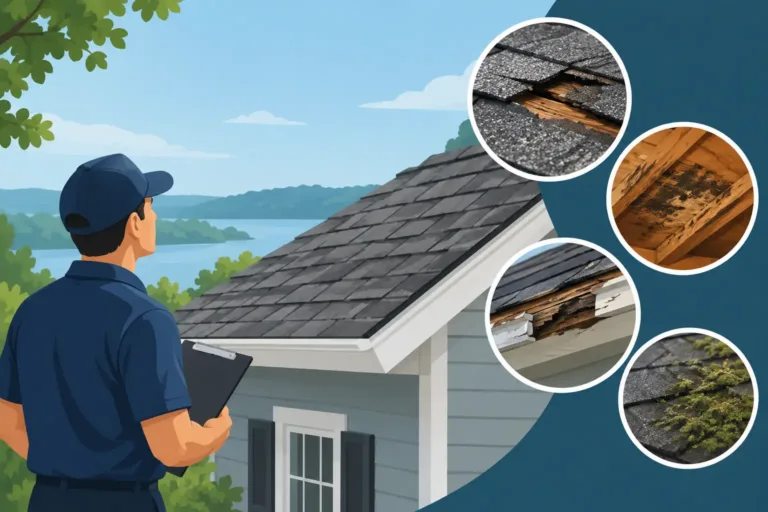
A roof should feel firm underfoot to trained professionals. If an area looks wavy, sagged, dipped, or uneven from the ground, water may have weakened the decking underneath the shingles or metal panels. This is more concerning than a few cosmetic shingle imperfections because it can point to a structural issue below the surface.
Sagging near the ridge, around a valley, or along the eaves should be inspected promptly. Do not walk on a roof that appears soft or unstable. It can be unsafe, and extra foot traffic can cause further damage.
Ceiling stains, peeling paint, or wall discoloration
Yellow-brown rings on a ceiling are among the most familiar signs of a roof leak, but they are not always fresh. A stain may remain after an old repair, while an active leak may cause little discoloration at first. What matters is whether the stain grows, feels damp, returns after rain, or appears alongside peeling paint, bubbling drywall, or a musty odor.
Check upper-floor ceilings, closets, corners near exterior walls, and rooms beneath roof valleys or skylights. Take photos and note when you first noticed the issue. That documentation can be helpful if storm damage leads to an insurance claim.
Damp insulation or a musty attic smell
Your attic often gives the clearest early warning. On a dry day, look from the attic floor for wet insulation, dark wood, water streaks, rusty nail tips, or a persistent earthy smell. Those conditions can signal ongoing moisture even if your living space looks normal.
Ventilation matters here. A poorly ventilated attic can develop condensation that resembles a roof leak, especially during temperature swings. A thorough inspection should distinguish between water entering from outside and moisture building up inside the attic, because the solution is not always the same.
Dark, cracked, or crumbling wood
Visible roof framing or decking may show dark staining, splitting, soft spots, or wood that crumbles when gently tested by a qualified inspector. Not every dark mark means active rot. Old water stains, surface mildew, and dirt can look alarming without causing structural decay.
Still, wood that has lost its firmness requires attention. A roofing professional can assess whether it can remain in place after drying or whether affected decking, fascia, or framing needs replacement. Covering damaged wood with new shingles is not a lasting repair.
Damaged fascia, soffit, or eaves
The edges of a roof are especially vulnerable because rainwater flows there and gutters can overflow there. Peeling paint, swollen fascia boards, soft wood around gutters, sagging soffit panels, or visible gaps at the eaves can all indicate moisture damage.
Sometimes the cause is a roofing failure. Other times it is a gutter problem, poor drainage, or water splashing back from landscaping. The repair should address both the damaged wood and the route water took to get there. Otherwise, new fascia can rot again.
Shingle damage around problem areas
Missing shingles, lifted tabs, cracked flashing, exposed nail heads, loose ridge caps, and deteriorated pipe boots create openings for water. These are not proof of roof rot by themselves, but they are common entry points. After high winds or hail, even small damage around penetrations and roof edges can allow repeated rain exposure beneath the roof covering.
Alabama storms can make this more urgent. A roof may shed water normally during a light rain but leak when wind pushes water sideways under compromised materials. If damage appeared after a storm, avoid making assumptions about whether it is cosmetic or covered. Document what you can safely see and have the roof evaluated.
Mold or mildew that keeps returning
Mold in an attic, on a ceiling, or near exterior roof edges usually means moisture is present, but it does not identify the source. It may stem from a roof leak, bathroom exhaust venting into the attic, a plumbing issue, or insufficient airflow. Treating the visible mold without correcting the moisture problem leaves the underlying risk in place.
A professional assessment can help separate roof-related damage from ventilation or interior moisture concerns. That clarity prevents spending money on the wrong repair.
When Roof Rot Becomes an Urgent Repair
Any active interior leak deserves quick attention, especially if water is dripping near electrical fixtures or causing a ceiling to bulge. Keep people away from the area, move valuables if it is safe, and use a container to catch drips. Do not puncture a sagging ceiling unless a qualified professional advises you to do so.
A visibly sagging roofline, widespread soft decking, or extensive attic moisture may require more than a simple shingle repair. The trade-off is straightforward: a targeted repair is usually less disruptive and less costly when damage is limited, but patching a roof with widespread material failure can delay a replacement that is already necessary.
For commercial property owners, prompt action is also essential to protect inventory, tenants, equipment, and operations. Low-slope roofs can hold water in ways that make deterioration less visible until insulation or decking has been affected.
What a Professional Inspection Should Answer
A useful roof inspection is not just a quick look at shingles. It should identify the source of water intrusion, assess the condition of the roof covering and exposed components, and explain whether the damage is localized or more extensive. If a storm may be involved, the inspection should also document observable damage clearly for the claim process.
Ask for a straightforward explanation of the recommended scope. You should understand what needs immediate repair, what can be monitored, whether damaged decking will be replaced if found during work, and how ventilation or drainage concerns will be handled. Honest answers matter more than pressure tactics when you are making a high-stakes decision about your property.
Bluefin Exteriors provides no-pressure roof inspections and insurance claim help for Alabama property owners who need a clear assessment after a leak or storm. Acting before moisture spreads can protect more than your roof. It can protect the structure, finishes, and peace of mind beneath it.
